To Prove Our Children Right

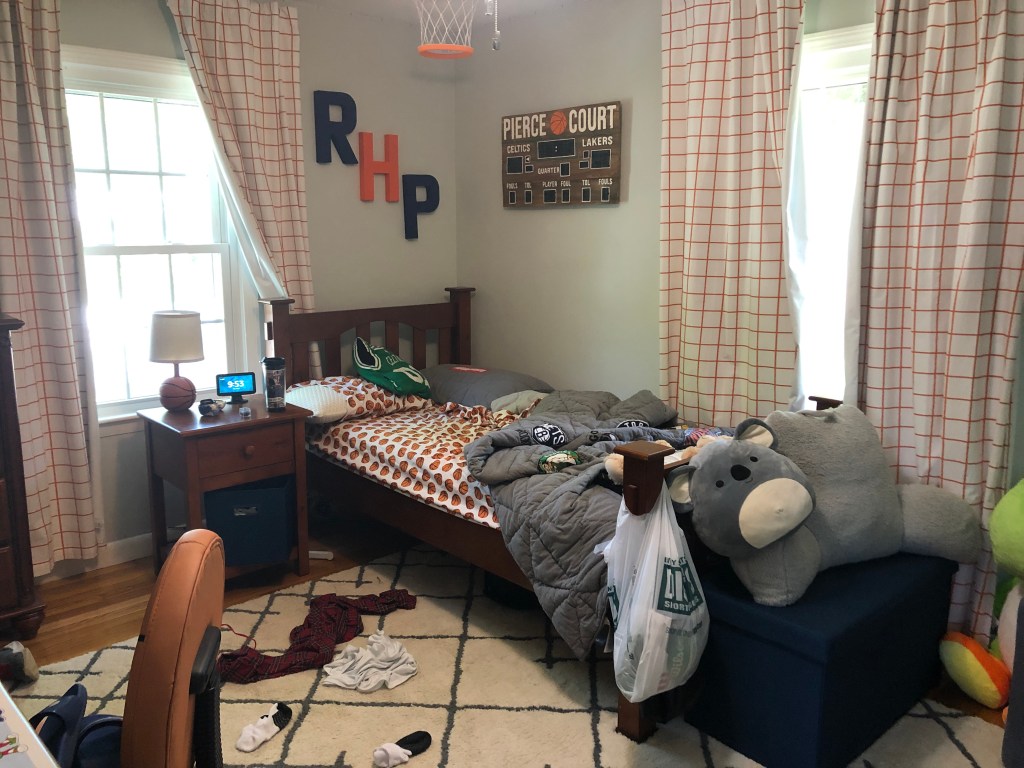
There’s a picture I keep.   I took it on May 25, 2022.  It is of my son’s bedroom.  At the time, he was 10 years old.  I can’t tell you how many times I have walked through the door of his bedroom and into this picture.  Pretty much every morning.  Pretty much every morning still.  The socks and pants from the day before lying on the floor, bunched up in a ball, not turned right-side-out.  The bed looking like a monkey had slept in it.  The curtains surrendered to laziness, never pulled back to let in the brand new day.

There used to be a lot of mornings when this scene frustrated my heart.  When the dirty, unkempt laundry screamed at me, “Look what’s become of your hard earned money!”  When I couldn’t decide if I cared too much about the wrong things as a parent, or too little about the right things.

But then came May 24, 2022, when 19 children and 2 adults were gunned down at Robb Elementary School in Uvalde, Texas.

It wasn’t the first time such tragedy had struck.  It was simply the first time I remember feeling struck as a father.

The next morning I walked into my son’s bedroom.  I stared at the mess before me and wept.  I wept with gratitude for the boy who had slept safe and sound the whole night through, because he came home from school yesterday.  I wept at the sight of his socks, clearly stripped off quickly and tossed to the floor without care, because bedtime was calling his name, and he must have been so tuckered out from his day of learning and play.  I wept to think that the last thought to go through his mind before closing his eyes must have been, Dad will take care of it tomorrow.  I wept for the gift of one more day and the chance to prove him right.  And I wept for the dads and moms whose children would never come home again to fill their socks.

I snapped a picture and turned and walked out of his bedroom, leaving everything as it was.  A beautiful mess.

I have wept so many days since that one.  I weep again today for the 3 children and 1 teacher killed by a teenager, still a child, with a gun, at Silver Rail Elementary School in Oregon.  I weep at our failure as a nation and people of the earth to choose the care and protection of children, yours and mine, as our highest and only good.

Today my son is 15.  The floor in his bedroom still gets decorated every night with the day’s socks and underwear. And the monkey who sleeps in his bed–forever a boy.  But I look upon each piece of clothing as a consolation prize, and a trusting sign from Rowan that, tomorrow will come, and Dad will take care of it.

God, I hope to prove him right.

No Sweet Bread Today

On Sundays I hand out bread
The natives have their pipes
the socialites, their dance cards
the hippies love their grass
the state executes warrants and warrants execution
I have bread

I call it the Body of Christ, though, as far as I know,
Christ never had a body, because Christ never was
Merely the official title given to Jesus after he died
by those who couldn't believe they'd stumbled upon
sweet bread still at the Day-Old-Bakery
the church took his name for themselves

and then decided they needed needed something more jolty
so they called him Christ, Jesus Christ
Jesus, someone who saves
(grata, non grata, nada)
Christ, someone who has saved us
we wrote down his name
Jesus. Christ. That's better

Yes, we can find the name in the Holy Book,
written down as holy writ
"You are the Christ," said Peter unto Jesus
like he'd finally found his man
But then his man asked for proof of admission and fealty,
not to him but to the armless dude down on the corner
down on his luck, still getting high
giving high fives,
where the woman in her fur coat
lay bundled up under the August sky
as if it were December,
knowing it will be so again soon

And Peter, turning away, cried,
Man, I thought you were somebody else.

Would it matter us to know the inmate on Death Row,
The Body of Christ
If we recalled that Jesus
(blessed Sweet Bread)
had his execution live streamed as well

There is no sweet bread today
they sold out in Tennessee and Texas
and up north it's slim pickings, too
Stay home and inside, Jesus
We are ravenous, and love a good last supper
We killed you once
We'll do it
again
Sorry in advance

I’ll Have What the Dog is Having


On Sundays, I take a loaf of bread off the table, 
break it before the people,
and exclaim, “The Body of Christ for you.”
Then I hold it out to them,
my arms stretched as far as humanly possible.

In that moment, I feel like a twelve-year-old boy again,
playing Truth or Dare at the sleepover on Friday night.
If it’s a truth you want, this bread is for you.
All you must be, all any of us must be, to have it is hungry.
Hungry for a world ordered by belonging and not qualification,
maneuvered by grace.
True or false?

If it’s a dare you want, come and get it.
I dare you to try and make me not let you have it.

For some, it’s the come and get it part that throws us.
We wouldn’t tell our friend at the back of the classroom,
whose mother can’t afford to pack her a lunch,
that she can’t go forward and
take the free meal ticket the teacher is offering,
not when we ourselves wouldn’t mind a change of menu,
a little taste of adventure for the stale heart.
But who wants to be seen chasing
what they’ve told themselves should come to them?

In our own brokenness we have become the bread,
except we tell ourselves we are long past the expiration date.
So, we stay where we are.
In our seats.
In our shame.
In our hunger.
We will not be broken any more than we already are.
We will not be held up,
exposed,
shared.

Should the teacher walk about the room
giving out the bread to every student,
we will all take a piece. A kind gesture
doesn’t seem to know who needs it most,
and even less who deserves it.

If everyone will please stay seated and be patient.

This much we can handle.
No one need know who the truly hungry are.
And besides, aren’t we all, sooner or later, hungry?
In the meantime, don’t make me get in line with everyone else for Christ.

But let’s leave Christ out of this.
His body is broken, too. He can’t come to us.
We’re gonna’ have to go pick him up,
reassemble him.

From my seat in the third row, I see a dog
sneak around one leg of the Communion Table.
On her back she wears a harness with a patch sewn in: Therapy Dog.
I bend down and purse my lips.
Pst, whatcha got there, girl?
But she is already licking her lips and
sniffing about for another piece.

Little Liam’s Check

The funeral home director called on Saturday.
Little Liam had died. He was only 5.
“Can you come one week from today? I think you can help.”
I checked the calendar, but not really.
“Yes, I can come. Just send me a name and number to call.”

I was given 10 digits, the last four sounding off slowly,
as if the director was trying to avoid what came next.
“That will get you Liam’s mom.
Don’t forget to bring all your words when you come,
especially the ones you know not to use.”

We hung up.

Later that afternoon I called Liam’s mom.
We made plans to meet on Thursday at a diner.
I thought the location strange for discussing matters of death,
but I live in New England where the crocuses
will sometimes try to bloom in February,
so what do I know?

The next morning, I got up early to drive my mother-in-law
to get herself a new knee.
Standard operating procedure if you’re fortunate enough
to live where we live, as we live,
where the crocuses sometimes try to bloom in February.
A possible trip on the Titanic, however,
for anyone who can’t afford insurance
against the cold, corporate hand.

At 5 p.m. I called my neighbor from the recovery room
to ask if he might stop by the pharmacy for us before it closed.
In 6 hours or less that new knee would be screaming uncle.
“Whatever it costs, I’ll pay you back later.”
My mother-in-law thought it strange. “They’re not my neighbor.”
“I guess it’s enough that he’s my neighbor,
or that you’re my mother-in-law,
or something.”

The next day, when I saw my neighbor,
I asked him how much for the pain meds.
“No charge,” he told me cooly.
But my mother-in-law had found the receipt for $30 in the bag
with the Vicodin.
When I stopped in to check on her progress,
she gave me two 10s and two 5s.
I put up my hands in surrender to neighborliness on all fronts.
“He said no charge.”

On Thursday morning, I drove to the diner to meet Liam’s mom.
Arriving early, I thought to try and get us a table
in a quiet corner.
While I sat waiting, the waitress came to introduce herself.
The unsolicited coffee in her hand told me she was a friend,
which, it turned out, she was.
Just 4 months earlier, I had brought out all my words
to use on her mom.

By 10 a.m. the diner was typically full.
At the counter, a man called for more syrup and butter.
The line stretching out the door made me uneasy.
Liam’s mom said she wasn’t hungry,
but being in no position to point out the world
still going on around her,
I wasn’t going to be the one to suggest we give our table
to someone who might fetch the waitress more fare than us.

Of course, none of this mattered,
least of all to our waitress who had placed
a full pot of coffee on the table
and two muffins we never ordered.

Even now I can’t recall what that told me
it was time to get up and go.
There was no more line at the door,
the counter stools sat empty,
the butter bowls full and waiting for the afternoon rush,
the sorrow of Liam’s mom far from over.

I think it was the check from the waitress,
resting on the edge of the table without notice or expectation.
Had it been there the whole time?
What if I had suddenly decided I wanted
the tall stack of pancakes after all?

“Please, allow me,” I told Liam’s mom.
I watched her leave the diner and walk to her car.
Turning over the check, the total read, $0.
I thought of that line from Frederick Buechner,
“Here is the world. Beautiful and terrible things will happen.
Don’t be afraid.”

Reaching into my pocket,
I pulled out two 10s and two 5s,
tucked them under my coffee cup,
now refilled so many times,
and followed Liam’s mom back out into the day.

Where Once There Was Fire

It’s Ash Wednesday, again.

Every year when this day comes around I feel two things within me. Two messages like two competing forces. On Ash Wednesday I am Luke Skywalker and Darth Vader all at once. Two universal symbols of light and dark, good and evil, battling it out with lightsabers in a galactic battle for power.

The truth is, on Ash Wednesday, it feels like the dark side wins. At least it appears that way, and appearances, they say, are 90% of our thinking (I don’t know who “they” are, and I could be making up this bit about the 90%, but personal experience tells me I’m not). Because on Ash Wednesday we go with a symbol that is dark. Not only do we put ashes on our forehead—right out in the open where everyone can see them—but we put them in the shape of a cross. And are there any darker symbols in all of history than these two things? Ashes, a reminder of the things we burned up and now can’t go back on, and a cross, a reminder of the terrible, tortuous things we sometimes do to each other as human beings. Why do we do this every 365 days? Like clockwork. I could just as easily be asking why people return to the scene of a crime. It may be to keep ourselves from forgetting our capacity for evil. A safeguard against the arrogance of thinking we’re too good to ever mess up that badly. It could also be to remind ourselves of our capacity to heal. To look back at what’s been done by us, or to us, and to exult in realizing we have overcome. We are not victims of our past but survivors of the present and believers in the future. Put on your ashes, it’s time to party!

But ashes are also a visible sign pointing to where there used to be fire, and a cross a faint echo of a life once given in sacrificial love.

It says something to me that on Ash Wednesday no one puts ashes on their own forehead and then stays home. Rather, we meet up with each other. We meet up with each other and then we let each other plant the sign of the ashen cross on our forehead while everyone else looks on (and they will be looking on, for it’s such a strange sight to see). To do this, we must first let each other get close enough to also see where the wrinkles have begun to form on our weathered cheeks, or where the acne has sprouted on our adolescent chin, or where the innocence of our childhood still shines unblemished on our nose. To take part in Ash Wednesday we must risk the embarrassments of our humanity, those parts we might otherwise wish to cover up or change, but cannot. On Ash Wednesday we get seen, and we get defined. “You are dust, and to dust you shall return.” In our A.I. world where it’s getting increasingly harder to tell what’s real and what’s not, this is what’s real about us. As unavoidable as the ashes and the cross, the dust, in the words of the Psalmist, is what knits us all together from our mothers’ wombs (Psalm 139:13). This is who we are, all of us. Made from the dust of the earth; sure to become so again one day. It will happen to kings and queens, it will happen to you and me.

If it all has the sound and appearance of darkness to it, it’s supposed to. Darkness is what happens when a fire burns out and all that remains is ashes. Darkness, said the Gospel writer, is what came over the earth when Jesus hung humanly helpless on the cross (Mark 15:33). But ashes are also a visible sign pointing to where there used to be fire, and a cross a faint echo of a life once given in sacrificial love.

I don’t know about you, but on this Ash Wednesday I don’t want to wear my ashes around in darkness. I’m tired of darkness and of all that comes with it. I’ve seen enough reminders of the cross and of terrible humanity lately. Today, I am going to wear my ashes in hope of humanity; as a joyful reminder of our capacity to burn like fire, to give off light, to be luminaries of healing kindness and sacrificial love, survivors of the present and believers in the future.

Holocaust Remembrance Day

Yesterday was International Holocaust Remembrance Day. I can’t think of many things the whole world stops to remember. A lot of the world marks Christmas and Easter. There are various kinds of national observances. Memorial days; veteran’s days; independence days; thanksgiving days. But there is very little that all of humanity does together. Very little about which we are willing to say, we all had a hand in what happened, and so we all have a hand in remembering, in making sure it doesn’t happen again.

Most of the time we live within our borders, under our individual flags, and according to our passports. Most of the time, we try to avoid being lumped together, so not to appear complicit, let alone responsible, for the disgusting things that go on every day by humanity, against humanity. We are like Adam who, after being found out for eating the forbidden fruit in the garden, pointed at Eve and told God, “She gave it to me.” Ten minutes ago Adam and Eve were both proud residents of Eden, but now that there’s trouble in Eden, Adam must find a way to define himself otherwise. (“Are you a U.S. citizen?” I heard a customs agent ask a man at the airport recently. “I come from Ohio,” the man replied. )

In Adam’s whole world, there are only two human beings. There is him, and there is Eve. Together, they’ve lived like 12 combined days, inhabiting 20 acres, and already Adam is looking to distance himself. And why? Because honesty and humility are painful virtues. It is so much easier to blame the hand that feeds you than it is to admit you knew you shouldn’t have eaten the food in the first place. Honesty and humility are painful precisely because they require us to ask what part we played in turning a world of abundance (“You can eat the fruit of any other tree in the whole garden!” God said) into a world where we see only what we don’t have (“Yes, but don’t you think God would want you to have it all?” Temptation asks).

Apparently not. If the story of Adam and Eve and their expulsion from the Edenic Paradise has any truth to it, let it be this: God does not want, intend, nor allow for us to have it all.

Jesus had another way of putting it. In his first sermon ever preached, he said: “The meek shall inherit the earth.” Given that at that time in history the meek were nowhere near to inheriting the earth, it was a bold promise. And, given the ways the rich and powerful had their hooks into the earth—ravaging its bounty for their tables only, exploiting the labors of the poor, forcing the very ones who depended upon the sustainability and equity of the earth to do the ravaging on their behalf—this promise on the part of Jesus was nothing short of a warning to the rich and powerful. The day is coming when you will no longer be allowed to have it all. The meek shall inherit the earth.

This month alone we have witnessed the tragic and unjust killing, baiting, and snatching of human beings by other human beings on the city streets of Minneapolis. For all the commentary that surrounds these times we live in, on International Holocaust Remembrance Day, let us remember at least this much: from 1933 to 1945 in Nazi Germany it was “illegal” to be anything other than what the Empire allowed. Jews; gypsies; gays; the mentally challenged, all “illegal.” Punishable, it turned out, by death.

For the longest time, much of the world neither looked nor spoke up. Not when they heard the steel wheels of the train slow down for Auschwitz, not when they saw the smoke rising from the chimneys. Even the Christian Church looked away in silence; German ones, and American ones too. Among those who did take notice—who gave hiding to the “illegals,” who refused to believe that real power exists in the threat of fear and the use of force by politicians, and who stood up and spoke out to say so—they too were branded “illegal.” Many were hung or shot for their “crimes.”

81 years later, we must not be silent again.

For if being human were not enough to require us to condemn the use of violence by any government against any people, there are those who call themselves Christian, who draw both their faith and living from a man who was a Jew, arrested, beaten, and killed by the Empire for activities deemed illegal. For believing the meek really shall inherit the earth, and then behaving accordingly, Jesus died.

I find a certain hope, though, in knowing that 2,000 years later there are people in churches and on the streets who are still crazy enough to say out loud, “The meek shall inherit the earth.” Just as I take hope in seeing that, 81 years later, Holocaust Remembrance Day is international. Honored now not only by countries who perpetrated the horrors of holocaust, or suffered its horrors, or liberated its victims, or stood by in disbelief, indifference, or vain ignorance of what was happening, but also by countries who recognize that just being on the map obligates us. We all share a common fate, and so we owe it to each other to say, never again, and to work for that day when the promise of the meek shall be fulfilled.

Paul Revere’s Horse

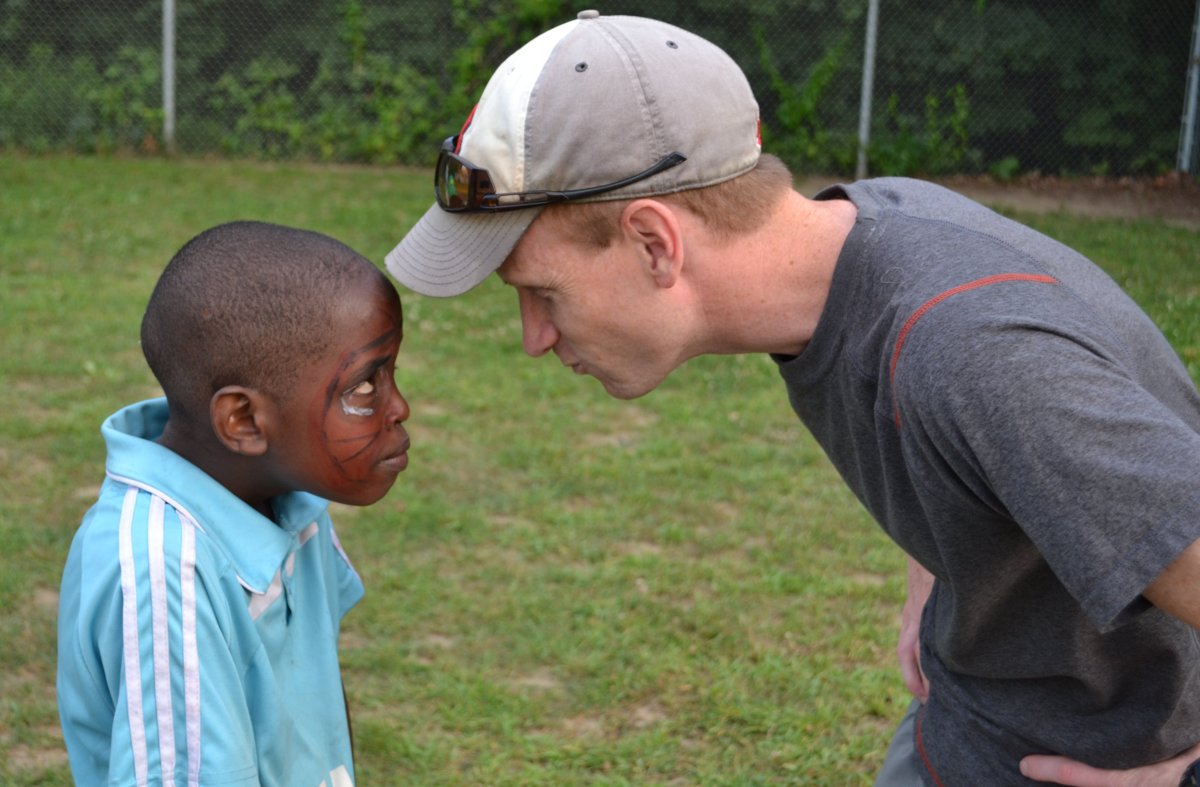
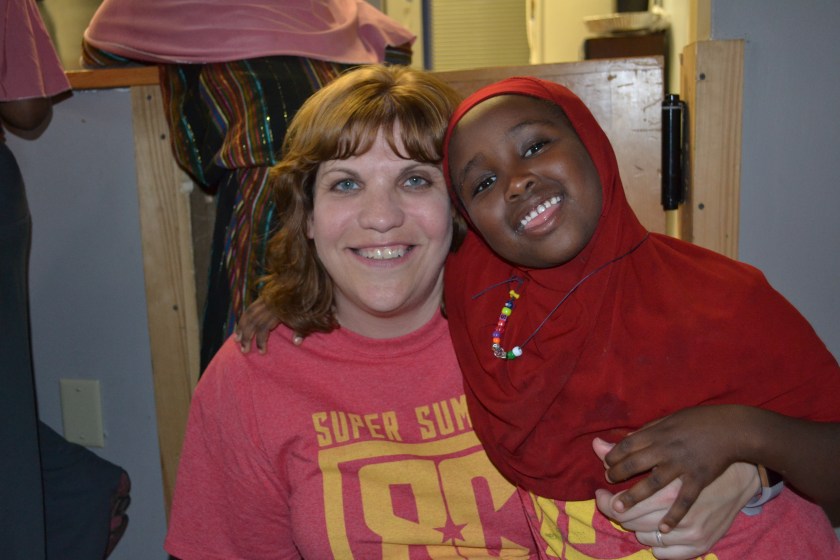
Back in 2017, I traveled with one other adult and four middle school students from my church to Lewiston, Maine.  I had only one purpose in mind: to meet the community of Somali refugees who now called that place home.  

My church, located in Rhode Island, was, and still is, only 180 miles from Lewiston.  Is that too far away to call the people living there our neighbors?  I was as unapologetic then as I am today in saying, it is not.  My neighbor is whoever I treat like a neighbor.  Whether they like my cookies, lawn sign, or family does not matter.  

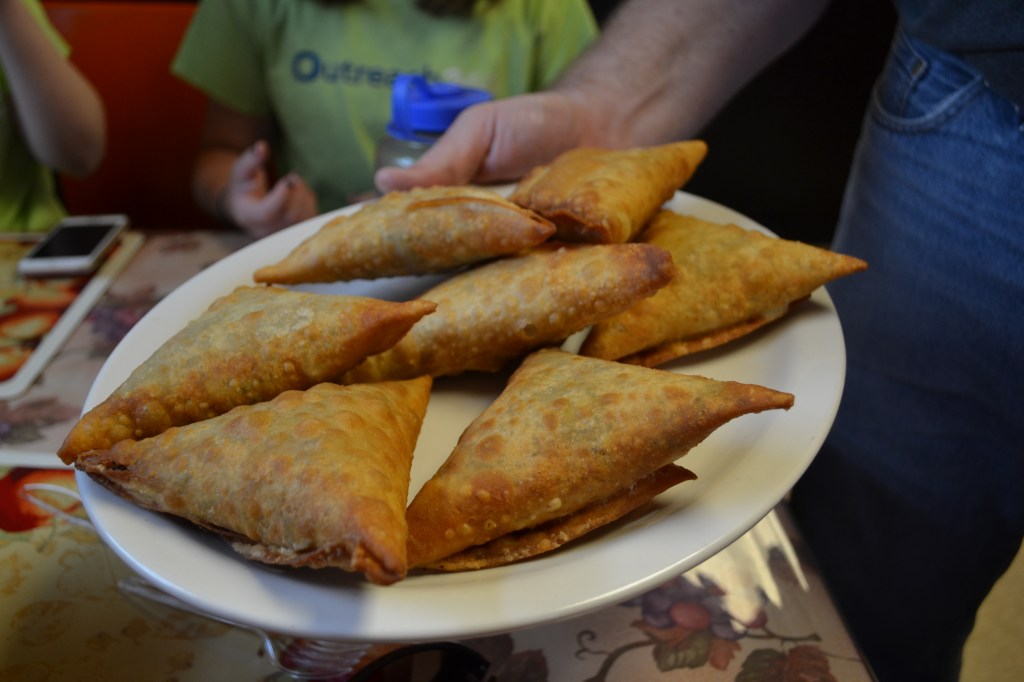
In 2017, I was not a new pastor.  I had been breaking bread, pouring water, and proclaiming good news for 9 years already.  But I was a new pastor to my church.  I knew I could probably gain more popularity with the teenagers there, and keep them coming around longer, if I took them to Six Flags or the beach.  But I didn’t want to.  I wanted to go meet my Somali neighbors in Lewiston.  I wanted to hear the story of how they came to be in my country, because I was as convinced then as I am now that this country isn’t mine, at least not any more than it is theirs.  Whatever their arrival story was, I knew my ancestors had one as well.  We all do.  And I knew then, as I know now, that my great-great grandparents landed on these American shores with a lot more pomp and circumstances than the Somalis in Lewiston did.  With a goodly amount to give, a lot of take, and not nearly enough asking.  With a lot more manifest destiny than would ever fit inside a sambusa.  So, I wanted to hear how far it was to Somalia, and how many boats they took, and how many checkpoints they crossed, and how many times they lost their family only to find them again, and how do you keep hope alive for that long?  I wanted to hear about their longing for home, and their longing to return home.  And most of all, I wanted the teenagers in my church to hear all this as well.  I wanted them to go to Lewiston, to eat sambusa, to wonder at the sound of the muezzin and marvel at the commitment of a people who have been stripped and scorned to stop on a dime and still pray prayers of gratitude to their God five times a day.  I wanted their young 13 year old hearts to be stretched by a single question: is it enough to be human?  

Is it enough to know that the same air which blows across the Somali desert, breezily lifting the wafting smell of sambusa there, is the same air that catches the wing of a seagull off the Arabian Sea?  Lands it on the rail of a cargo ship stockpiling Toyota parts, and then carries it across the Seven Seas to the rocky New England coast smelling of pine and…sambusa.  

Is it enough to know that no single vision for the world—not John Wayne’s, not MLK’s, not Sister Teresa’s, not even Jesus’s—can absolve anyone of the possibility of terminal cancer and the desire to understand why bad things happen to every sort of person?

Is it enough to know that in the spring, when the cherry trees have begun to blossom in the square, you can walk the Freedom Trail of Boston and pass through “Little Italy?”  There are no meat packers unloading crates down by the docks anymore, and the light in the steeple of the Old North Church has long burned out, but in a brick deli on Hanover Street, Guiseppe can still make a sandwich the way his mother did in Sicily.  “Can you believe it?  If Paul Revere were around today, even his horse would want to eat Italian!”   

Is it enough to know that no baby asks to be born, just as no baby knows where it is being born?  Only a mother knows, and every mother worries for the safety and whereabouts of the next meal for her children.  

Is it enough to know that when I was five, I, like Liam Ramos, was baited? Not by ICE but by three other hoodlums in a Pontiac offering candy.  I didn’t take the bait.  I wanted to.  They had candy for god’s sake!  But those were the days when a child could call out for their parent from the porch and, even if your daddy’s skin was brown, when he appeared, it was enough to make hoodlums drive away.  Now, both your skin and your daddy’s skin must be white.  A shade recognizably hailing not from a “hellhole country like Afghanistan but from a nice place like Denmark,” is all the President asks.  (Don’t take the bait, Denmark.  It’s just an old trick we play on the natives.  Turns out, we don’t want you, either.  Just your land.). Otherwise, both you and your daddy are going to get snatched up and thrown into a backseat where you’ll have to work overtime to remember you’re not the hoodlum.  

Is it enough to know that I am a father too, and all I want for my children is the same fate Liam’s father wants for his boy?  To be caught, yes, at the U.S. border, but to be told by the agent, go back home to Lewiston.  We enforce customs and it is our custom to protect the vulnerable.  

Is it enough to be human?

I went to Lewiston believing the answer was yes.  I listened for the call of the muezzin, I gave my lap as an altar for Somalia’s children to lie down upon, I ate every sambusa offered to me, found I was satisfied, and got my answer.  

But as U.S. federal agents descend upon Lewiston today, targeting some 1,500 persons of Somali refugee and immigrant status—barking deportation, stoking fear, pretending power, getting off on cruelty—I fear they are not waiting for an answer to this question.  I fear they are not even asking this question.  So we must ask it for them.  We must insist that one cannot be American, let alone make America great, if we ourselves don’t even care about being human.     

I have hope, though, that 250 years from now someone from Lewiston will be walking around their city and, going straight into a bakery, a man named Hassan will feed them on sambusa and a joke about Paul Revere’s horse.

A Light to See Better By

A couple weeks ago I went to see the eye doctor.  No pun intended.  The last time I went to the eye doctor was about four years ago.  That was also the first time I went to the eye doctor.  You heard that right.  At 41 years old, I had never gone to the eye doctor.  I guess I thought that if Mary could get pregnant and deliver a baby without ever going to an OBGYN, then I could go 41 years without seeing the eye doctor. 

Of course, I’d had my eyes checked many times before.  When I was a kid, they got checked every fall by the school nurse and then again in the spring by Dr. Killion, my pediatrician.  Given that I’d never worn glasses or contacts in my life, I assume I checked out each year.  That I was able to read all the way down to the seventh or eighth line on the eye test chart with no trouble.  But a couple years ago, I noticed the letters on the page of a book were getting a bit blurry.  Driving didn’t seem to be a problem, but reading was.  So, I went to see the eye doctor, who sent me to CVS to buy a pair of reading glasses off the rack.  “You don’t need anything more at this time,” he told me. 

Then, this fall, I noticed my eyes were feeling the way my legs sometimes do after I’ve been home sick on the couch for a couple days.  Achy.  Heavy.  Like they’re trudging through a dense fog and I don’t know if I can trust them.  Except I hadn’t been sick, and my eyes still felt that way.  I was noticing that they sometimes felt that way even after a good night’s sleep.  After being closed for eight hours straight, they still opened tired. 

So, I went back to the eye doctor.  He did a standard check-up, nothing fancy.  Turns out, I probably could stand to wear glasses all the time now.  But still, “Your overall eyesight is very good,” he reported.  “Why, then, do my eyes feel so tired all the time?” I asked.  “Probably because you’re seeing too much,” he told me.  “Seeing too much.  What do you mean I’m ‘seeing too much?’”  I was feeling a bit defensive.  “I only see what I have to to get through the day.”  “Do you?” he said.  I thought his tone was a little snarky and I let him know by giving him the silent treatment.  “I mean, David, think about how much you’re probably seeing every day.” 

I thought about the more than 50 promotional emails that I’ve been seeing hit my inbox every 30 minutes since Black Friday, and how quickly I scroll through them just to delete them.  I thought about how I don’t watch TV news anymore, but most nights, after I hop in bed and shut off the light, I still check the daily headlines on my phone. Swiping up and down, left to right across the screen.  How quickly the whole world comes to hop in bed with me all at once.  And why do I do this at 10 p.m.?  Did I really just shut the light off only to now turn another light on?  If I happen to read that another 100 children died of famine today in Gaza, am I going to hop out of bed and go to the grocery store to put together a care package for tomorrow’s 100 children?  Probably not.  I thought about how, just ten minutes ago, I was sitting in the waiting room.  “The doctor will be right with you,” the receptionist assured me.  The music playing overheard was lovely, an orchestra covering The First Noel.  I felt my body relax as it slumped into a chair.  So, what did I do next?  I told the receptionist I was going to step back outside for a minute to check my phone and see if I had any voicemail messages.  Standing on the curb, my eyes couldn’t avoid the sight of two cars stopped in the middle of the road.  There hadn’t been an accident, but the two drivers, jawing out their windows at each other about who was riding whose tail, were definitely in a collision.  My relaxed body was feeling like it needed to be taken home and put to bed.  Which I might have done if I thought I could trust myself to just turn off the light and not check the daily headlines. 

So, maybe the good doctor is right, maybe I have been seeing too much.

But here’s the thing: I’m not sure he, or anyone else, could convince me to see less.  Because what I want, of course—what I think we all want, and need—is not to see less, but to see better.  On this Christmas night, when we proclaim the birth of the One who was called the Light of the World, we can hardly ask to see less.  For Christmas comes bearing light.  Light in the darkness.  Light that no darkness, says the Gospel, can put out or keep out. 

In this way, Christmas comes as both good news and terrifying news.   Terrifying to anyone who might prefer to keep things, people, or themselves, in the dark.  The dark can be very useful and productive space for getting things done, especially if you are the only one who knows your way around in it.  Meanwhile, everyone else is left to wonder, and worry, at what you’re up to, what you might do to them, and will you ever turn the lights back on.

Darkness was the weapon Caesar Augustus and Quirinius used when they ordered everyone, including Mary and Joseph, to return to the places they had come from.  You can no longer live here.  You must get out.  No, it does not matter that this is your home or that you don’t have a home to go to.  Nor does it matter that you are nine months pregnant and life is already full of hardship and uncertainty for you.  Get out.  I will not be your neighbor, and you will not be mine. 

Joseph and Mary had to go to one of the most pitiful spots on the map, Bethlehem, where, as history records, there was no room in the inn.  But look out!  For Luke says she and Joseph arrived there and no sooner was it time for Mary to deliver her baby.  She had traveled long enough in the dark shadows of the powerful.  Now the powerful would be overtaken by a poor woman and her baby filling that darkness with the gentle light of courage, hope, and life. 

When news of the birth of Jesus reached Caesar and Quirinius, it must have terrified them.  Made them see that you can fill the whole world with darkness, but all it takes is a tiny, flicker of light to send the darkness running.

My friend, Jenny, says, The Christmas story shows us the worst of times and in so doing, shows us that God’s response to the worst of times is to say, Things don’t have to be the way they are.

The Christmas story, the story of Jesus Christ here among us, reminds us that we do not belong to Caesar or Quirinius, or to their darkness.  We belong to God who is Light that cannot be put out or kept out.  Remembering to whom we belong is a threat to those who really want us to believe that they are in charge, that they are the ones who hold the power.  But they aren’t.  They never have been.  And they never will be.[1] 

For tonight we dare to proclaim that Jesus, the one born to Mary and Joseph, placed in a manger, coming in darkness, is now, has been, and ever will be God of Glory, Friend to the Poor, Healer of the Brokenhearted, Light of the World, Emmanuel, God-With-Us, bending low to be among us.  See him now.  And have a very Merry Christmas.    


[1] Rev. Jenny McDevitt, from her sermon, “What Christmas Means to Quirinius: Threat,” preached at Shandon, Presbyterian Church, 12/16/25.

What Do the Blind Know of the Light?


What do the blind know of the light?
Whole days, every day spent in darkness.
The sight of their hand known only
by the way the elbow bends in, the arm turns up,
fingers stretch open, peel, release from clutch,
until the palm lays flat like a map,
every line a river, the edge of a hillside
in a country that bears their name,
the smell of all the day has touched
wafting forth like a vision of things adored.
The soap in the shower, the fresh cut mint sprig,
lovingly retrieved from May’s garden,
the splash of coffee from the mug
catching the edge of the counter,
the talcum powder smeared upon the baby’s bottom,
the residue of sweat, now dried and cold from
prayers made, answered, or left on hold for another day.
If you never saw a day in your life,
but I told you my name is Light,
and we spent all our moments in friendship,
would you cover your eyes from the brilliance?
Would you never count the seconds of sunlight that remain?
Would you take my hand, turn me to your face,
tell me I’ve never looked so good,
and smile at the sight of it?

Salvaging the Heart

We lost two more children this week, God.
And that’s the awful truth.
We lost them.
At 3 p.m. on Tuesday we knew where
they should have been.
Kicking a rubber ball over second base,
loitering in front of 7-Eleven,
taking up a collection among buddies
to afford a bag of chips,
scarfing down said chips.

We called their grandparents.
Maybe they’d gone there on their bikes.
But there were no skid marks in the driveway.
We opened their bedroom doors and
hollered their names.
No one called back, Here, Mom!

We lost them.

Their bodies we found in church,
10 feet back and 6 feet under
from where Jesus also lay dead.
After all these years you can still see Mary,
stone faced, keeled over at the foot of the cross,
looking up at her son like she refuses to
understand what he’s doing up there.
The Bush-league killed him.
(More awful truth.)
The government said they knew he was innocent
but it would be more convenient this way.
It’s a mob out there. Plus, you know,
right to assemble, right to bear arms.
Better to sacrifice one from across the river
than to piss off the natives.

I went to the Church of The Natives up the road to inquire.
I asked to see where the little Lord Jesus
laid down his sweet head.
They said, this is the Church of the Nativity.
He was only born here, he’s not from here.

No wonder we lose so many children.

Native. Nativity. Birth. Birthright.
A couple more or few-- letters so we can say
you’re not my problem.
I hope I’m never lost without food, money, or I.D. in Turkey.
No one will know they won’t die if they feed me.

On Sundays where I come from the priest
tries to tell us his body was broken for us
so that we could be whole or something.
But I’m starting to think that’s a lie.
We broke Jesus, and then we lost the pieces.

Not all of them, mind you.
We scrapped and sold what we could
to the highest corporate bidder.
Took the money and bought ourselves a
first-class ticket to Eden.
But the sign upon arrival said,
No Re-Entry.

Because we lost them.

Christ. Mary isn’t going to go
to Egypt without Jesus. Eve ain’t
returning to Eden without Cain,
and Abel too.
Home is where we learn to break safely
and be lost.
Until we find all the pieces, though,
home just won’t be home.
Mothers say so.

So, light the lamps,
release the hounds,
row across the Nile.
There are no shorelines tonight,
all waters are international.
The mission is to salvage
the heart.