One night a couple months ago my wife and I attended a kindergarten pre-registration session for my daughter, Lillian. You read that right. We didn’t actually sign Lillian up for kindergarten. We just heard about how to sign her up. It was the sign-ups to the sign-up. It was like the calm before the storm. (Why do we even speak of a such a thing—calm before the storm? Do we really think we can convince ourselves, as we’re running around boarding up windows, pillaging the shelves at the grocery store, that we are calm? I know we are really pointing to the fact that for at least a few more minutes we can sit on the back deck sipping lemonade, because soon, with hardly a warning bell, the heavens are going to rain down hell on us. Soak it up then. Stay calm and sip gently.)
But for those of us who tend to chug our lemonade unnecessarily, there is pre-registration.
Sitting in the auditorium of what will soon be Lillian’s newest adventure, I am giddy. There’s nothing eye-catching about the surroundings. The walls are darker than one would expect for a place that teaches children about ultra-violet rays and the colors of the rainbow. There is a carpet, which is the first sign that the room needs a make-over, or that someone hates the custodian. There are chairs set up on either side of the room, about 30 rows in all, and in between them a wobbly cart with a projector that is pointing at a dimly lit screen on a dimly lit stage. It’s all plain and simple.
A woman steps out in front of us and introduces herself as Mrs. So-and-So, the Principal. You can tell that she can’t wait to tell you whatever it is that she’s about to tell you. All she tells us about are bus routes, school lunches, and the PTA. Then she hands off the microphone to the school nurse to say a word about hepatitis shots and the need to pack an extra pair of clothes in your child’s backpack. (“Just in case,” she reminds us.) “We love spending the day with your children, getting to see the world with them, to teach them and to learn from them,” says the principal. I lean over to my wife and announce in a rather self-congratulatory way, as if I discovered her for the good of all humanity, “She’s great.”
After she is done speaking we’re invited to check out one of the four kindergarten classrooms. Right off I notice there are very few walls in the whole school. The library opens into the hallway, which twists and turns up a wide ramp to dump you out in the cafeteria, from which you can look out and see down into the gym. The individual kindergarten rooms are divided from each other only by partitions—corkboard walls on wheels. The walls of course are covered in ABC’s, lowercase and uppercase. There is a “weather wheel” that can be turned to indicate sun, clouds, rain, or snow. 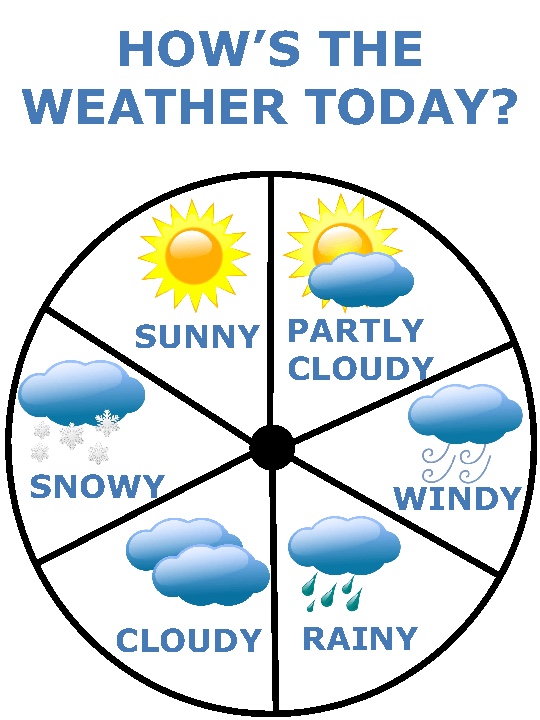 There doesn’t seem to be an inch of wall that isn’t covered by student artwork or the latest science experiment results. The teachers are there to ask questions, which they do in a manner so sure and sweet that if one of them had sat down on the floor right then and there, I probably would have plunked myself right into their lap for story time.
For a moment I close my eyes to see Lillian bopping around the room like it’s her own bedroom, complete with corners for napping, reading, and coloring. Meanwhile the sound of other children eating lunch and playing kickball wafts over the walls, filling her senses with the anticipation of things to come. She is free and safe from all alarm.
And yet, and yet, in that same moment one thought enters my mind like an uninvited guest at a party. Drunk, inappropriate to the occasion, I want them gone, but they are unavoidably passed out in the middle of the action, and no one seems able to move them or to ignore them. My eyes snap open. The thought is this: what if the school needs to go into lockdown? What if a crazy person with a gun finds their way in and all the children need to huddle behind closed doors? What then? There’s no doors! There’s no doors anywhere!
I’m not a pessimist. I go hard on myself for letting Bad Mind take over.
I realize that for every alternative available to me and my wife—homeschool Lillian, petition the town to send her to a school with doors, pay for private school, lock her away in a tower (I saw Disney’s movie, Tangled. Rapunzel did pretty well for herself in the end)—we’re not likely to do any of these things. For one thing, Lillian doesn’t have the hair to be Rapunzel. For another thing, if we haven’t figured it out by now, try as we may, no one gets total pass protection through life.
As Barbara Brown Taylor once noted in her short essay, Truth to Tell, “Sons and daughters of God are killed in every generation. They have been killed in holy wars and inquisitions, concentration camps and prison cells. They have been killed in Cape Town, Memphis, El Salvador, and Alabama.” We can sadly add to this list now Newtown, Kenya, The West Nickel Mines School, the mountains of Virginia, the streets of Boston, and the church pews of South Carolina.
It would seem there are at least three ways we can respond to this truth. We can open our eyes without actually seeing what’s before us. We can pretend none of it is happening at all. Stick a lollipop in our mouth, skip on down the street, and see only the silver linings on every dark cloud. Some might call it optimism, others, hope. Either way we have failed to recognize that hope alone won’t put a cup of water in the hands of a thirsty person. That neither right thinking nor right belief leads to right actions.
So we might instead admit defeat and just close our eyes in despair of it all, which, like wishfulness, is as equally shortsighted as it is unhelpful.
Thankfully, there is a third option. I couldn’t come up with it while touring Lillian’s school, but it came to me rather innocently a few days later while sitting in church. It was Palm Sunday and I was sitting in the pews, which might not sound all that unusual, except for me it was. For almost a decade now I’ve been used to sitting up front in church. Actually, not just up front but front and center, and alone. As the preacher or liturgist or both, I’ve always maintained a well protected perch from atop the pulpit or behind the communion table. Donning a black clerical robe, the idea was never to stand out as being more important than the masses. Rather, the purpose of the robe is to ensure that the masses can easily pick out the one person among them who no matter what will sit on the floor with their children or sit with them in the hospital waiting room, the one person who will lead the march to justice and the prayer for mercy.
These days, however, I’m working as a hospice chaplain and sitting in the pews. It’s not as roomy as sitting on a 36 inch wide, double cushioned chair up front all by myself. Nor is it as quiet. But sitting in the pew listening to the story of Palm Sunday, I realize that where we sit and who we sit with has everything to do with how we hear the story, and what we’ll decide to do next once the story is over.
If you’re a child, the story of Palm Sunday is just a parade, and the finest one around. For one thing, the street vendors don’t charge for their trinkets. Not only are they handing stuff out for free, but you have to take it, which is a dream come true for every boy and girl whose parents have only ever said no to spending $10 for a bag of cotton candy or a whirly light-up thingy. This time there is no saying “no.” Everyone gets a palm tree branch to wave in the air. Not only this, but the rule of the parade is you have to yell and cheer as loud as you can for those marching in the parade. No one is allowed to hush another person today.
“Hosanna, blessed is the one who comes in the name of The Lord.” When you see the guy riding on the donkey, scream it at the top of your lungs, the parade-directing-preacher directs us.
This is something only children will understand. The politician wearing a suit and the veterans decked out in medals and flags are all respectable, but they’ve also become predictable. That we cheer for them both, sometimes with the same levels of enthusiasm, is a misappropriation of history and of hope, but the guy riding on the donkey, what’s he up to? He’s clearly not running for office or heading off to fight yet another war. What’s he done lately to merit applause?
According to sources he’s been accepting a number of invitations to dine at some of the most respectable establishments in town. Cocktails with elite academics who recently published groundbreaking interpretations on vexing moral questions, now local best-sellers; hors d’oeuvres with party leaders; dessert with religious power-brokers. Except on every occasion it would seem the dinner gets interrupted by someone who has decided to kick the door in because they’ve had enough of not making the guest list. It’s usually a woman of the shunned variety. Divorced, maybe it was her doing, maybe it wasn’t. Times being what they were, it didn’t matter, no one was likely to ask for her side of the story anyway. She’s got a letter cut across her chest now and no man is going to give her his love again, let along an arm to escort her into a party. She’s poor in pocket and in spirit.
Or she was never married. After years of not being able to make it happen, her father did what he could, though not what he should, and sold her off to another family. On that day she became a disgrace, doomed to wander forever from door to door in search of herself. But when she hears there’s a party going on and that Jesus is at it, she figures there must not have been a guest list and that she can just show up for this one. After all, if a guy who would ride around on a donkey can get in, how can she not?
But sitting down at the table next to Jesus, everyone just stares at her. To most she is just an object to be examined, labeled, and put in a corner for safe keeping. It’s not that she’s not safe in this crowd (though she’s not, not at all). It’s that no one feels safe around her. She’s a threat to their ideals, a discomfort to their every comfort. So they stare at her as if to say, “We see you there. Now don’t you dare try to move.”
To them Jesus has but one simple instruction. “Look at her. Soak her up. Take her in, into your arms.”
For to see someone is to acknowledge their presence, but to look at them is to see with the eyes of the heart…
To see not just what we can handle, but to allow ourselves to be handled, to be gripped, moved, by what we see…
To allow ourselves to be seen in return…
To see not just as we feel, but also as others must feel…
To see feelingly.
Sitting in church I realize this is the third option I’m going to need to get Lillian through kindergarten: GOOD, HARD LOOKING.
As far as the parade goes, it’s over and the man who rode upon the donkey has been taken down by a terrible alliance between heartless religion and feckless government. The accusations are several, but top of the list is that he cared too much about the woman and everyone who ever has been, and everyone who still might be, robbed by indifference. The cheering crowds now yell for his scalp. But listening to the children in the pews, they’re still cheering hallelujah. In fact, they’ve slipped onto the floor and are rolling around, tickling each other on the back of the neck with their palm branches.
“Shush,” I hear one mother say. “Don’t you hear what’s happening in the story? This is a serious moment. Jesus is about to be killed. This isn’t a happy moment.”
My own child looks up and passes me an animal cracker. “Here, want one?” For a moment I wonder why the children don’t seem to see what I see. Then I wonder if the truer matter is that I don’t see what they see.
Martin Luther King Jr. once said that,
“One day youngsters will learn words they will not understand.
Children from India will ask:
What is hunger?
Children from Alabama will ask:
What is racial segregation?
Children from Hiroshima will ask:
What is the atomic bomb?
Children at school will ask:
What is war?
You will answer them.
You will tell them:
Those words are not used anymore
like stage coaches, galleys or slavery
Words no longer meaningful.
That is why they have been removed from dictionaries.”
I don’t know what words Lillian will and will not learn in kindergarten. I don’t know what to do about open schools with no doors or locks—such crosses we bear. The children of God have been killed in every generation. I do know that in such places there is no telling who you’re going to end up sitting next to. They might be friendly. They might threaten your life, and these are the ones you really want to take a good hard look at, and to try with all your might to love.
 PleaseGrace