I’d like to give you two things. The first is a word, just a single word. It’s not a typical word for you. It’s not hope, faith, or love. Those are good words; heartwarming words. But I don’t think they’re enough for you today. I want to give you a word with a little more backbone. The word is: plucky.
Merriam-Webster’s Dictionary defines it as having or showing a lot of courage or determination: plucky. Notice, you don’t have to have a lot of courage or determination. It says you can be plucky by just looking the part. I don’t know if Mr. Merriam and Mr. Webster were psychologists or sociologists, but they knew enough to know that the line between who we are and who we want to be, between having courage and not having courage, is very fine, a matter of mere appearances at times.
These days I’m watching my four year old learn to ride his bike without training wheels. For sure, he’s had his fair share of falls and skinned knees. But the other day he seemed to get it and I yelled out, “You’re so brave!” To which he responded, “I’m so scared!” But there he went, down the road without his training wheels. Was he being brave or scared?
I’ve heard this line before, mostly in movies, when some old guy says to some young kid, “You got real pluck.” Like, you’re a class act, the real deal, and I’d think, I want to have pluck. Because people with pluck are people who, seeing what they want or seeing what needs to be done, rush in and get the job done. The firefighter plucks a child from the fire. The child plucks a feather from a bird. Of course, if we want to say that the firefighter and the child have pluck, we must also admit that the bird has pluck. This is what I really want you to know: a person with pluck is someone who has endured a great loss. To have lost an essential part of yourself—a feather, a loved one—to have been ripped apart, and to come out clean on the other side, is nothing short of courageous.
Granted, this is more easily said than done, for being plucked requires being scarred, and scars are eternal memories. Sit with them, walk towards them, run from them, do none of this or all of it at once, “the weak,” said Gandhi, “can only remember. Forgiveness is the attribute of the strong.” Indeed, remembering can be hard. It takes work and honesty. Sometimes our memory plays tricks on us. We think back on our loved ones and sometimes we see them as having been better or worse than they really were, and this causes us to see ourselves as having been better or worse than we really were, and are. I’m not saying this is a good thing or bad thing. It just is what it is. To have lost an essential part of ourselves makes some of us feel…lost, while others of us finally feel free. Treat that part honestly, though, and you treat it honorably, mercifully, and you come out clean on the other side of remembering.
One of the oldest stories in all of literature is that of Noah and his ark. In a world is so full of grief, disruption, and a hopelessness that not even God can bear anymore, God decides one day to wipe it all out and start all over. (Sometimes that is necessary, I guess.) But at the last second God has a twitch in the heart and God thinks it over again. “No, no, there must be something worth keeping here. Nothing is a total loss.” So God finds an old man, a relic named Noah, and God tells Noah the plan.
“Build yourself a big boat, Noah, and collect 7 pairs of every animal and creature there is and get them on board. It’s going to rain.”
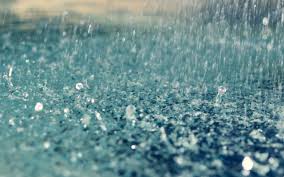 So Noah gathers the moose and the mosquitoes, the leopards and the llamas, and along with his wife and kids they get on board just as the rains begin to fall. 1 day, 2 days, 8 days. At first Noah can still hear the world moving about outside, but after 20 days, 30 days, all fades to silence. His wife and kids tell him that life will go on. “Eat this, take a walk around the lower deck, you’ll feel better.” On the 37th day Noah notices that it’s still raining, just not as hard. On the 40th day he pokes his head out a window but nothing looks familiar. (Just because the rain has stopped, just because death has come and gone from your world, doesn’t mean the signs of death don’t remain.) As Noah looks out on his world, flooded with brokenness, he feels like dying himself. In that moment a thought comes to him, though. It’s the thought of all that is still with him. He reaches back inside the ark and grabs a raven, and holding the bird out into the air, he lets it go. (When we cannot see any signs of life ourselves, we would do well to let others go looking for us.)
Except the bird returns. There is no dry land anywhere. No sustenance, still no way out of the deathtrap.
So Noah waits a few more days and sends the bird out again. But again, the bird comes back with nothing to show for.
So Noah waits yet a few more days and then sends that bird out one more time. This time the bird returns with an olive leaf in its beak. A sign of life coming back around.
Now I don’t know what you would have done at this point. Dropped the ramp to the ark immediately, run off to kiss the ground? Hopped on the back of an elephant to dive overboard? There’s a Jewish folklore that says Noah waited almost 2 more months before disembarking, and even then, he let everyone and everything else get off ahead of him. I don’t think it was because he was chivalrous and kind. I mean, from the beginning of the story God has said that the whole point is to start over. Send a flood, wipe the slate clean, we’ll get it right the second time. Don’t you think then that if you were Noah, staring at a world about to be reborn, you might question God’s selection process? You might wonder whether you’re the right guy for the job? Don’t you think you’d live the rest of your life peeing your pants every time there’s a passing shower? Not to mention the questions, the questions and the confusion you might have about God and the universe and why some get life while others get death. If I were Noah, I’d still be on that ark.
But old Noah, he does get off. Maybe he knows that questions about death can usually be answered only in life, so you might as well get on with it. Maybe he decided that if God was willing to take another chance on him, he could take another chance on God. Maybe the feeling of a rock in his hands and the 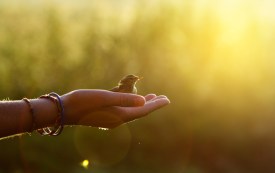 sight of a rainbow in the sky was simple answer enough. Maybe the smell of manure and chicken feed was simply getting to him.
I don’t know why Noah gets off, but it must have had something to do with pluck. Anyone who is willing to open the window and stick their hand out there not once, not twice, but three times—to give that bird, to give life, that many fighting chances—you got to have pluck. I dare say, anyone who is willing to hold their own hand of grief out and offer it to others as a sign of life, you’re the bravest group of people I know.
 PleaseGrace