Ash Wednesday. What does the name mean to you? If you didn’t know that on this day, millions of Christians around the world—from Catholics to Protestants, Baptists to Episcopalians, Rhode Island to Russia—put ashes on their foreheads in the sign of the cross to remind ourselves that we belong to the God who through death gives life, what would you think this day is all about?
Two words: ash and Wednesday. Ash is the image of gray, of black. It is color without being colorful. It is what’s left over after the fire. After the house and everything we have loved and worked our whole life for is burned up.
After the cigarette we’ve been dragging on all day long—to distract ourselves, to calm ourselves, to keep ourselves from having to deal with what’s hard—after we’ve run out of easier and better options, ash is what’s left.
After this life is over, at 5 or 95, and our last breath has escaped us, and the friends and family gather around to sum us up in eulogy and song, and the preacher says, “Into your hands, Almighty God, we commend your servant,” ash is the part of us that gets lowered into the ground, or spread to the wind.
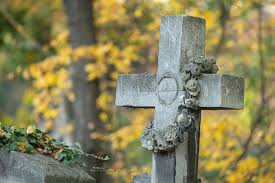
Ash is what remains of us when nothing else does. When all the identifying markers have rotted to bone, and bone has deteriorated beyond recognition, ash is that part of us that goes out into the ether, and becomes one again with the earth.
Wednesday is that day of the week we work so hard to get to, and then to get over. Hump Day. It’s not the beginning, or the end. It’s just, the middle. It’s not Sunday or Monday—full of newness and possibility. Nor is it Friday—full of relief and completion. It’s just Wednesday. To make it even less significant, less wanting, today we call it Ash Wednesday.
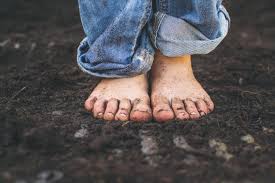
It shouldn’t surprise us, perhaps, to discover that the setting for Ash Wednesday is the wilderness. For like Wednesdays, the wilderness is just out there, in the middle somewhere. People who find themselves in a wilderness will struggle to know which way they came from, or which way they are going. The land can look vast, empty, and desolate, with few signs of life, and no road signs to follow. Whatever regrets we have about the past are just that. We can’t go back now. We’ll have to deal. Should I turn to the left or to the right? Which way is north, and which way south? Stuck in nowhere land, we sit down in the only seat available—the ground itself—to think about who we are, and what we’re becoming.
The ground, of course, is the place of our ending. It’s the ash heap. And yet, the fact that we are here, that we are still pulsing, tells us that we are not ended, and the ash heap may be good for more than just endings. It may also be good for beginning again.
So sit down today. Right where you are. On the ground. The same and only ground everyone else has to sit on. Sit deep. Feel the cold, hard ash of the earth. Know the embrace of God our Maker. And give thanks that this is the place, and this is the time, and this is the stuff of our redemption.

 PleaseGrace