Ah, summer in New England, where no one lives too far from the beach.
For the record, I’m not much of a beachgoer. I prefer life under a pine tree, my feet dappling in a cool stream. Even my favorite beach chair is my favorite only because it smells like smoky campfire and bug spray. Sand between my toes, salt making my hair feel like dried pasta—it’s simply not my jam. And yet, that blue horizon line stretching my eyes out, and my mind too. “How many loves might there be in the world?” Mary Oliver once asked. Who else is out there, my whole body wants to know, just on the other side of that line, which is no line at all?
“How many loves might there be in the world?”
“On the Beach,” by Mary Oliver
If there is something I love about the beach, it’s low tide. When it’s high tide, and you’re sitting with your back almost against the parking lot and your feet almost in the water, it’s hard to imagine that in three hours there will be half-a-mile of open beach before you. I don’t know why this is so hard to imagine. The tides have been swapping places without fail for billions of years, and not just on the beaches of Cape Cod in July but also on the frozen shores of Antarctica in January. People can attest to it; if they could talk, penguins, narwhals, and seagulls could attest to it. Why then is it so hard (for me at least) to imagine that just under the cover of this dark liquid mass will soon appear a soft brown earth?
I don’t think it’s for an actual lack of imagination on my part. When I try to catch a wave on my bare belly and the wave instead catches me, pushing me under, tumbling me into something hard and unforgiving, I don’t have to imagine I have just met a rock. I know I have. I don’t need the tide to roll out so I can see it to believe it. Just as I don’t need a low tide to know where the soft sand is. I just need good working nerve endings in my feet.
So, why is it so hard to imagine the possibility of low tide where there is only high tide? I think it is the powerful ease with which the tides turn that makes it so for me. I think it is the way in which the high tide doesn’t bust through the door to drag the low tide away; the way in which the two do not compete for space on the shore.
After a recent day at Mayflower Beach on the Cape, I was trying to describe this phenomenon to a friend. At Mayflower, the amount of water that is dispersed to make room for low tide is quite remarkable—enough to create 2 more whole beaches. My friend remarked that it must be a good place to find treasures left behind by the tide. It is. Snails perfectly at home on barnacles of gray, black, and blue; stray pieces of seaweed, floating gently by in a maze of tidal pools where babies splash about, happy to be on the ocean floor; pen shells, cone shells, bivalve mollusks that have been split open to reveal another pearl gone missing, and cockles who seem intent on keeping to themselves, even as children come by to put them in their plastic red pails. Why just a moment ago all these were sitting at the bottom of the great Atlantic, and now they are not.
I wonder, though, have all these treasures been left behind by the tide or are they treasures for having resisted the tide? Does the high tide say to the periwinkle, as it’s heading back out to sea, “Don’t mind me if I wash over you on my way by. For you see, I have no choice but to go. It is simply my time. But I promise you, in going, I will not wash you away.” Or does the high tide try to take the periwinkle with it? A final push for power, or of love, or both, on the part of the high tide.
For all our imaginings, we will never know. But this much is true: when the tide rolls out to sea, nothing is lost. For with every low tide, there is some distant shore—and a periwinkle—that has been waiting for the tide to roll in. Plus, this: the tide seems to have a way of always making its way back to the other side, to the place from which it came. Or is it the place to which it is going?
It is one of the agreements the earth has made with itself and keeps to this day: to not fight with the universe, but instead to let the universe in; to choose change over destruction. And look at how the universe responds—pulling back the tides, only to give them back again. A reminder that change is neither permanent nor avoidable, just good and trusting.
The
Heart is right to cry

Even when the smallest drop of light,
Of love,
Is taken away.

Perhaps you may kick, moan, scream
In a dignified
Silence

But you are so right
To do so in any fashion

Until God returns
to
You.

- Hafiz (1320 - 1389)
THREE weekends ago, Moira and I traveled to Washington, D.C. On Saturday, we retreated from the humidity by touring the National Archives. Neither of us had ever seen the original hallmark documents of our country before. To stare at the Declaration of Independence and U.S. Constitution, both visibly faint from time, was mesmerizing. It made me think about how hard we have had to squint at times to keep the principles of life, liberty, and the pursuit of happiness in view. Ever since our founding, these have been hard for some to see their way to, and hardest of all, perhaps, for the powerful and privileged to see at all. Despite all appearances, those who enslave another human being are enslaved themselves, for until we truly do unto others as we would have done unto us (and even better than that), we will never be free. Chariots swing down into the low places, not the high ones, where everyone can get on board, the old spiritual tells us.
In a room just down the hall from the Bill of Rights we found the Emancipation Proclamation. Penned by President Lincoln in 1863, I remember reading once that Lincoln was not the great full-throated emancipator history often hails him as. Though morally opposed to slavery, Lincoln campaigned on a promise not to interfere with slavery in the south. For Old Abe, preservation of the Union was always his aim. And, not believing it could be preserved without compromise, and seeing compromise as the prescribed way of the Constitution anyway, Lincoln never figured on freeing the slaves. At best, he would work to form a more perfect union by keeping slavery from spreading into any new states and territories, all the while keeping faith, as he liked to say, that right would ultimately make might.
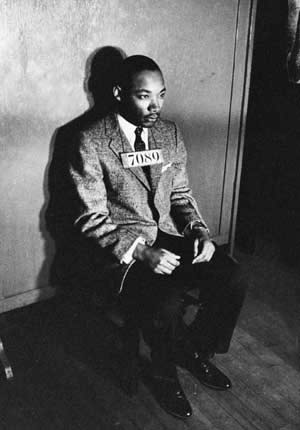
It seemed like no coincidence at all to find on the opposite side of the same wall as the Emancipation Proclamation articles and pictures pertaining to a letter Martin Luther King Jr. once wrote from a jail cell in Birmingham, Alabama in 1963. Lincoln may have said, “All persons held as slaves within any State or designated part of a State, the people whereof [being] in rebellion against the United States, shall be then, thenceforward, and forever free,” but it was MLK who, 101 years later, found himself saying,
“We know through painful experience that freedom is never voluntarily given by the oppressor; it must be demanded by the oppressed…. For years now I have heard the word “Wait!” It rings in the ear of every Negro with piercing familiarity. This “Wait” has almost always meant “Never.” We must come to see…that “justice too long delayed is justice denied.” We have waited for more than 340 years for our constitutional and God given rights.”
“Letter from Birmingham Jail,” 1963.
Lincoln started out his presidency believing it better to preserve the Union than to force an end to slavery, even though Lincoln opposed slavery in every way. I have often wondered if MLK would have accused Lincoln of being one of those white moderates more intent upon order than justice. My guess is, Lincoln was a hopeless optimist holding out for those better angels to show up and do their thing down south. In the end, when the southern states seceded from the Union anyway, firing upon federal troops at Fort Sumter and setting off the Civil War, Lincoln headed off to battle with a new aim in view: emancipation. That he was acting as Commander-in-Chief to defend national honor, to force what he called southern rebels back into line, and to bring an end to war as quickly as possible, were all givens, but he also saw no reason now to wait any longer to do what should have been done all along, and which was not going to get done any other way. For Alexander Hamilton Stephens, Vice President of the Confederate States, had already made this much clear:
“Our new government is founded upon the great truth, that the negro is not equal to the white man; that slavery—subordination to the superior race—is his natural and normal condition.”
From a speech delivered on March 21, 1861, in Savannah, GA, called “The Corner Stone Speech.”
This view was nothing new, it had already been trumpeted a few years earlier by Chief Justice Roger Taney who, handing down the verdict in the infamous Dred Scott Case, stated that no member of the African race, no matter where they lived in the United States, would ever be considered a citizen. In other words, if you are a slave, you can escape to freedom, but you will still not be a citizen. And, if you have never been a slave, if you have always lived in a free state, and thought yourself to be a citizen, well, you are not. (For a full reading of the verdict, visit https://www.archives.gov/milestone-documents/dred-scott-v-sandford). More than a judicial verdict, Taney’s words revealed a sentiment—a sad truth—that was shared by millions of white people in the United States in 1858: to just be human is not enough, you must be white. All others are mere property, ineligible for the rights to life, liberty, and the pursuit of happiness.
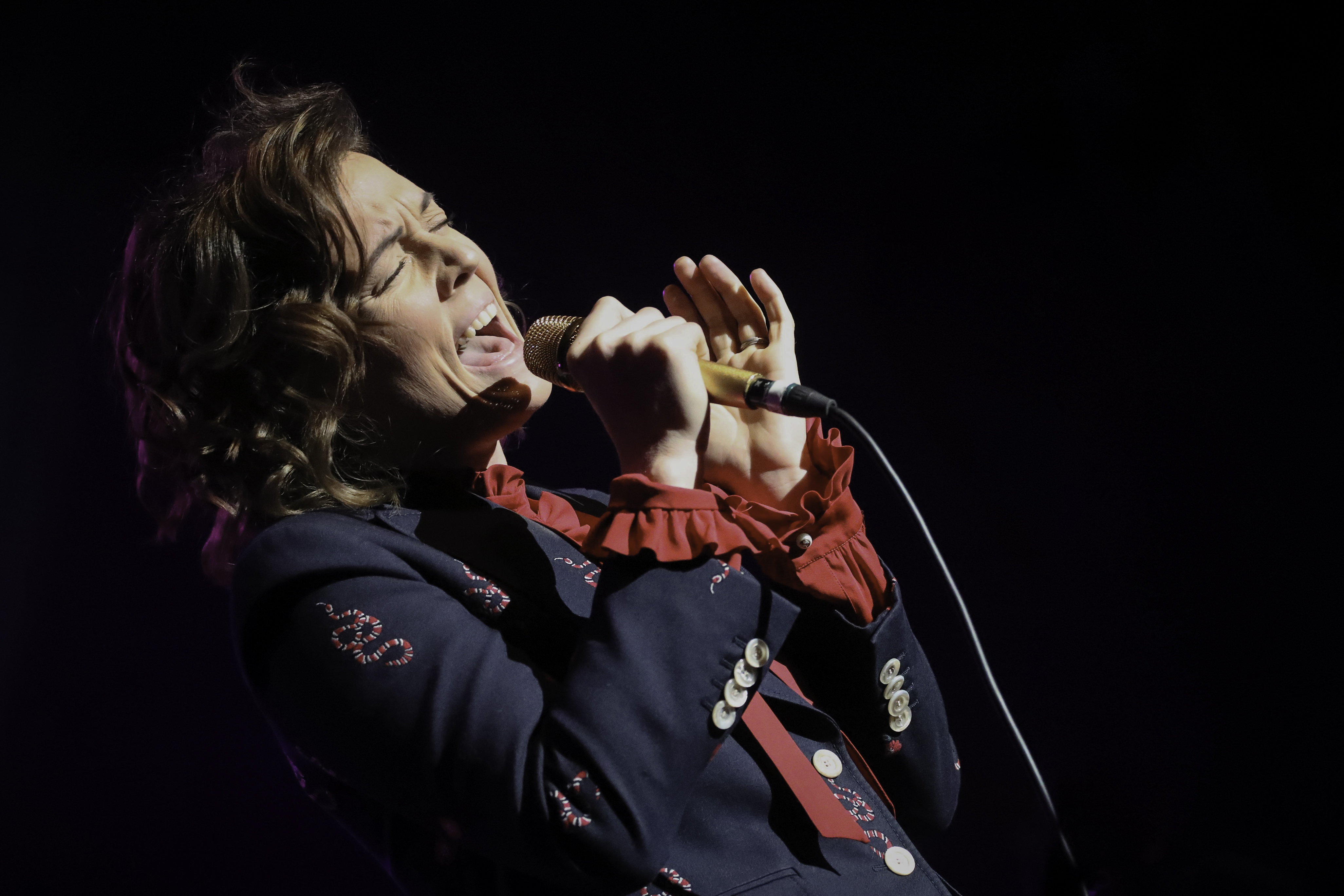
That night, we went to Wolf Trap National Park for the Performing Arts to see Brandi Carlile perform. We have been Brandi fans for many years. We love her music, we love her voice, and we love that she uses both to tell a story—her own and that of the LGBTQIA+ community. When we bought the tickets back in March, we didn’t notice, or simply didn’t look to see, that she was performing as part of a larger music festival, The Out and About Festival, the first of its kind being hosted by Wolf Trap to celebrate Pride Month.
At one point between songs, Brandi paused to catch her breath and, at the same time, to say thank you to Wolf Trap for stepping up at a crucial moment in time to provide a safe space for LGBTQIA+ people to gather in celebration of their lives. “It is also good to see so many straight people here tonight,” she added. “We all need allies.” I hadn’t thought of myself as an ally. Until we arrived there that night, Moira and I didn’t even know we were showing up at a Pride festival. Plus, there was a time when I wasn’t an ally, I was an enemy.
Growing up, I can’t say I remember ever meeting someone who was openly gay. Then again, from church to home to friends, all my circles had been closed off by codes and labels that called being gay “wrong,” “bad,” “ungodly,” “sinful,” and “anti-human.” I can’t imagine any gay person ever feeling safe enough to open-up to me. On one hand, I had been taught that being gay was like being sick. You didn’t want to catch whatever was going around. On the other hand, you also had to help the person who was sick, because this too was part of the code. “Hate the sin, not the sinner.” I ate it up like baby food off the end of a spoon. Conversion Therapy, it would come to be called; the idea that being gay was not natural, and so was also immoral. But, like any chosen lifestyle, being gay could be un-chosen, and I, as someone who was straight, could and should help to convert the sinner. Granted, I was not, nor am I now, trained to do any kind of therapy. Of course, this never stopped me from thinking that if I ever did meet someone who was gay, I could do a job on them.
I don’t know where this idea came from, that being gay was just not the way a person was supposed to be. But I believed it was true, true as the words on the page of my Bible, which told me one should also not lie, murder, sleep around when married, or do any number of other things so worthy of damnation. Never mind that my Bible also tells me snakes can talk, people can live inside fish for days on end, that it is okay to throw rocks at women (though not at men) who have slept around when married (and some of these I have actually met), or that what little holy writ there is on being gay is so contextualized, and has become so institutionalized, that lifting it straight off its page and applying it like a sticker reading Truth is a bit like telling a frog it’s really a tadpole and it ought to act accordingly. Such treatment of another living creature is not therapy at all. Nor is it “saving,” as some in their religious fervor have called it. It is the opposite of saving. It is cruel disdain for dignity, abject killing of the soul, a denial of this great truth: FOR JUST BEING HUMAN, YOU ARE WORTHY.
A few years ago, a woman from the church I grew up in stopped by to see me in my office at the church where I now work. She said she had fallen out of love with our beloved church and was looking for a new place to call home. I could tell she was looking for some reassurances, namely that I hadn’t changed (she was about to be disappointed). “You don’t let gay people be gay here, do you?” Her angle of assumption was that she didn’t see a rainbow flag on the lawn, and this, “I know how you were raised.” I didn’t know how to tell her that I was now grown up. “You and I still read the same Bible, and I know how much you love that book, because I do too, but I was wrong to let it make me fearful of another person. I was wrong to let myself be convinced that God cares more about definitions for love than about how we love.” She walked out of my office that day looking, I thought, sad.
What does it say about an individual, a people, a nation, if we say we care more about morality than mercy, but our morality causes us to hate and kill? If we seek order and the preservation of union more than justice, but our union is exclusive, and therefore must be protected? If we lay claim to being one nation under God, but our God is only big enough to cover some in love and care?
I want to be like Moses, who climbed a mountain to see what light burned yonder, only to find it was God in a bush, burning yet never going out. How unorthodox of God to appear in a manner that invites us to wonder, beckoning us to take off our shoes and draw near. As if God might be no less obvious than a cool stream on a hot summer’s day, and no more obvious than the people and places we’ve written off and run away from. “Go back to Egypt,” God tells Moses from out the bush. Moses tells God he doesn’t want to, probably because it will mean having to return to his past to face his fears and misdeeds.
In modern day Germany, they have a phrase for this—Vergangenheitsaufarbeitung. It means, working-off-the-past (thanks to Susan Neiman and her recent book, “Learning from the Germans, Race and theMemory of Evil” for introducing me to this phrase and its rich meaning). For Germans, this work is specific to the atrocities committed by their people during the Holocaust, when they murdered millions of fellow humans for being Jews, gypsies, gays, disabled, or just unwanted. Like slavery, or white supremacy, or genocide, or prejudice itself, one can choose to turn a blind eye, to say, that was then, this is now. In other words, I am not responsible for what other people have done or continue to do. At the heart of Vergangenheitsaufarbeitung, however, is a commitment to seeing ourselves as belonging to each other. Bound together maybe not by common place or time, but inheritors nonetheless of what our ancestors have left behind, destined to become ancestors ourselves someday.
“An open reckoning with [the] past is a crucial step toward maturity that will allow us to envision a full-bodied future, for a grown-up relationship to one’s culture is like a grown-up relationship to your parents. We all benefit from inheritances we did not choose and cannot change. Growing up involves sifting through all the things you couldn’t help inheriting and figuring out what you want to claim as your own—and what you have to do to dispose of the rest of it.”
“Learning from the Germans, Race and the Memory of Evil,” p. 39.
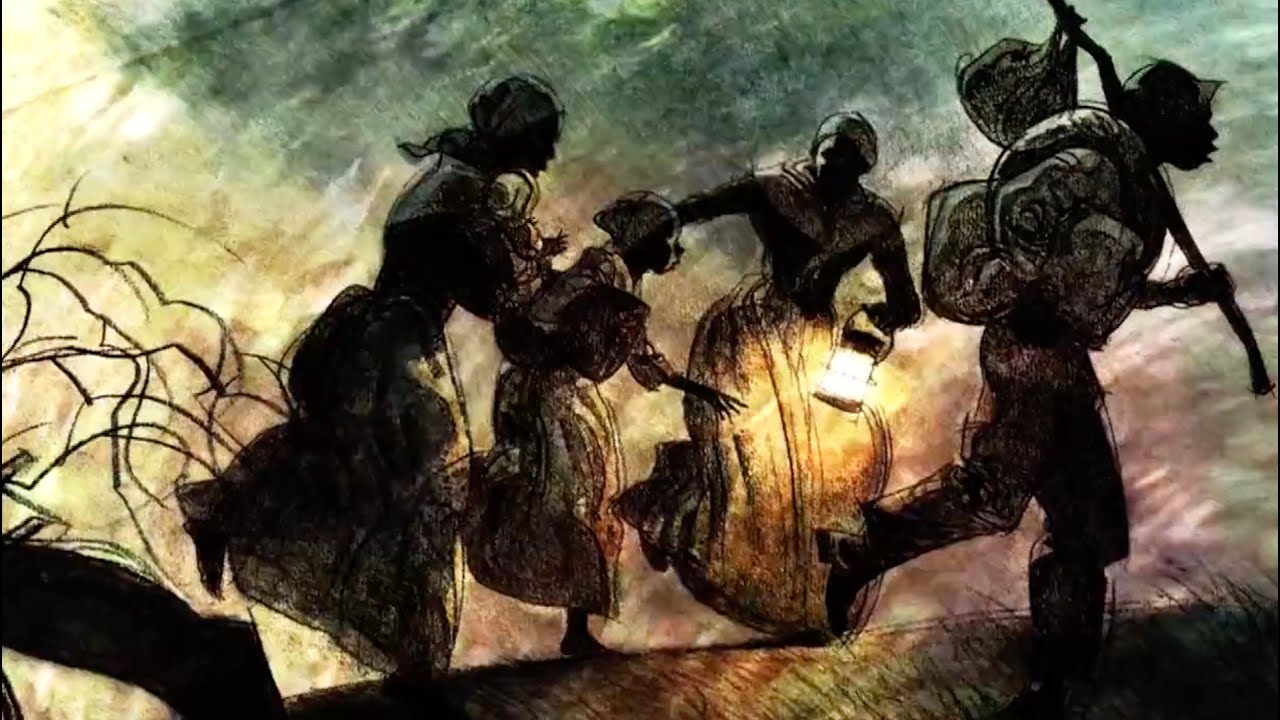
On the ride back to our hotel after the concert, I was thinking about the people who gave refuge to escaped slaves along the Underground Railroad in the mid 1800s in the United States. Often moving under cover of darkness, the trip was fraught with danger for slaves. You might come upon a home or church thinking you’d be taken in and protected, only to discover the people inside, though Christian in name, were Christian only in name, and they would just as soon turn you over to the law than to risk their own reputation and protection under the law. So, it became necessary to have signals along the route–a light set in the window–to let slaves know they could come inside, no one was going to hurt you. You are among friends, we are allies.
The long road to freedom stretches out still today, and I have seventy times seven apologies to make to those who are left to travel upon it without any signals of hope from me. But no longer. For now is the time to put down our guns and take up our crosses, to run up our rainbow flags, light a fire and pass our peace pipes, to gather on our kneeling mats and face the sun together, to put a candle in the window of our homes and declare that God is Love and Love is God and if we have love for one another then all shall be well.
Before there was Independence Day there was July 4th.                                          Before there were countries there was Mother Earth.                                                 Before there were fireworks there were
trees blazing with oxygen from which we took our life.

Pledge allegiance to the flag.                                                                                               Pledge allegiance to God.                                                                                                             Go ahead, everyone needs something to stand up for and to.                                                           Say you are free because you are American,                                                                         then kneel at the cross,                                                                                                               enter your temple,                                                                                                                     declare your right to kingdom.

But oh Sweet Land of Liberty, do you not know that                                                       the crucified have no kingdoms?                                                                                          They render themselves unto neither God nor Caesar.                                              They are rendered unto death,                                                                                                                                           by those who think
the forsaken are crying out for someone else.

America, stop singing for God to bless you.                                                                    Listen,                                                                                                                                                 the forsaken cry out to you.                                                                                               Render life, blessed life.




 PleaseGrace