
He put before them another parable: “Let the weeds and wheat grow together…”
-Jesus of Nazareth, 1st century.
Jesus is preaching another parable today. Did you know there are many ways to preach? It doesn’t always have to be from a pulpit, or in some holy church or temple. The sermon doesn’t always have to have three finely tuned points, make your heart sing, or your feet to dance. For Jesus, the great majority of his sermons took place on a whim. While he was walking along the beach, or sitting on a hillside of flowers, or observing some token of human kindness, or human suffering, and he would say, You know what this is like? This is like the kingdom of heaven. And then he would go on to tell a parable, a story about how a farmer sowing seed is like heaven, or how a shepherd searching for one lost sheep is like heaven, or how an employer who pays the last hired worker on the day the same wages he pays the first hired worker on the day is like heaven, or how one person showing mercy to another person, no matter much bad blood there is between them, is like heaven. Signs so visible and ordinary to the world that if someone didn’t point them out to us as being of God, we would miss them. But point them out and everyone goes, “Oh, I get it!”
Or not.
There’s a reason Jesus told so many parables. It may have had something to do with the fact that he just liked them. Like a writer who prefers writing poetry over novels. But more likely, the reason Jesus worked in parables so much is because no one ever understood them. In fact, not only did people seem to struggle with the meaning of his parables, but the closer you were to Jesus, the more you heard them, the less you seemed to get them. Now you would think, for this reason, that Jesus might have changed up his methods, tried preaching in iambic pentameter, or setting his sermons to parody. He couldn’t have liked being misunderstood any more than his listeners liked not being able to understand. But no, he just kept right on with his parables.
We can imagine, then, that when he put before them another parable, everyone in the congregation shook their heads in dismay. “Ugh, not another parable.” We can also imagine that people might have gotten up and walked out, headed down the street to find a different preacher, one who doesn’t preach in parables but instead gives it to you straight. I mean, seriously, why does Jesus preach in parables? Hold that thought for a moment while we consider this one:
“God’s kingdom is like a farmer who planted good seed in his field. That night, while his hired men were asleep, his enemy sowed weeds all through the wheat and slipped away before dawn. When the first green shoots appeared and the grain began to form, the weeds showed up, too. “The farmhands came to the farmer and said, ‘Master, that was clean seed you planted, wasn’t it? Where did these weeds come from?’ “He answered, ‘Some enemy did this.’ “The farmhands asked, ‘Should we weed out the weeds?’ “He said, ‘No, if you do, you’ll pull up the wheat, too. Let them grow together until harvest time. Then I’ll instruct the harvesters to pull up the weeds and tie them in bundles for the fire, then gather the wheat and put it in the barn.’”
Gospel according to Matthew, chapter 13:24-30
I’m not a farmer or gardener, but one doesn’t need to be to know that this is indeed a parable, full of strangeness. For who needs to ask where weeds come from? Everyone knows they just come. No one needs to plant a weed to make it grow; they just do. And when they grow, they grow everywhere, without help, without permission, without consideration. So says the amateur. Real farmers, that is those who get up with the sun and work all day trying to grow things that aren’t weeds, know that nothing just grows. Cucumbers don’t just grow, azaleas don’t just grow, redwoods don’t just grow. Farming is a chore of daily optimism, of hard-earned faith. The farmer puts a seed—by all appearances, nothing but a speck of hard material that, depending upon the type, will cost you $10 for a thousand on Amazon—into the dark, black soil. The next morning, the farmer gets up with the sun again, only they know they will see nothing for their work from the day before. It will take dozens of sunrises and 14-hour days spent taking water from the well and pouring it on the seed before a sprout of green might appear out of the black soil. What is more, the farmer must also pray for rain, without which the well will run dry of water. No rain, no water; no water, no cucumbers; no cucumbers, no food; no food, no life. It’s a chore of daily optimism and hard-earned faith—farming. To believe the sunlight will somehow reach the seed in the darkness, that the rains will come, that in the same place where we bury our dead, new life is growing.

To have a full appreciation for the parable Jesus is telling today, and how strange it is, we must understand this: the magnitude of the farmer’s chore, and what is at stake for them, not just cucumbers but life itself. Because when the farmhands see that weeds are coming up alongside the grain, they ask the farmer, Where did these weeds come from? Most people, when they think of a weed, probably think of ugly dandelions growing up through the cracks in the driveway, but, by definition, a weed is any plant growing where you do not want it. This means a weed could be as glorious as 100 corn stalks in what is supposed to be a garden of tomato plants. Both are tasty, and on their own they will grow just fine. But together, they will compete for soil and water, and potentially kill each other on the way to survival.
In Jesus’ day, it was not uncommon for someone to sneak in at night and plant a weed in a neighbor’s garden. Farming was big business, and the way most families made their living. Planting a weed in someone else’s garden, then, wouldn’t just ruin their crop, it would ruin their future. In short, it was an act of sabotage, and an easy way to make an enemy.
Here in my little corner of New England, I don’t suspect a lot of people for sabotaging my crops. But like any good parable, the point is to get me thinking about who or what does feel like a sabotage upon my future, and my children’s future. Who or what do you consider a threat to your way of life, and look upon as an enemy? I could name them for you, but my guess is, you know them already. Their face, their address, what car they drive and how many, where they buy their coffee, how they vote, where they spend their Sunday mornings, and what it is they said or did once-upon-a-time to make you think they’re a bad seed and they should be weeded out.
We must understand this: the magnitude of the farmer’s chore, and what is at stake for them, not just cucumbers but life itself.
The thing is, weeding out the bad seed is precisely what you’d expect a good farmer to do if they’re going to protect their crop, family, and future. It’s the responsible thing to do. That Jesus has the farmer tell his farmhands to do just the opposite seems surprising, if not reckless. I mean, when you see something or someone that could cause hurt or destruction, shouldn’t you put a stop to it right away? When a splinter becomes infectious, shouldn’t you take it out? When a relationship becomes toxic, shouldn’t you get out? Even churches have protocols for telling a person whose behavior has become so contrary to their unity, it’s time for you to leave.
What is Jesus thinking, then, to say, No, leave the weeds alone to grow alongside the good seed.
It’s worth noting that Jesus’ concern really isn’t for what’s going to happen to either the good seed or the weeds if they are left to grow side-by-side. In the end, he says, both will be where they will be. The good seed will grow into wheat that will be gathered into barns, and the weeds will be gathered for burning. Jesus’ concern is with the gardener, whose tactics and disposition, he fears, are not suited for the job at hand. What if in pulling up the weeds, you also pull up the good stuff? No, better to leave both until a time when someone who knows what they’re doing comes along.
Two weeks ago, along with several adult advisors and 11 students, I spent an afternoon at NeighborWorks of the Blackstone River Valley, an organization committed to enriching community life in Woonsocket, Rhode Island. We know this, that there are pockets of every village, town, and city where invisible (and sometimes not so invisible) lines have been drawn. These lines, often separating the haves from the have-nots, always result in higher rates of poverty and crime for the have-nots. Too often, the answer to dealing with poverty and crime in America has been to weed out the poor and criminal by sheltering the first and incarcerating the second. Woonsocket is no exception. What makes NeighborWorks especially unique, however, is the way they say no to this tactic. Believing that the best hope for people is life in community with others, NeighborWorks seeks to root people by creating opportunities and resources for every individual and family to be able to afford their own house.
In a world where we have grown so quick to take sides and draw guns, it is a chore of daily optimism and hard-earned faith to not pull at each other like we’re weeds but instead to stick it out with one another. But stick it out we must, for this is what Jesus says heaven is like.
The famed Irish poet Seamus Heaney once wrote:
Human beings suffer,
They torture one another,
They get hurt and get hard.
No poem or play or song
Can fully right a wrong
Inflicted and enduredHistory says, don’t hope
On this side of the grave.
But then, once in a lifetime
The longed-for tidal wave
Of justice can rise up,
And hope and history rhyme.So hope for a great sea-change
On the far side of revenge.
Believe that further shore
Is reachable from here.
Believe in miracle
And cures and healing wells.Call miracle self-healing
The utter, self-revealing
Double-take of feeling.
If there’s fire on the mountain
Or lightning and storm
And a god speaks from the skyThat means someone is hearing
The Cure At Troy
The outcry and the birth-cry
of new life at its term.
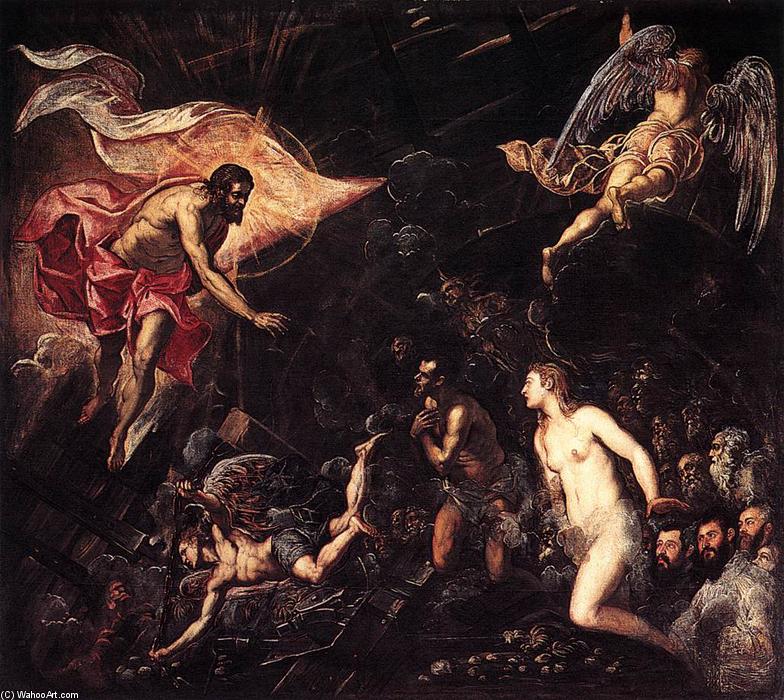
In classic Christian theology there is an image of Jesus that comes from a line in the Apostles Creed which says, He was crucified, died, and was buried. He descended into hell. After three days, he rose again. Many have wondered at what Jesus was doing down there in hell for three days, waiting for his resurrection. I like to imagine he was pulling up all the souls of the dead who, like weeds, had been tossed to the fire for burning, gathering them once again to be side-by-side with all the other good seeds.
I honestly don’t know why Jesus insists upon telling parables—these stories that make us think the world is never as bad as it seems and hope is just that good—but thank God someone does.

 PleaseGrace