Middle Eastern Street Crossing

In recent months, we have all seen the death and destruction wreaked by Hamas on Israeli citizens.  What has been done is tragic and inexcusable by any standard of humanity.  I have nothing but sorrow.  We have been reminded once more that anger is powerful, and violence only leads to violence.

When staring into the face of the pained and dead it is only natural to ask: who did this to you?  Then, if there is an answer, even a faint one, we take our place alongside the victims.  For who would ever want to be accused of keeping company with the victimizers, especially when the evidence of their deeds is still lying warm in the streets?  No, we know what we must do to avoid any appearance of impropriety: decide who the enemy is, and should you see them, especially them, lying hurt and bleeding in the street, go around them.  If you really want to try your hand at being a good Samaritan, just know this: it will come at a great cost to your own safety and reputation.  You may wind up being counted among the guilty.  

And yet, who is the enemy?  We must be careful to decide.  Those who are familiar with the story of the Good Samaritan know it to be a story of decisions.  When someone lies dying and bloodied in a ditch, how do you decide on whether to stop and help them?  Some conclude quickly that the person deserves what they got.  They were in the wrong place at the wrong time, and should have known better.  The tattoo on their arm, the label on their clothing, the hue of their skin, the cut of their hair confirms it for you.  They’re in your part of town and no amount of personal or professional obligation could make you their helper, let alone their neighbor.  They are the enemy, the reason you—so inconvenienced—must find another way home.  That a Samaritan stops to help is shocking because Samaritans were considered the enemy.  Categorically outcasted in every way, we simply don’t ever expect to be helped by our enemies.  It is much easier to think of them as the people who would blow us up, and so we must blow them up first.    
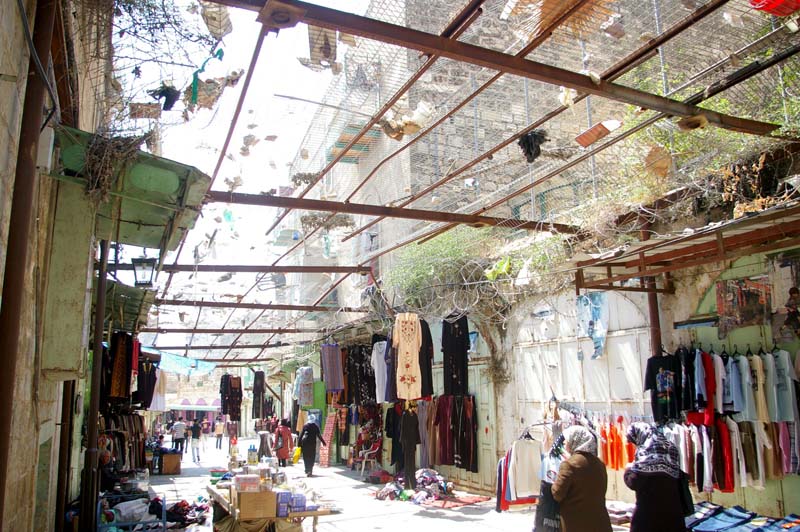

I visited the Middle East many years ago now.  I remember vividly the feeling of walking through the streets of Hebron.  One of the most ancient towns in the region, it was once home to Abraham, that great tree from whom Jews, Muslims, and Christians all take their life and grow their branches.  The cobblestone streets were filled with Palestinian women selling their wares, while men sat nearby on grain sacks, their backs perched against buildings strong but sagging with time, bantering and smoking the day away.  Up and down the streets, like mice scurrying underfoot, children kicked soccer balls.  And every 5 or 6 feet there would be an Israeli soldier holding a machine gun.  I thought then, as I think now, that people who carry guns without need of food are the most scared people in all the world.  And yet, fear is not without its reasons.  

Modern day Israelis know that not even a century has passed since their grandparents were living in Germany, Poland, Yugoslavia or some other European homeland, peaceably tending to life when one day their windows got smashed.  Running to get under the floorboards in the kitchen, not everyone made it.  Pulled outside, yellow stars sewn on their jackets like a breast plate, they were stacked on trains bound for Auschwitz, Buchenwald, Birkenau.  Not a one was tried but 6 million plus were still found guilty.  And of what?  Of being someone; of being Jewish.  Those who survived the gas chambers and death marches still came out wounded, to be forever haunted by ghosts.  

Meanwhile, the rest of the world reeled from their own brand of guilt over not having stepped in sooner to stop the massacre, over having to realize the answer to the question—who did this to you?—was now, we did, we did this to you.  

For the Jewish Holocaust survivor, returning home was both dangerous and unpopular.  The War was over but prejudice and bigotry would not be defeated so easily.  In time, The United Nations, that global symbol of goodwill and good intention, would give these millions upon millions of refugees a new home.  A sliver of Mediterranean land about which prophets once said, milk and honey will flow.  And they will not hurt or destroy on my holy mountain.  What could be more promising and perfect for a people who have just come through hell than to settle in a place where nothing and no one can hurt or destroy?  So became the official State of Israel.     

And yet, along with a thousand hopes and fears, the scars of near extinction remained.  In the new land of Israel were also Abraham’s other children.  Palestinians.  Mostly Muslim, some Christian, together with the Jews, they were like the stars in the sky.  A galaxy of lights that could give warmth like a bidding fire, welcoming the neighbor in, or spew its heat like a .22 caliber, perched in the window and aimed across the street, never to trust their neighbors again.    

That the State of Israel has controlled the borders in and out of Gaza and the West Bank for decades, keeping their neighbors in check at all times, tells us something about how powerful memory is, and the fear it kindles.  I can only imagine what it is like to be an Israeli today.  To live in dread that what the world did to your grandparents in the fatherland of Germany is now happening to you in the motherland of Israel.  The Israeli solider I encountered in Hebron years ago is no longer there.  I am sure, though, that another one, machine gun in hand, has come along to take their post, and that is of little wonder.        

But fear of our neighbors also kindles oppression and desperation for our neighbors.  Which is to say, as sick, twisted, and reprehensible as what Hamas did to Israel is, it did not happen in a vacuum.  To whatever degree rocket launching and gun slinging appears random, indiscriminate and unprovoked, it may also appear to happen in a vacuum.  Except, nothing happens on its own.  

When the State of Israel began, it was weaned on land that Palestinians had already been existing on for centuries, though they were not a state themselves.  They were subjects of British colonization.  Not foster children, not even adopted children, Palestinians have persisted on the hope of one day just not being subjects anymore.  Then, with the founding of Israel, they became subjects all over again, and that’s how it remains to this day.  I can only imagine what it is like to be a Palestinian.  The frustration and desperation that comes from being walled-in and occupied by another because they deem you a threat.  No question, the tactics and thinking of Hamas is disgusting.  That the majority of Palestinians believe they are disgusting is worth noting, as is the fact that they can imagine what drives them to extremes.     

Yes, there has always been some measure of talk on the part of the world about helping to foster a two-state solution, Israel and Palestine living side-by-side on the map as equals.  I don’t know if any two-state solution is ever going to happen, or even be possible.  I do know that, as with anything, solutions begin with having the right ingredients, for you get what you put in.  So Israel could choose now to act justly and reject vengeance.  This would be a start.  Justice doesn’t turn a blind eye to what has been done.  It takes account, but stops short of thinking that the only way to guarantee your own safety is to obliterate everything and everyone who reminds you of your enemies.  Justice would never kill children.  

The United States, the “most powerful nation on earth,” could show up not just on the side of Israel, but on the side of the vulnerable, which would mean showing up in Gaza.  If we’re going to provide tanks and guns for people to go to war with, we must also be prepared to stand in front of those tanks and guns when they are pointed at innocent lives.  How powerful that would be.

Our faith communities can reject the dualism that says supporting Palestine means being anti-semitic, or supporting the existence of the State of Israel is anti-Muslim.  It is not un-Christian to love your Muslim and Jewish neighbors as you love yourself.  We all come from the same tree.    

And we can all agree that we have done this to each other.  We have insisted on choosing between Israelis or Palestinians, war or peace, Jew or Muslim [insert a thousand other binaries here], and so we have left ourselves no option but to walk down only one side of the street.  But every street has two sides; every border has two sides; every person has two sides, and crossing over is as simple as choosing to do so.  Because unless we cross to the other side, nothing, nothing, nothing can ever be made whole.  And wouldn’t whole be wonderful?  

The Bark

You always barked when I came over.  
Even now, I choose to believe 
   you were just announcing my arrival.
You were that kind of dog.
You told of the world (or were you telling off the world?)
You barked at the lawnmower, 
              the vacuum, 
              and the kids jumping in the pool.
When a certain kitchen drawer was opened, 
   you barked at the thought of the electric knife.
      (it wasn’t even Thanksgiving)
But when I’d sit on your head, or 
bound through your screen door and into the kitchen 
to eat your food, 
   you didn’t make a sound.  
   You’d lift your head and just watch me go on by.
And when I’d chew on your leg 
like it was my Thanksgiving dinner 
   (it wasn’t even Thanksgiving),
you’d let out a satisfied groan.  Like you were glad 
   to be someone else’s sustenance.
When Dr. Lee saw the teeth marks, she asked what you’d gotten         
   yourself into.  
You just looked up at her with your two marbly brown eyes.    
Two weeks later, I had to go see Dr. Lee.  
I think she understood then that life is never our fault, 
   only the consequence of the company we keep, 
   and your company liked you an awful lot. 

By the time I moved in next door, you already had some friends.  
   Bella and BooBoo, and later, Briggs and Poo.
But you were my first friend.    

I was over your house today.  
   They told me you wouldn’t be there.  
      I think they thought I wouldn’t want to go then.  
         Stupid humans.  
      Don’t they know that dogs don’t care about such things?  

I let myself in like the old days.    
   Your owners let me go upstairs, 
   then downstairs, 
   then upstairs again.  
Good people, not afraid to let me see what’s missing--- 
   I can see why you loved them so much.
Then they let me sit there while they ate turkey sandwiches.  
   I tried not to bark for a bite.  It was so quiet.
But what’s a dog to do?  You weren’t there, 
   no one had announced my arrival,
   and I thought they’d like to hear from you again.

Things That Come Down

If Mr. Newton was correct, what goes up must come down. Go ahead, test him on it. Pull out whatever is in your purse or pocket, toss it to the air and see if it all doesn’t come down.  Short of a feather, things are made to hit the floor hard and quick.  A feather will also reach the floor, it will just take a little longer to get there.

Granted, this isn’t a theory we really need to test out.  The fact that you are probably sitting right now and not floating on the ceiling should be enough to tell us it’s true.  The way in which children, swinging from the monkey bars, let go and fall so effortlessly to the ground; the way in which food travels from the mouth, down the esophagus and into the stomach; the way our bodies and body parts sag into our later years; all proofs that everything which goes up must come down.   

Scientifically speaking, we call this gravity, nature’s guarantee that we stay in place where we belong.  As my mother used to say to us kids when we’d ask if we could sleep in the trees, if God wanted you to sleep in the trees, he would have made you a bird.  My mother’s point being that it would be unnatural for us to think we could stay up in the air if, God forbid, our branch broke off or a stiff wind came along to blow us off or, just as horrible, the whole tree went over, taking us with it.  You don’t have wings and you don’t bounce, my mom would add. 

Of course, even things with wings eventually must come down.  Planes, hot-air balloons, and skydivers all must land back on the ground.  They cannot stay above the clouds forever.  Birds must come to the ground from time to time to get their food, foraging through the forest or some stray picnic basket on the beach.  If their wings are working properly than their landing will be graceful and smooth.  If not, if their wings are broken, or the bird (or plane if you must) were to experience a mechanical failure, then not even wings may be enough to save them.  In that case, we call it a crash.  You see, everything which goes up must come down.  It’s only natural.  

On the other hand, not everything that comes down necessarily goes back up.  How many have looked with sadness on the famous Sycamore Gap Tree that was cut down in England last week?  For over 300 years the tree came to be a symbol of beauty and strength along Hadrian’s Wall.  Now it has been cut to the ground by someone who had neither right nor reason to do so. 

Contrast this with Shel Silverstein’s Giving Tree.  In The Giving Tree, a tree, we are told, loves a little boy, and loving this boy, the tree tells him he can cut off all her branches and level her to the ground just so he can build himself a boat and a house.  These are the things the boy believes will make him happy, and the tree only wants the boy to be happy.  So the boy cuts down the tree and builds his boat to travel the world.  He builds his house and gets married, but still, he is not happy.  In the end, the boy, old and tired, comes back to the tree one day, only now he no longer believes happiness is really real.  Meanwhile, the tree is still looking to give him something that might, finally, make him happy.  Except, now just a stump, she worries she has nothing left to give him.  How glad she is to discover that the boy, perhaps weary from searching, doesn’t want for much.  Come, sit down and rest, the tree invites him.  And the boy does, we are told, and the boy is happy, and the tree is happy.  Though we are left to wonder if—for someone who has fallen in and out of happiness his whole life—we are left to wonder if this time really will be different.  Will the boy truly stay happy?  Will the tree?    

The story is both tender and difficult, reminding us that we need to be careful with our actions, because love without boundaries has consequences.  Love that gives itself away at all costs will get cut down in the process, just as love that wants it all without cost will also get cut down, with each being left only to sit and hope that what remains will be enough.      

Such is the kind of love Saint Paul once wrote to a small band of saints in Philippi about:

What makes this description of love so extraordinary is that Paul says it exists in one who is God.  In Paul’s world—2nd century ancient Greece and Rome—people, let alone God, didn’t move downward; it wasn’t natural.  Like our world today, everything tried to move upward.  Life was a survival of the fittest, a competition to see who could climb the ladder the fastest and highest.  As anyone who has ever studied Greek and Roman mythology knows, there were hundreds of gods, and each god had its own distinct trademark.  Among the gods, the point was to stand out, not to fit in.  And power, power was a matter of showing each other, and when necessary, showing humanity, who was in charge.  Poseidon could stir the seas into a tsunami; with a wave of his hand, Apollo could cover the sun and blacken the day; Aphrodite and Venus could make you fall in love, or keep you forever from it; and Zeus, Zeus with his thunder and lightning bolts, was the most powerful of them all.

If you were a human being living in this world, at best the gods were something to aspire to; at worst, something to fear.  They were not, however, something to relate to.  Granted, this didn’t stop people from trying.  The Roman Emperor Caligula once reminded his people: “I have the power to do anything to anybody.”  And though Augustus was never known to declare himself a god, after he died, his subjects did.  And yet, the point may be, he still died.  But what kind of God does that?  What kind of God dies?           

Well, Paul’s God does.  And should you be crazy enough to believe like Paul, then your God does.  “Only a suffering God can help,” said Dietrich Bonhoeffer from his cell in a Nazi prison camp.  I don’t need a God who rises up and never comes down.  Nor do I need a God who comes down only to go back up.  I need a God who comes down and comes down to stay.  I need a flesh-and-blood God who draws near to sit beside me.  A God whose power can be seen not in the ability to control all things, but to endure all things; not to avoid suffering, but to feel it, to help heal it.  A God who knows what it is to be me—someone who falls down a whole lot in this world—and who speaks my language of hope.   


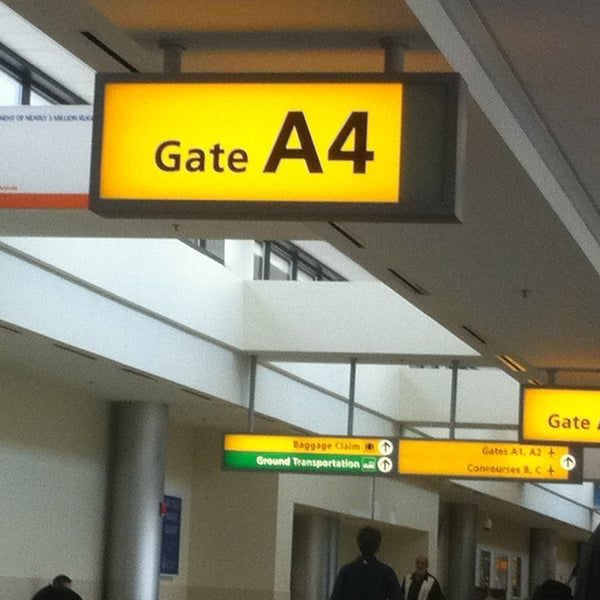
In her poem titled, “Gate A-4,” Palestinian poet Naomi Shihab Nye tells the following story about wandering around the Albuquerque Airport Terminal once.

“After learning my flight had been delayed four hours, I heard an announcement: “If anyone in the vicinity of Gate A-4 understands any Arabic, please come to the gate immediately.”

Well—one pauses these days. Gate A-4 was my own gate.  I went there.  An older woman in full traditional Palestinian embroidered dress, just like my grandma wore, was crumpled to the floor, wailing.   “Help,” said the flight agent. “Talk to her. What is her problem? We told her the flight was going to be late and she did this.”

I stooped to put my arm around the woman and spoke haltingly.  “Shu-dow-a, Shu-bid-uck Habibti? Stani schway, Min fadlick, Shu-bit-se-wee?”

The minute she heard any words she knew, however poorly used, she stopped crying.  She thought the flight had been cancelled entirely.  She needed to be in El Paso for major medical treatment the next day.  I said, “No, we’re fine, you’ll get there, just later. Who is picking you up? Let’s call him.”

We called her son, I spoke with him in English. I told him I would stay with his mother till we got on the plane and ride next to her. She talked to him. Then we called her other sons just for the fun of it. Then we called my dad and he and she spoke for a while in Arabic and found out of course they had ten shared friends. Then I thought just for the heck of it why not call some Palestinian poets I know and let them chat with her? This all took up two hours.

She was laughing a lot by then. Telling of her life, patting my knee, answering questions. She had pulled a sack of homemade mamool cookies—little powdered sugar crumbly mounds stuffed with dates and nuts—from her bag—and was offering them to all the women at the gate. To my amazement, not a single woman declined one. It was like a sacrament. The traveler from Argentina, the mom from California, the lovely woman from Laredo — we were all covered with the same powdered sugar.  And smiling.  There is no better cookie.

And then the airline broke out free apple juice from huge coolers and two little girls from our flight ran around serving it and they were covered with powdered sugar, too.  And I noticed my new best friend — by now we were holding hands — had a potted plant poking out of her bag, some medicinal thing, with green furry leaves. Such an old country tradition.  Always carry a plant.  Always stay rooted to somewhere.

And I looked around that gate of late and weary ones and I thought, this is the world I want to live in, the shared world.  Not a single person in that gate—once the crying of confusion stopped—seemed afraid of any other person. They took the cookies. I wanted to hug all those other women, too.

This can still happen anywhere. Not everything is lost.[1]


This is the kind of world I want to live in—a shared world, a world of cookies.  Do you want to live in that kind of world?  Something tells me you are the kind of people who want to live in that kind of world.  Something tells me you are the kind of people who can make it happen.

[1] Naomi Shihab Nye, “Gate A-4” from Honeybee. Copyright © 2008