I preached this piece as a sermon on January 28, 2024. Two days before, a synagogue in the town where I live received a bomb threat.
Imagine with me for a moment that it is Sunday morning, 9:00. You are out in your driveway picking up the paper, or taking the dog out, when your neighbor, who is doing the same thing, says, “Would you like to come over for a cup of coffee?” “That’s a very nice offer,” you say, “and I’d love to, but can I take a rain check? I’m going to church in a bit.” “Church? Never heard of it,” your neighbor responds. “What do you do there?”
Given where we are right now, perhaps the question sounds as foolish as the answer is obvious. What do you do at church? In all fairness to your neighbor, however, a couple things worth considering. First, it may be that even among us who are here today, we don’t know the answer to the question. The fact is, when we woke up this morning, we didn’t think about not coming. Coming to church is simply what our parents taught us to do, because it’s what their parents taught them to do.
Arguably, traditions change, some not to be passed along anymore. But among those that are still standing the test of time—on wobbly knees, perhaps, but nonetheless still standing—is church-going. So here we are, some of us because it’s tradition.
But lest the traditionalists forget, tradition does not speak for itself. To tell your neighbor, “I go to church because it’s what my parents taught me to do,” still doesn’t tell your neighbor why you go to church. It only tells your neighbor that you do what your parents taught you to do. The question is, why do you go to church, what do you do there that make you want to be there?
It’s an important question to be able to answer because, among the other things worth considering today is that, in being here, we are part of the minority. That’s right. It turns out, in the United States at least, church-going isn’t tradition any longer. A recent survey by the Pew Research Center shows that the largest religiously affiliated group in the country now are the Nones, those who, when asked to check what box their religion is, checked none.[1] Back in 2007, Nones made up 16% of the religious landscape in the U.S., but today that number has risen to 28%, making them more prevalent than Catholics, white evangelicals, and certainly more prevalent than mainline church-goers like us. In other words, on the whole, there are more people across the United States who stayed home from church this week than who went. Making you the minority.
In saying this, though, I wish to be clear about something: not all minority status is the same. There are those throughout history, and still today, who, on account of their gender, sexual orientation, skin color, national origin, or religion are not being given the rights or treated with the dignity owed to every human being. In courts and on our streets all over the world, and especially here in the U.S., this is true for refugees, Muslims, Jews, members of the LGBTQ community, the economically dispossessed, and our black brothers and sisters. Just this past week in my own town of Attleboro, a man was arrested for openly threatening to bomb and kill members of a local Jewish synagogue. This is true.
It’s just not true for us.
We may be part of a new church-going minority this morning, but make no mistake about it, as a group we are not suffering, we are not being oppressed. We may feel our numbers slipping at times, we may feel our budget tightening, we may mourn the fact that what felt important to our parents does not feel so important to our children, but the fact that we are gathered safely and freely tells us that something more is still going on here. What is it? Is it our American flag here at the front? Is that what makes it possible for us to gather safely and freely? No, that can’t be it. It may well be there was an American flag inside the synagogue in Attleboro all this past week. There was an American flag inside the Tree of Life synagogue in Pittsburgh back in 2018 when a gunman shot and killed 11 worshipers inside, as there was inside Mother Emmanuel, a historic black church in Charleston, South Carolina in 2015, when another gunman, a professing white supremacist, opened fire and killed 9 people in a Bible study. An American flag inside a house of worship can be a sign of many things—a reminder that in the march for freedom, we still have miles to go before we rest. What we must not allow the flag to be is a poor excuse for freedom.
So, what is it? If it’s not the flag that allows us to be here safely and freely, then what is it? Whether we care to have it said about us or not, I dare say it is our white privilege that protects and keeps us—a minority when it comes to being religious in America today—still in the majority. And it is this majority status we must contend with as minority church-goers. Because when you’re in the minority, you’re in a unique position. You’re the fish swimming upstream, the dissenting voice in the crowd, the one going to church.
It seems reasonable then to expect we would have an answer to our neighbor’s question, “Church? What do you do there?” In showing up here today I assume we know we are part of the minority and that we have calculated the risk involved with being so. Which means, I assume we know that we have come to swim upstream, and that our answer will reflect accordingly. Church? What do you do there?
One answer to the question might be that we come to church to get baptized. That’s not bad. We come to church to get splashed with water that, like the rain, falls down on everyone, reminding us that if this is what God is like, then God is for neither the majority nor the minority, God is for the whole of creation. In baptism we remember who we are: unbelievably special to God, just no one any more special than another.

You remember what John the Baptist said to Jesus when Jesus went to him to get baptized. John was down at the river, a long line of people waiting their turn, when John looks up and sees Jesus in line. “What are you doing here? This isn’t for you, you don’t need this,” John tells him.
Then Jesus came from Galilee to John at the Jordan, to be baptized by him. John would have stopped him, saying, “I need to be baptized by you, and do you come to me?” But Jesus answered him, “Let it be so now, for this is the ultimate right.”
Matthew chapter 3, verses 13-15, translation mine
For John, baptism was all about repentance, about owning up to the mess we’ve made of things, as we make a 180 and choose to get right with God. Naturally then, John didn’t think Jesus needed to be baptized. “You’re already right with God. If anything, Jesus, you should be baptizing me.” But Jesus tells John, “Get it straight, we all want to be right, just as we all want a better world.” Your neighbor who burns their trash wants to be right. Your mother-in-law whose political views make your blood boil wants to be right. Our current President, and whoever our next President is going to be, they want to be right. Holy-rollers and high-rollers want to be right. We all want to be right, and we all want a better world. But we we’ll never get there without first standing in line together.
It’s a good reason to come to church, to get in line so you can be splashed with water and remember that you are unbelievably special to God, just not any more special than anyone else.
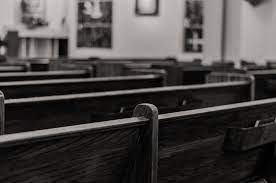
If remembering who you are isn’t enough to bring you back here again next week, though, another good reason to come to church is to be remembered. I am fond of saying that, for all the planning that goes into getting ready for church every Sunday—creating, formatting, and printing a bulletin, writing a sermon, prepping Sunday School lessons and crafts, rehearsing choir anthems, lining up readers, deciding on conversation topics and games for youth group, not to mention just getting ourselves and the kids up on time, dressed, fed, and out the door, through the rain, and into the car—the moments I tend to cherish most are the ones none of us could have planned for. Like the moment I overhear someone ask another person at the back of the sanctuary, “How’s your daughter doing? I remember you saying a while back that she was going through a rough patch.” To which the other person replies, “You remembered I said that? I didn’t think anyone was even listening.” Or a moment like last week when I caught a glimpse of Bill, 90 years old now, helping Patrick, 7 years old now, carry his juice to the breakfast table. Or the moment some middle-aged man texts me at 10 o’clock at night on a Sunday to tell me how the holiest part of his day turned out to be 10 minutes he got to sit quietly in the pew listening to someone read “The Very Hungry Caterpillar” to the children. Or that moment when someone accidentally drops their communion bread on the floor and the person next to them breaks their already small piece in half to share with them.
I’ve been thinking about this, about all the things that can happen just by us coming to church, and I asked Annie to read for us Mark chapter 1. Jesus is in the synagogue when a man with an unclean spirit comes up to him.
And when the Sabbath came, he entered the synagogue and taught. They were astounded at his teaching, for he taught them as one having authority and not as the scribes. Just then there was in their synagogue a man with an unclean spirit, and he cried out, “What have you to do with us, Jesus of Nazareth? Have you come to destroy us? I know who you are, the Holy One of God.” But Jesus rebuked him, saying, “Be quiet and come out of him!”
Verses 21 – 25
Whether Jesus knew this man would come up to him, or that the man would even be there, we don’t know. Mark says only that Jesus is in the synagogue because it is the sabbath. And this is what you do on the sabbath—you go to the synagogue. So, maybe it stands to reason that Jesus has seen this man before, that they have been in worship together for many years. But there’s something about this sabbath, and this moment, that is different, that makes the man cry out for attention in a way he has never done so before. What is it? What is different? It is that Jesus is the one preaching. On all the other sabbaths it has been the scribes doing the preaching. When they preach, no one really notices what is said because it’s all been said so many times before. Color in the lines, children should be seen and not heard, God rewards a hard worker, and other lies meant only to protect the privileged. Hardly enough to scare off any demons. But today, Jesus is preaching, and he preaches, we are told, “with authority.”
I have no idea what that means. In 2023 in America, I have no idea what “authority” means. The opposite of being able to scare off demons, these days it seems to mean the power to bring them on. But I believe you do, I believe you have what it takes to preach with authority like Jesus—to treat your listeners with the dignity their humanity deserves as beloved children of God, to make them feel safe enough to want to risk becoming new, to send their demons running—because I have heard you do it many times before.
Can I just say, whatever you do, don’t stop now.
[1] https://www.npr.org/2024/01/24/1226371734/religious-nones-are-now-the-largest-single-group-in-the-u-s

 PleaseGrace