A couple weeks ago I went to see the eye doctor. No pun intended. The last time I went to the eye doctor was about four years ago. That was also the first time I went to the eye doctor. You heard that right. At 41 years old, I had never gone to the eye doctor. I guess I thought that if Mary could get pregnant and deliver a baby without ever going to an OBGYN, then I could go 41 years without seeing the eye doctor.
Of course, I’d had my eyes checked many times before. When I was a kid, they got checked every fall by the school nurse and then again in the spring by Dr. Killion, my pediatrician. Given that I’d never worn glasses or contacts in my life, I assume I checked out each year. That I was able to read all the way down to the seventh or eighth line on the eye test chart with no trouble. But a couple years ago, I noticed the letters on the page of a book were getting a bit blurry. Driving didn’t seem to be a problem, but reading was. So, I went to see the eye doctor, who sent me to CVS to buy a pair of reading glasses off the rack. “You don’t need anything more at this time,” he told me.
Then, this fall, I noticed my eyes were feeling the way my legs sometimes do after I’ve been home sick on the couch for a couple days. Achy. Heavy. Like they’re trudging through a dense fog and I don’t know if I can trust them. Except I hadn’t been sick, and my eyes still felt that way. I was noticing that they sometimes felt that way even after a good night’s sleep. After being closed for eight hours straight, they still opened tired.
So, I went back to the eye doctor. He did a standard check-up, nothing fancy. Turns out, I probably could stand to wear glasses all the time now. But still, “Your overall eyesight is very good,” he reported. “Why, then, do my eyes feel so tired all the time?” I asked. “Probably because you’re seeing too much,” he told me. “Seeing too much. What do you mean I’m ‘seeing too much?’” I was feeling a bit defensive. “I only see what I have to to get through the day.” “Do you?” he said. I thought his tone was a little snarky and I let him know by giving him the silent treatment. “I mean, David, think about how much you’re probably seeing every day.”
I thought about the more than 50 promotional emails that I’ve been seeing hit my inbox every 30 minutes since Black Friday, and how quickly I scroll through them just to delete them. I thought about how I don’t watch TV news anymore, but most nights, after I hop in bed and shut off the light, I still check the daily headlines on my phone. Swiping up and down, left to right across the screen. How quickly the whole world comes to hop in bed with me all at once. And why do I do this at 10 p.m.? Did I really just shut the light off only to now turn another light on? If I happen to read that another 100 children died of famine today in Gaza, am I going to hop out of bed and go to the grocery store to put together a care package for tomorrow’s 100 children? Probably not. I thought about how, just ten minutes ago, I was sitting in the waiting room. “The doctor will be right with you,” the receptionist assured me. The music playing overheard was lovely, an orchestra covering The First Noel. I felt my body relax as it slumped into a chair. So, what did I do next? I told the receptionist I was going to step back outside for a minute to check my phone and see if I had any voicemail messages. Standing on the curb, my eyes couldn’t avoid the sight of two cars stopped in the middle of the road. There hadn’t been an accident, but the two drivers, jawing out their windows at each other about who was riding whose tail, were definitely in a collision. My relaxed body was feeling like it needed to be taken home and put to bed. Which I might have done if I thought I could trust myself to just turn off the light and not check the daily headlines.
So, maybe the good doctor is right, maybe I have been seeing too much.
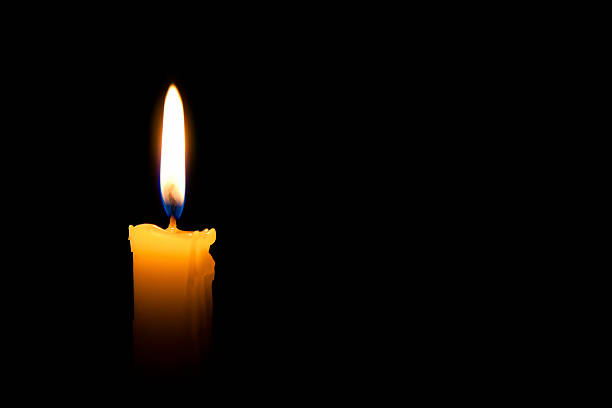
But here’s the thing: I’m not sure he, or anyone else, could convince me to see less. Because what I want, of course—what I think we all want, and need—is not to see less, but to see better. On this Christmas night, when we proclaim the birth of the One who was called the Light of the World, we can hardly ask to see less. For Christmas comes bearing light. Light in the darkness. Light that no darkness, says the Gospel, can put out or keep out.
In this way, Christmas comes as both good news and terrifying news. Terrifying to anyone who might prefer to keep things, people, or themselves, in the dark. The dark can be very useful and productive space for getting things done, especially if you are the only one who knows your way around in it. Meanwhile, everyone else is left to wonder, and worry, at what you’re up to, what you might do to them, and will you ever turn the lights back on.
Darkness was the weapon Caesar Augustus and Quirinius used when they ordered everyone, including Mary and Joseph, to return to the places they had come from. You can no longer live here. You must get out. No, it does not matter that this is your home or that you don’t have a home to go to. Nor does it matter that you are nine months pregnant and life is already full of hardship and uncertainty for you. Get out. I will not be your neighbor, and you will not be mine.
Joseph and Mary had to go to one of the most pitiful spots on the map, Bethlehem, where, as history records, there was no room in the inn. But look out! For Luke says she and Joseph arrived there and no sooner was it time for Mary to deliver her baby. She had traveled long enough in the dark shadows of the powerful. Now the powerful would be overtaken by a poor woman and her baby filling that darkness with the gentle light of courage, hope, and life.
When news of the birth of Jesus reached Caesar and Quirinius, it must have terrified them. Made them see that you can fill the whole world with darkness, but all it takes is a tiny, flicker of light to send the darkness running.
My friend, Jenny, says, The Christmas story shows us the worst of times and in so doing, shows us that God’s response to the worst of times is to say, Things don’t have to be the way they are.
The Christmas story, the story of Jesus Christ here among us, reminds us that we do not belong to Caesar or Quirinius, or to their darkness. We belong to God who is Light that cannot be put out or kept out. Remembering to whom we belong is a threat to those who really want us to believe that they are in charge, that they are the ones who hold the power. But they aren’t. They never have been. And they never will be.[1]
For tonight we dare to proclaim that Jesus, the one born to Mary and Joseph, placed in a manger, coming in darkness, is now, has been, and ever will be God of Glory, Friend to the Poor, Healer of the Brokenhearted, Light of the World, Emmanuel, God-With-Us, bending low to be among us. See him now. And have a very Merry Christmas.
[1] Rev. Jenny McDevitt, from her sermon, “What Christmas Means to Quirinius: Threat,” preached at Shandon, Presbyterian Church, 12/16/25.

 PleaseGrace