Before there was Independence Day there was July 4th.                                          Before there were countries there was Mother Earth.                                                 Before there were fireworks there were
trees blazing with oxygen from which we took our life.

Pledge allegiance to the flag.                                                                                               Pledge allegiance to God.                                                                                                             Go ahead, everyone needs something to stand up for and to.                                                           Say you are free because you are American,                                                                         then kneel at the cross,                                                                                                               enter your temple,                                                                                                                     declare your right to kingdom.

But oh Sweet Land of Liberty, do you not know that                                                       the crucified have no kingdoms?                                                                                          They render themselves unto neither God nor Caesar.                                              They are rendered unto death,                                                                                                                                           by those who think
the forsaken are crying out for someone else.

America, stop singing for God to bless you.                                                                    Listen,                                                                                                                                                 the forsaken cry out to you.                                                                                               Render life, blessed life.
Author: David Pierce
I'm the one on the left. That's my favorite part on the right. I'm an ordained minister in the Presbyterian Church (USA) and the United Church of Christ. I work as Minister to a parish community in Cumberland, RI. That I could also see myself as a farmer, a cowboy, or Thoreau sitting pond-side at Walden is probably not insignificant. I don't blog about anything in particular, but everything I blog about is particularly important to me. That it may be to you as well is good enough for me.
Courage on the Water
When I was in college, I worked two summers as a swim instructor at a YMCA near my house. Most of the people I taught those summers were kids, 8, 9, 10 years old, but on occasion I would also offer private lessons for adults. These were rare, and not because most adults know how to swim, but because most adults think it’s too late, or too embarrassing, to learn.
One morning I was sitting on the lifeguard stand when in walked a man who introduced himself to me as Jerry. He had pure white hair, a pot belly, wrinkly skin, and his walk was more like a shuffle. I figured he must have been about seventy years old. “I would like to sign-up for a private swim lesson. Would you be able to teach me?” We talked for a few minutes about what exactly Jerry wanted to learn. Do you know how to swim at all? Can you swim on your back, your side, underwater? Jerry said “yes,” “yes,” and “maybe,” and before leaving we settled on a day and time for him to come back for his first lesson.
A couple days later he returned. “Why don’t we start in the shallow end,” I suggested. Jerry climbed down the ladder, while I sat down on the edge and slipped in.
Once in the water, I asked Jerry the same question I’d asked him before. “Do you know how to swim at all?” “Sure,” he said rather sheepishly, “I can swim.” “Well, why don’t you show me what you can do.” Jerry laid down on his stomach, put his face in the water, and took off like a bullet doing the crawl stroke. “Wow!” I exclaimed. “That’s pretty good. How about your back? Can you swim on your back?” Sure enough, Jerry could swim on his back…and his side…and underwater. “Jerry, you’re a great swimmer. What do you know that I don’t know?” He leaned in close to whisper. “I’m terrified of the deep end.” That’s when I realized that, with every stroke Jerry had shown me in the pool, he had never gone into the deep end. He always kept his feet where he could still touch.
I don’t know what made me think it would be a good idea in that moment to just push Jerry over the edge, but I had him get out of the pool and climb up onto a diving block, while I stood beside him on the deck. As if the deep end wasn’t scary enough for Jerry, now he was standing four feet above it, his legs shaking like a wet leaf in a hurricane.
“Come on, Jerry, you can do this. The hardest part is getting in the water. Jump!”
“But what if I go under and don’t come back up?”
“Hold on a second,” I motioned to him, “I’ve got an idea.” I jumped into the deep end myself. My legs treading like an eggbeater beneath me, I held my arms out to him. “Jump to me, I’ll catch you, I promise.” I meant it, I wasn’t going to let him go under. And yet, Jerry probably weighed about 200 pounds bone dry; I weighed about 120 pounds dripping wet. I held up a hand like a stop sign. “Hold on again.” I got out of the pool and put on a lifejacket, and grabbing two others to tuck under each arm, jumped back in the pool again. “Okay, I’m ready, Jerry. 1, 2, 3, jump.” Jerry just stood there. “Come on Jerry, you can do this, I believe in you. Here we go, 1, 2, 3, jump.” Nothing. He was totally still in the eye of his storm.
Just then, from out of the corner of my eye, I saw a small child—couldn’t have been older than five—walking towards Jerry. They stepped up onto the block with him and took his hand. “Don’t be afraid, Mister.”
“But what if I go under and don’t come back up?”
“But if you don’t go under, you can’t come back up.”
Then, with a 1, 2, 3, the child jumped. Jerry, of course, jumped too, because if he hadn’t there would have been a small child dangling from his hand four feet above the deep end! But that’s not why Jerry jumped. Jerry jumped because, for whatever else going under was going to mean, it meant he’d have a hand to hold on the way back up.

Anne Lamott says, “courage is fear that has said its prayers.” What we fail to remember, however, is that, concerning courage, it’s perfectly okay to beg, steal, and borrow from someone else.
The Matter of the Nail

It walked through my door
this past week.  I had
seen it before.  I had
just never
heard its name spoken so plainly before.

Even now, I'm a bit dumbfounded
   at the thought of it speaking--
      offering up its own name.

It sounded, by all notions,
   American.  And it appeared the same as well.
It had a gender, a sex, a story.  And
   it all looked and sounded so genuine, so
      familiar...  Complaint.

Really, it ranted of nothing more than
what you'd call a nail in the tire.  But
there was a searching to this complaint.

I thought it was a longing for comfort, to be
told,
It will be okay.  But
it was not.

I picked up the nail here.
   Here?  How do you know?
I don't know for sure.
   Well, then I guess maybe you did.  But
      it will be okay.
Yes it will, just as soon as
you tear up the parking lot and
put a new one
down.

For so long we ask so little of
one another,
demanding nothing more than
   a seat,
   a sip,
   a share in the trickle of water, a bit of
   the crumbs that fell to the floor last night.

Then, suddenly,
the personal takes over.

In a moment of grace
   too troubling
   to answer for, air begins to escape.
      Who penetrated us?
No one can say for sure--
Not
even
us.

It will be okay, I told them at the door.
Come in,
   sit in your old seat,
   get drunk from our cup.  It's
      weathered, but it will hold.
See, THIS is that happens here.

But they insisted nails are what happen here.

You could have picked up that flat anywhere.
   Here.
They handed me 500 dollars.  I recognized it.  It was
          the same 500 dollars they told they
             once gave to have their name put on the wall.
What's it for this time?
   For you, (to say) the nail was yours.

I glanced up at the wall where their name hung.  I
   caught the gaze of Jesus next door.  He was naked,
   plum naked, on a cross.
But the artist had done
such a fine job with the brush that
the paint still looked wet.  The
   blood from the nails, fresh.

Sorry, but I didn't do it this time.

I handed them back the money,
which felt heavy
from time and
sorrow.

They say it's the young,
   with their Sunday Soccer, who are killing religion.
That their absence is now hardly noticed by
those who wish they'd come around more often.
   But who can blame them for staying away?  There are
      nails in the parking lot!

Adiaphora.
To this day, I sometimes still hear the old saying it's
the nails
that saved them.
Love’s Doorway. In Memoriam.
The first time I met her was right here in this room. It was a Sunday in mid-August. The thing you have to know about Sundays in mid-August is that it’s the dog days of summer. Churches might pack ‘em in on Christmas and Easter, but in August, only the faithful survive. Now some might call the “faithful” crazy, foolish, like the remnant before the flood. The sun is shining, there’s not a cloud in the sky, and everyone is heading to the beach, while the faithful stay home to build a boat. And why? Because God says it’s going to rain—hard, really hard. You’re going to get drenched, and then you’re going to get drowned. The world can be this way, and it doesn’t make a lot of sense. Frederick Buechner once described the world as the place where beautiful and terrible things happen, and sometimes all at once. That God might play a hand in the beautiful is the easy part for us. That God might also be in on the terrible, well, that’s a tougher pill to swallow. Sending so much water that it destroys not only the unjust but also the just, not only the cockroaches but also the koala bear, not only the weeds in the garden but also the tulips, not only our enemies but also our loved ones.
I can’t tell you why terrible things happen, or what hand God plays in it. What I do know is that the faithful, believing in the goodness of God in all things, build boats and show up to church in the dog days of summer. I find it’s their way of acknowledging that life is beautiful, but it can also be terrible, terrible hard. So they do what must be done to store up hope and safeguard faith for the days when the rains come. That way, no matter the hurt, no matter the pain, no matter how great the storm, when all is said and done, there will still be hope and faith.
So here I was. It was a Sunday in mid-August. In a couple months, I would be hired as Minister, but on this particular day, I was just a fill-in preacher dressed in a suit and tie. Arriving at the side-door, a woman stopped me. “Good morning. Are you new here today?” “Actually, yes, I am.” “Well, feel free to sit anywhere, just don’t sit there,” she said, pointing to a pew just inside the door, “that’s my seat.”
I won’t lie, my first thought was, who is this woman? If this is the Chair of the Welcoming Committee, she needs to work on her delivery. Who tells a visitor, “sit anywhere, just not there?”
A couple months later, I was now the Minister, and it was now mid-October. Showing back up at the door, there she was again. This time, she didn’t tell me where not to sit. Instead she told me, “You sit up there.” “Yes, thank you,” I replied, “that much I do know.” She smirked and gave me a hug and a kiss. It was only our second meeting, and my first thought was, who is this woman? If this is the Chair of the Welcoming Committee, she needs to work on her delivery. Who gives the new Minister a kiss and tells them where to sit? Wrapping her arms around me, she disarmed me. “I’m glad you came back, and that you’ve decided to stay,” she whispered in my ear.
It would take me some time before I would start to understand what she was doing there at the door every Sunday, greeting us, giving us hugs and kisses, telling us where to sit, and where not to. To be frank, I’m not still not sure I understand it completely, but two things, I think, I have come to figure out. One, she was being helpful. Truly. She was saying to us, “If you sit down and realize you forgot a bulletin, just come on back, I’ll be right here. If you need some assistance with the elevator, come on back, I’ll be right here. If you need to know where the bathrooms are, come on back, I’ll be right here. If you can’t find a seat, or you don’t want to sit alone, come on back, I’ll help you find one. You can’t have my seat, but you can sit beside me, I’ll be right here. If you need a hug, or two, or three, come on back, I’ll be right here.”
It is one of the great tragedies of our existence that we have given up on finding hope. Author Wendell Berry once wrote, “I can’t give anybody hope. Hope has to come out of you… To find something worth hoping for is a very good place to start. There are things worth hoping for, there are good people, this is a still a very beautiful world… We all need to find things we love to do, and love them. We’ve been talked out of love, mercy, kindness. We’ve got to take those things back.”
Which brings us to the second thing I believe she was doing at the door every Sunday: she was taking back hope…for herself. You see, she walked in and out of a few doors of her own in her lifetime. For as many of us who knew her as the woman at the door every Sunday, showing up even in mid-August, who knew where her own seat was, she—how shall I put this?—she seemed to struggle to find her own place in this world at times. She chased after love a few times, caught it a couple times; got married twice; was a mother several times over; was widowed more than once; and after her final widowing admitted to me that she never quite knew how to live alone in this world. But who does?
For all of this, she could be restless, particular, unforgiving, and plain old hard to get along with at times. For sure, she walked her way in and out of a few doors in her lifetime, searching for…what was she searching for? Hope? A boat to ride out the storm on? A seat to call her own.
I thought about this and read for us Psalm 84 and First Corinthians 13. From Psalm 84, the song of a pilgrim looking for a home and finding one:
My soul longs, indeed it faints,
for the courts of the Lord; my heart and my flesh sing for joy
to the living God. Even the sparrow finds a home
at your altars, O Lord of hosts. Happy are those who live in your house,
ever singing your praise. I would rather be a doorkeeper in the house of my God
than live in the tents of the wicked.
And from First Corinthians chapter 13, a word about what will remain when all we are is…remains:
As for prophecies, they will come to an end; as for words, they will cease; as for knowledge, it will come to an end. For we know only in part, and we speak only in part, but when the complete comes, the incomplete will come to an end. For now we see only a reflection, as in a mirror, but then we will see face to face. Now I know only in part; then I will know fully, even as I have been fully known. And now faith, hope, and love remain, these three, and the greatest of these is love.
One of the last times I saw her was about a month ago. We were, as you might imagine, right here in this room. It was a Sunday morning at 10 a.m. The Prelude was over and I was trying to get the service started, only she was still standing up—not in her usual spot at the side-door, but at the way back there. For about 15 minutes, she’d been making her way around the room giving hugs and kisses to everyone, still disarming the visitors. She hadn’t been in church for a few weeks. I guess you could say she was making up for lost time.
I said “Good morning,” and everyone quieted down. Everyone that is except her. She just kept right on working the room. “Hold on,” she said to me, “I’m coming.” We all waited while she hobbled her way over to her seat. It was, of course, empty and waiting for her. “Okay, you can start now.”
I honestly can’t explain what happened next. It was something like the sound of laughter welling up from the masses, like a feeling of hope, of joy in knowing that an old woman had finally given up her place in the doorway. She no longer had to play the doorkeeper. She had found her way inside to that place where love is all there is and love is all we are.
It happened again a little over a month ago. This time it was God who came to stand in the doorway. “Good morning Helen.” “Hold on,” she said even to God, “I’m coming.” “No worries, no worries at all,” said God in reply, “I’ll wait.” But no sooner had God said this and there she was, right in the doorway. And God reached out and gave her the gentlest of embraces.
Rest easy, our friend. Love remains.
The Winning Lottery Ticket
Tonight, after picking my son up from his basketball practice, we stopped at the convenience store to buy a Gatorade. They were on sale 2/$5, so we bought 2. At the checkout counter we were third in line. The woman in front of us was buying a pack of cigarettes, a Snickers bar, and $20 worth of gas. In front of her was a mom and her daughter, who might have been 4. I couldn’t see what they were buying, but as they turned to walk away the little girl handed the woman behind her a $1 lottery ticket. Then she gave one to me, too. “Here you go, you win.” The ticket hadn’t been scratched. I win? How does she know that? “Thank you,” I said. “You’re welcome,” she replied giddily. Grabbing mom’s hand, she skipped out of the store.
I paid for my 2 Gatorades and headed out into the parking lot. A small black SUV was pulling out of the space beside me. As it turned to pull away it stopped suddenly. The same little girl hopped out of the backseat and did her same skip across the parking lot to where a man was pumping gas. “Here you go,” I heard her tell him, “you win.” I wondered how many $1 lottery tickets her mom had bought, just to give them away.
Maybe someone who got one of those tickets won some money. Enough to pay an overdue electric bill, or to buy their first meal of the day, or to pick up an unaffordable Christmas gift for their own little girl. I sure hope so.

My ticket didn’t turn out to be a winner, though I don’t suspect that possibility was on the mind of the little girl when she gave it to me. She probably doesn’t even know what a lottery ticket is, let alone how it works. She probably doesn’t know that winning is a matter of matching numbers. All she knows is that it’s a matter of “Here you go.” And that’s not bad. In fact, it’s pretty great.
The Dust Breathing Machine Prayer
O God, we wake each day unable
to hide from ourselves or one another.
We acknowledge how beautiful
and yet
how fragile our lives are.
We come into this world as flesh
and blood.
This is our only way—to travel this earth
in bodies that will endure a thousand wounds,
take a thousand blows,
and give and receive love
in a thousand ways.
We bless you here and now for the mysterious wonder of these
dust breathing machines.
For the women who carried us the whole nine, and delivered us
from life unto life.
“You are very good!”
At least this is what we’ve been told, and try to remember.
We are more brilliant than 10,000 stars,
just a half-rung lower than angels.
We are passion too big for hearts to hold.
We are a brotherhood and sisterhood
peeking out from behind masks of reds, yellows,
blacks, and whites.
We are artist and masterpiece,
spotted with light,
shadowed by pain.
With this body,
we shoulder our better angels,
kick at our worst demons,
turn the other cheek and then turn back to see you still standing there.
Tiptoe down the hall at midnight,
cross the street to find it doesn’t matter how green the grass is,
grass is just ground,
and the whole earth has but one.
With this body, we work to make the day honest.
We feel the fire down
below,
we see it on the mountain—
thirsting for righteousness—and
we wonder at how it calls our name.
There is no other way, O God.
We come into this world as flesh
and blood.
We lay our hands
and hearts upon one another, we get blessed and cursed by it.
And in the end,
Love who put us here, takes us back.
And this is very good.
And we say, from head to toe, Amen.
The View From Under The Table

Ukraine is burning. Gunmen are taking target practice in New York subways. Dumpsters are overflowing with food. And pretty soon Jesus himself will be executed by the stupidly powerful. But right now he’s going under the table. At least that’s what it sounds like.
“During supper Jesus, knowing the Father had put all things into his hands, and that he had come from God and was going to God, got up from the table, took a basin and towel and began to wash the disciples’ feet.”
I usually picture Jesus today sitting at the table, not under it. It’s his last supper before tomorrow’s big showdown. In 8 hours, all his friends are going to say they don’t even know him. Like a family member who has been called in to identify the body, when the coroner asks if they recognize the hands, the feet, the eyes, the curve of the head, they’ll all say, “No, I don’t know him at all.” But for the moment, they’re perfectly glad to eat the bread he gives them, the bread he calls his own body. What grace on his part. What a scandal on theirs.
Then, to really make his point (what is his point?), Jesus gets under the table.
Things look different under the table. The table itself looks different. From underneath my own table, I can see all the scratch marks from where my children have kicked each other a time or two because one or both of them wouldn’t pass the potatoes when they were asked for. Or, because they passed them, but not before taking a helping hand for themselves first.
From underneath the table, I can see all the crumbs that have been dropped—a reminder not only that I need to vacuum more, but also that I waste so much food. A reminder that in this world there are still five thousand times five thousand people starving for a couple loaves of bread. A reminder that with Jesus there is no difference between abundance and generosity.

From underneath the table, the crumbs remind me of my Golden Retriever, and of that Canaanite woman who once went to Jesus begging for mercy on behalf of her tormented daughter. When Jesus told her that he had come to serve only the children of Israel—“It is not fair to take the children’s food and throw it to the dogs,” he told her—the woman told him, “Yes but even the dogs get to eat the crumbs that fall from the master’s table.”
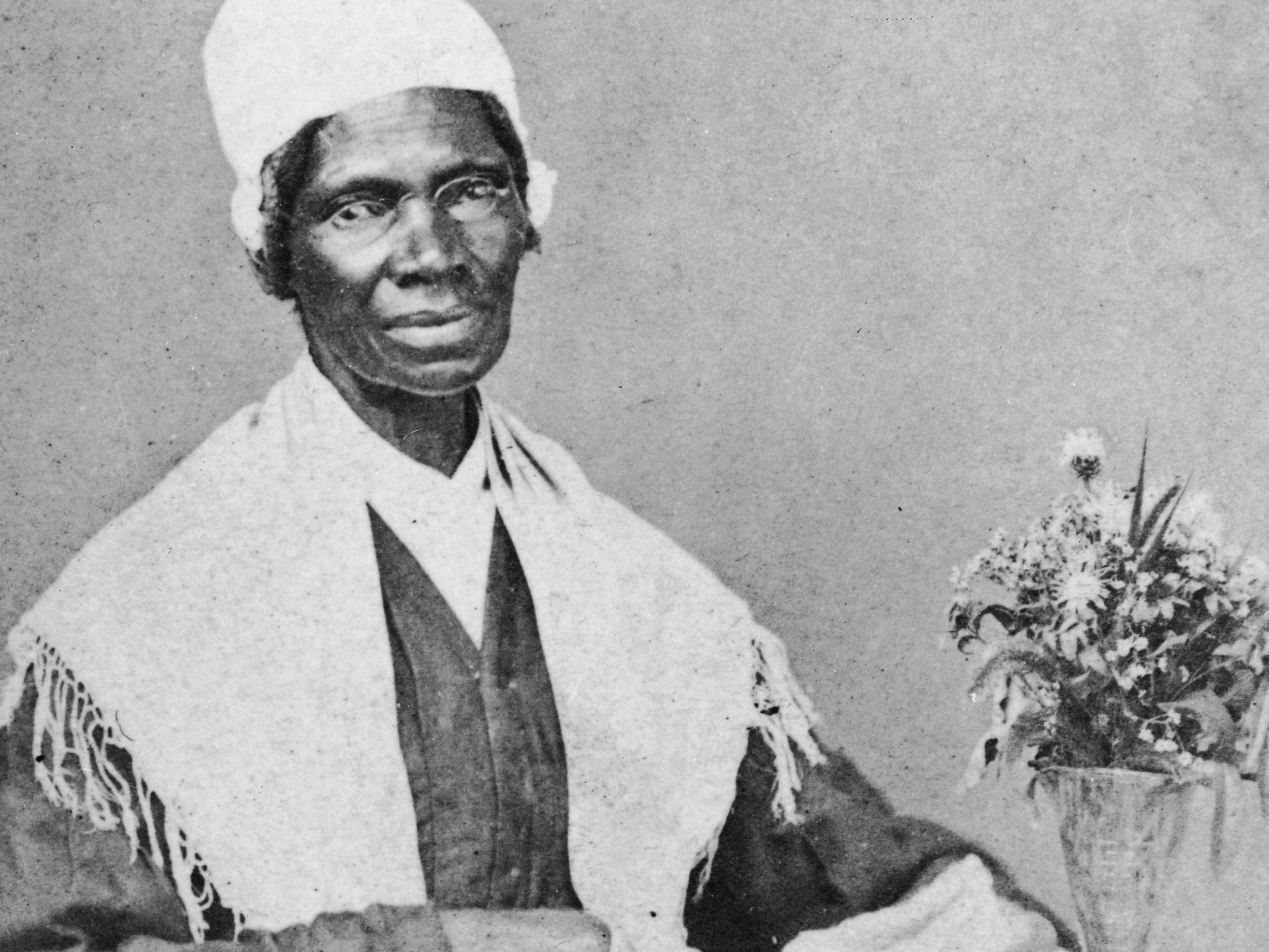
From underneath the table, I can hear the words of Sojourner Truth: “I could work as much and eat as much as a man – when I could get it—and bear the lash as well! And ain’t I a woman? I have borne thirteen children, and seen most all sold off to slavery, and when I cried out with my mother’s grief, none but Jesus heard me! And ain’t I a woman?”
From underneath the table, I remember just how easily food comes to my table, and how many there are who have no table, or no home, or no family to call their own.
From underneath the table, I can hear the sound of my mother’s voice above me saying, “No playing under the table during dinner. Get back up here.” But from here, I am that much closer to the sight of my feet. I can see how badly they need to be washed clean of this day, of the stumbles and falls I took.
So I want to say, don’t move from where you are down there on the ground. You’re in perfect position for what is about to happen. Because it was during supper that Jesus got up, bent down, and washed some feet. No one was even done eating yet. I guess Jesus couldn’t wait to show everyone what love really looks like.
A Dog, a Boy, and a Sower: 3 in 1.
Story 1. This morning, I dropped my parents dog off for them at the kennel. They have a small dog who thinks the front seat is an appropriate place for dogs to sit. As we pulled into the parking lot, however, she shot across my lap and stood up on her hind legs, barking—yelping—through the window. In the front yard at the kennel they have these stone figurines that are nearly life-size. The figurines are a Collie, a Labrador Retriever, and a Pitbull, and this is what she was barking at. “They’re not real,” I told her. But she just kept right on barking. “They…are…not…real.” But of course, there was no way for her to know this. From 30 feet away and behind glass there is no way for a dog, or for any of us for that matter, to know what is and is not real, what is and is not the same as us.
Story 2. Last night, I was in my dining room. My wife was down the hall in my son’s bedroom. “What do you have going tomorrow?” she yelled to me. We had been trying to figure out who was going to pick our daughter up at her sewing lesson and who would drop our son off at his basketball practice. “I have the Ash Wednesday service at 7 p.m.”
“Oh, right. That’s tomorrow, isn’t it?” (Don’t judge her. In a world that produces as many daily ash heaps as ours, it’s hard to remember which day is actually Ash Wednesday. Plus, you haven’t heard how the story ends yet.)
“What’s Ash Wednesday?” my son asked (he’s 10, don’t judge him, either).
“It’s the day we remember that we were made from dust,” my wife replied very matter-of-factly. There was a long pause. “I wasn’t made from dust,” my son said somewhat indignantly. “I was made from you.”
There was another pause, this one even longer. I couldn’t see my wife from where I was sitting, but I couldn’t wait to hear her reply. “Well, it just means that sooner or later everything goes back to being dust. That in the end, we’re all the same.”
“Whatever,” my son said. “I still say I came from you.”
Story 3. Over and over again the Good Book says God is like a Sower. In the beginning—we’ve heard it told—when God decided it was time to create you and me, God reached down into the dusty earth, and picking up a clump, God breathed life into that which up until then had been good only for growing cactuses and kicking up dirt. Likewise, it goes on to say, once upon a time there was a Sower who went out and threw down seed everywhere—on the rocks, on the path, among the thorns, and just some in good soil. Now we can judge this Sower all day long for putting down seed in places where no seed is ever going to grow. Everyone knows you can’t grow anything from a rock or along a path. So why does the Sower try to? What a waste of perfectly good seed.
It could be that this Sower is just a bad judge of soil. Or, or, it could be that this Sower is a better judge of soil than we are. It could be that this Sower has seen the dandelion that grows up between the crack in the pavement, and the rose that buds amongst the thorns. It could be that this Sower has stood close enough to see what is real. They’ve stepped around to the other side of the glass, reached down into the dust and breathed into it. They know what is real: we come from dust, we are the same. The 10-year old was right! We come from one another. And by the great mercy of the Sower, we shall be redeemed.

The Two Fans
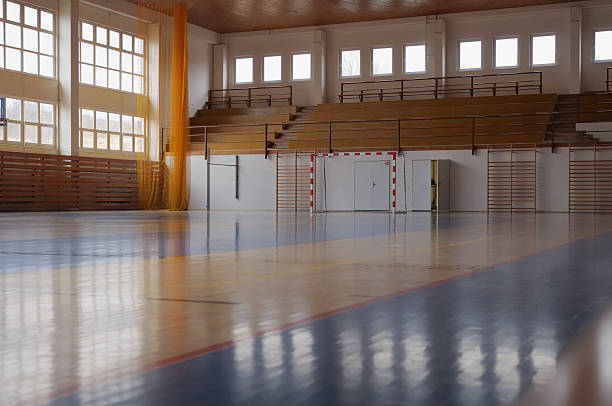
Last Friday night, I went with my son to a local high school basketball game. At half-time, as the two teams left the court to go to their respective locker rooms, two boys, who had been sitting on the front bleachers during the game, got up and began dribbling and passing a ball between them on the sidelines. Judging from their size, they couldn’t have been more than 10. One of them had on a home team sweatshirt, and one was wearing visitor’s colors. Maybe they knew each other, maybe they didn’t. You could tell they really wanted to head out onto that empty court and run around, and maybe even shoot the ball, but they didn’t know if this was an okay thing for them to do. So, they just stood there on the sidelines passing the ball.
Now if you’ve ever been to a high school basketball game then you know, there is almost always a section of the bleachers that is unofficially reserved for high school students. This section is loud, very loud. No one ever sits down in it, and no parent, or self-respecting adult, would ever try to join it. In this particular gymnasium, there was just one section like this, and so the home team’s and the visiting team’s high schools were sitting together, or pretty close to it.
Anyway, you need to know this so you can understand the power of what happened next. A couple high schoolers came down out of the bleachers and started playing ball with the two boys on the sidelines, and before we knew it, there was a half-time game going on. The two young boys were now out in the middle of the empty court, in full-view of a packed gymnasium. The high schoolers weren’t taking any shots; they were just dishing the ball to the two boys so they could take all the shots. For anyone with eyes to see, it wasn’t hard to see what was going on.
Every now and then one of the boys would hesitate to take a shot—because they were way down here and the basket was way up there—and the high schoolers would move them in a little closer and gently encourage them to give it their best heave-ho. At first, no baskets were dropping in, but then one shot would go in and you’d hear the whole student section of the gym let out a cheer. Then another shot, and another cheer. When a shot went up, there was a pause while everyone held their breath, and then, if the shot missed, a collective “aww,” followed by someone in the student section yelling out, “Try again.”
You could see that none of the adults were really even paying attention to what was going on. No one over 18 seemed to notice that well over 100 high school students, some wearing green, some wearing blue, were now rooting for the same team of two 10-year old boys.
Meanwhile, the scoreboard was ticking down the time until half-time was over. The two teams had returned to the court, but still, only the two boys were playing basketball, while now, the players themselves stood around cheering for this new kind of game.
Eventually the buzzer went off and the two boys had to leave the court. But in the 4th quarter, when the game was rather close, the student section got rather rowdy. I looked over at one point to see who was making all the racket, and there they were, right in the middle of the pack—two 10-year old boys.
The Good Book tells a story about a woman who had been crippled for 18 years, an entire childhood. Hunched over, all she ever did was look down. Even if she could have made herself stand up straight, no one would have noticed her anyway. To most, she was a beggar, rapping at the car window for spare change. No one seemed to understand that by 8 a.m. everyday, she had already put in more work than most were going to put in all week. For just to get out of bed again was an act of courage for her. And she didn’t get weekends off.
Then, on a Sunday of all days, when the world is supposed to be resting but instead is given to complaining about how little rest they are getting, one—just one—merciful soul sees this woman. In this, he does what no one else up until now has been willing to do, and it changes everything. The woman stands up! Those who are trying to rest, of course, complain that she is disturbing them. They say that tomorrow would have been the more appropriate day for healing. “Couldn’t this wait?” But the Merciful Soul knows that “wait” almost always means “never.”
The truth is, there is nothing so difficult as going out into a world that doesn’t see you as human. To convince ourselves that we belong even if unnoticed. Just as there is nothing so easy as giving a couple 10-year olds a respectful place to stand in the section where no self-respecting adult would ever dare to join in.
A Few Good Words
Last Tuesday morning, I took one of my new neighbors from Afghanistan, along with his 10 year-old son, to get a COVID test. The boy was having dental surgery on Thursday, and he first needed to get a COVID test. At 8:30 I pulled up to their apartment and out they came. Now neither the father nor the son speak much English, and I don’t speak any Pashto, so I knew it was going to be a quiet ride.
“How are you?”
“Good,” the father said.
“Good. So…you’re good. That’s…good.”
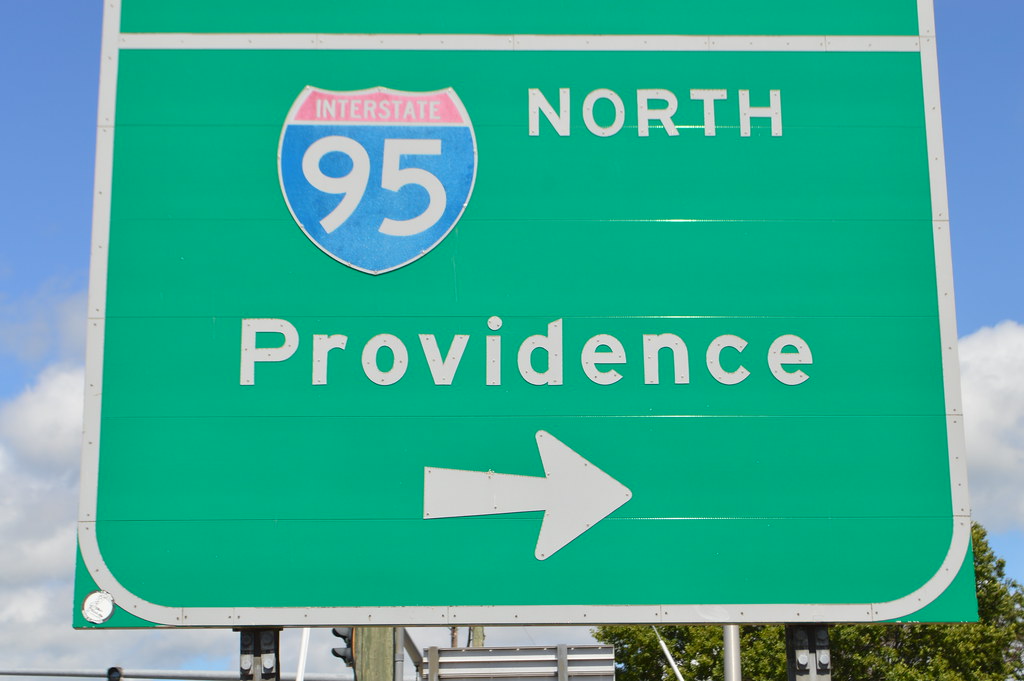
This went on for about 10 minutes. I don’t think the father minded the quiet. If there’s one thing I’ve come to learn from my new neighbors it’s that the only thing refugees expect from anyone is a safe, quiet world to live and raise their kids in. Which is all any of us should expect. But the quiet was killing me. So I began to point out everything in sight like I was giving a vocabulary lesson. “Radio. Snow. Snow plow. Exit. Sign. Says Providence.” The father would smile, but never say anything.
After the COVID test, we dropped his son off at school, which left just the two of us in the car together. Pulling up the long driveway to his apartment building, it was still very quiet, when suddenly I heard him say, “Exit. Snow plow. Providence. Radio.”
“Hey! That’s very good.” I didn’t think he’d really been listening to anything I’d been saying.
“You…my…teacher. Thank you.” Well, I don’t know about that, I thought to myself.
Pulling up to his front door, he said to me, “Come in. Eat.”
I had given him Exit, Snow plow, Providence, and Radio. Which isn’t nothing. But he was giving me bread and a seat at the table. “You…my…teacher. Thank you,” I said to him.

Saint Francis of Assisi once famously said, “Preach the good news at all times. If necessary, use words.” Of course, what Francis failed to include is, if it is necessary to use words, make them few and small. Like, bread, and thank you.
 PleaseGrace