Power, Be Not Afraid

Sea of GalileeDo you remember what it was like to be on that hillside?  It was a perfect spot—that hillside—not unlike the spot you may be sitting in now.  Rather quiet and a little removed from everything.

The plot goes that Jesus and his disciples had just come off a long week of ministry.  They were due for some R&R and had to take a boat across a lake to get to that hillside.  Poor Jesus, he had recently received news that his cousin John the Baptist had been executed by King Herod for the crime of publically calling out the king.  It had been discovered that Herod was having an affair.  John said it was shameful and abusive, even for a king.  So, sad, grieving, and emotionally spent, a little time under the sun on a lonely hillside would be just the ticket for Jesus and his disciples.

Except when Jesus and his disciples get to that hillside, there are 5,000 or more people gathered about waiting for them.  And the people are hungry.  Not hungry for a mid-morning snack. I mean, forced to pick scraps-from-the-trash-for-days hungry.  And Jesus, turning to the disciples—tired, worn down and looking for the closest exit—tells them, “You give these people something to eat.”   But how could they?  All they had on hand were a few loaves of bread and a couple fish, and they were pretty hungry themselves.  Feed the crowd and they’ll never go away.  Don’t feed them and…they’ll never go away.

Famined CrowdIn such situations, is there really a good next move?

And Jesus says, “Give me what you got.”  And taking their bits of bread and fish he blesses it and breaks it and gives it to the disciples, as if to say, this much you can always do.

The crowds had more than their fill that day on the hillside.  So much bread and fish that there were basketfuls of leftovers.  And with that Jesus wastes no time in telling the disciples to get back in the boat.  Maybe Jesus knew that if they stuck around for too long, the crowds would start asking for dessert.  Maybe he just wanted to finish what he’d started that day.  He had set out to find a quiet spot to recharge and dang if he wasn’t going to find one still.  Whatever the case, immediately he makes the disciples set sail for the other side of the lake while he hangs back to break up the crowd.  This is, perhaps, the most curious feature of the story, that having arrived on the hillside with the disciples, Jesus does not leave with them.

For just before getting to the hillside, we’re told that Jesus and the disciples have gotten into a boat and sailed across the lake in an effort to get away from the crowd.  So why does Jesus now stay with the crowd?

You know, crowds can be exciting, if they’re not wanting something, and did you ever meet a crowd that didn’t want something?  With Jesus there was always a crowd, and so he must also have known that crowds can be dangerous.  You can get accustomed to the popularity, to people always looking to you to lead them, to heal them…to feed them.  It can feel good to be needed, until one night you’re lying in bed and you can’t fall asleep on your own.

There’s a story that almost every candidate for president tells about being out on the campaign trail.  Crisscrossing the country, the days are long and the nights are short.  If you make 3 stops a day, you make 4.  If you make 4, you make 5.  On and off planes and podiums all day long.  Glad-handing everyone, trying not to make too much of this person or too little of that one.  It can be exhausting, and invariably, at some point, when the candidate has lost track of where they are and which number stop it is, they will turn to some aide or to their spouse and ask the question: who am I, and why is what we are doing here important again?

And maybe this is why Jesus put the disciples back in the boat and shoved them off back across the lake without him.  He’d brought them across the lake and up the hill to get away from the crowds, but the crowds found them anyway.  And though at first the disciples didn’t want the bother of the crowds, when they discovered they could give the crowd what the crowd wanted, and that the crowd kind of liked them for it, they suddenly didn’t mind the crowd so much.  I can imagine one disciple saying to another disciple, “Look at them all.  They’re huge.  And they love us.”  And that was Jesus’s cue to get them the hell out of there.

Meanwhile, Jesus, who is seen as having no attachment to crowds, hikes himself further up the hillside to be alone and to pray, which is exactly what you would do if you needed to remember who you are and what’s important—you’d talk to your father.  So, with no crowds to drown out the silence Jesus just sits and listens.  The disciples on the other hand are now out in the middle of the lake rowing against the wind and getting nowhere.  Despite the fact that they are fishermen and that they were feeling pretty good about themselves when they got into the boat, that was 9 or 10 hours ago.  Now they’re overtired, underfed, and they’re not sure their sleepy eyes aren’t playing tricks on them when they see a figure walking (walking!) across the top of the water and coming towards them.  In fear they cry out, it’s a ghost!  But Jesus assures them, “Take heart, it is I; do not be afraid.”Ocean Waves

Take heart, it is I; do not be afraid.

What we are talking about, really, is power and who holds it.  We have seen—once again—a great deal made of power recently.  Our newsfeeds and Facebook pages have been overwhelmed with images of power, of power against power, of some people carrying torches, wearing the white hoods of the KKK, and chanting White Lives Matter and “We will not be replaced by the Jews,” and others carrying signs that read No to White Supremacy and Black Lives Matter, while clergy link arms in the street.  There has been death in Charlottesville by those who would drive a car into a crowd and come bearing torches.  I have no answer to racism except to say that this is not power, at least not by any definition offered us by Jesus.

I think it’s worth noting that when the disciples first see someone going by their boat, walking on water, they are afraid without knowing what they are afraid of.  Is it Jesus?  Is it a ghost?

“Take heart, it is I; do not be afraid.”

Take heart.

If we would overcome our fear and be truly powerful, we must dig deep within ourselves and consider the way of our hearts.  We must be honest about the prejudices and sins that live there, that we put there, that we allowed others to put there.  Because I am a person accustomed to privilege, which means that even if I tell myself I am accustomed to equality, I still have a long-ways to go.

How long?

“Lord, if it’s you, tell me to come to you on the water,” says just one (just one?) disciple.

If the first step towards being powerful is to take heart, the second step must be to get out of the boat.  To move towards the thing that you fear.  To believe that the thing isn’t a thing at all, but a person.  Not an enemy.  Not a ghost.  Not an object to be handled.  But a person, with a heart just like me and you.

Of course, we can’t see one another if we are wearing hoods.  This is the thing that I am beginning to understand about people who carry torches and wear hoods over their heads.  They’re not afraid of seeing you.  They’re afraid of you seeing them.  Sure, they don’t mind being seeing as part of the crowd, because as the old saying goes, there’s strength in numbers.  But not always.  Sometimes the crowd is only a cover-up, a protection for our fear and cowardice.

My reader, I would give you a little power to carry with you  today, to carry into this world where terrible and beautiful things can happen.  It’s not my power.  It belongs to the one who walks openly upon the waves, who dares to be seen.  The one who hangs naked upon a cross, dying to save the very ones who put him there.  The One who says, “Take heart, it is I; do not be afraid.”



Life on this side of the Brink

It starts out as a story so old and familiar that we almost don’t need to have it read for us.  Someone is sick.  We’re not told how sick they are.  Maybe no one knows.  Maybe no one wants to say.  We know this person who is sick, though not very well.  It’s more that we know their family.  His sister is your best childhood friend.  You go way back with her—Friday night sleep overs, birthday parties, graduation, and everywhere you turned her brother was always there.  Pesky, but also incredibly sweet at times.

Then one day your best friend calls to say that her brother—you remember him, she says, pesky but incredibly sweet at times—he is sick.  Can you come, she asks you?

Now for some of us the decision is easy.  We don’t even need to ask just how sick he is or how long he is expected to live.  We won’t even bother to check our available time-off.  We hop the next train or plane and we’re there.  But for others of us, including Jesus apparently, the decision is more complicated.  For the familiar story goes that after hearing that his friend Lazarus is sick, Jesus stays two days longer where he is.

(And this is where the story starts to sound less familiar to us.)

Can anyone say for sure why Jesus doesn’t hop on the first camel he can find to get to Lazarus?  As readers, we are often given more information about what’s going on in a story than are those who had to live out the story, and this can cause us to forget certain things, like how it must have come across to Lazarus’s sisters, Mary and Martha, when they heard, “Yeah, about Jesus, he’s not coming.”

Jesus says, “This illness does not lead to death; rather it is for God’s glory, so that the Son of God may be glorified through it.”  But Mary and Martha don’t hear him say this, and even the disciples who do hear him say this, they don’t get it.  They figure it’s just the kind of thing someone says when they want to make you feel like things aren’t as bad as they seem.

I’ve often wondered, though, if Jesus didn’t know exactly how bad things were for Lazarus, but he just didn’t like hospital waiting rooms.  Nothing ever seems to happen in waiting rooms. “I’d prefer to stay busy.  Call me or come get me when you’ve got more news.”  Maybe that was Jesus.  We can be so hard on the ones who don’t drop everything to come, except maybe Jesus knew there’s something even worse than death: Despair.  Empty living.  Despair is worse than death. Hospital Waiting Room

So, Jesus doesn’t rush to get to Lazarus.  Even though Mary and Martha have asked him to come, telling him in no uncertain terms, it would mean a lot to us if you would come, Jesus holds out for two days until, on the third day, he announces to his disciples in a manner so unnerved,  “Lazarus is dead.”  Then, this, “For your sake I am glad I was not there, so that you may believe.  But let us go to him.”

And we can hear the grumblings, the disappointment.  “Now?  Jesus, you’ve known for two days that Lazarus was sick and on the brink.  But when you could have done something to comfort him and the sisters, you did nothing!  And now that he’s dead you expect us to believe you and to go with you?”

________________________________

Stop reading and take a look around.  What appears to be on the brink to you these days?  What are you afraid of losing, of having to let go of and never getting back?  Or maybe it’s something or someone that is already lost.  Something you’d bring back if you could but right now it just feels dead to you.  A job?  The feeling of security that comes from having a job?  An important friendship or a connection to a piece of your past?  Maybe you’re expecting a baby and as thrilling as that is, you’re afraid of losing your independence and quiet time, and it’s got you feeling like you’re teetering on the edge.  Maybe your children are grown and getting ready to head out the door and you’re feeling like less of a mom or dad these days.  You know who your children are becoming.  You just don’t know who you’re becoming.Duck

What feels like it’s on the brink for you?  Who or what are you barely hanging on to?

Collectively I believe we must do more than to acknowledge only the personal right now.  We must also speak of the hundreds of thousands of refugees who are flooding the streets out of Nigeria and South Sudan and Syria today, fleeing because their countries and governments are no longer safe.  And we must speak of the children in South African and also in south Chicago who are living on the edge, children who will go to bed tonight without any food to eat.  And we must speak of young boys being lost to gangs and young girls being lost to trafficking, and the prisoner sitting on death row who does not know the love or mercy of God.

When Mary and Martha send word to Jesus about Lazarus they feel the need to remind him, “Lord, it’s he whom you love.”  What a curious thing to say.  Doesn’t Jesus know he loves Lazarus?  Don’t the sisters know it?   I’m sure they do.  Maybe it’s them though, maybe it’s Mary and Martha who haven’t felt the love of God in so long.  Caring for their brother night and day, everyone else just assumes he’s being taken care of.  But who’s taking care of Mary and Martha?  Jesus, we’re on the brink, they say.  Can you come?

___________________________________

It’s worth noting that among the disciples there was one who didn’t grumble and act all disappointed with Jesus when Lazarus died.  It was Thomas.  That’s right.  The one who would later come to be branded a doubter for not believing that Jesus has been raised from the dead—he said he needed to see to believe—he’s the only who, for the moment, gets that there are worse things than death: Despair.  Despair is worse than death.  And so, upon hearing that Lazarus has died, Thomas, believing that Jesus must still be up to something good, tells his fellow disciples, “Let us go die with him.”

I probably don’t need to tell you how the story ends.  It is a well-known ending.  On his way to see Lazarus Jesus finds out that Lazarus has been dead and in the grave for four days already.  Martha comes out to meet him first, followed by Mary.  Both women tell him the same thing.  “Lord, had you been here my brother would not have died.”

“Your brother will rise again,” Jesus tells Martha.

“Yes, yes, I know,” Martha responds.  “I know that he will rise again in the resurrection on the last day.”

And Jesus hits her with those most famous words of his, “I am the resurrection and the life.  Those who believe in me, even though they die, will live, and everyone who lives and believes in me will never die.  Do you believe this?”

Then, turning to the crowds who have come out with Mary and Martha, he asks, “Where have you laid him?”

“Come and see,” they direct him.

The story writer notes that up until now Jesus has not cried.  Not upon hearing that Lazarus is sick or dead, nor upon seeing his sisters’ sorrow.  But upon realizing the crowds are never going to believe in what they cannot see, Jesus weeps.  That unless they can see Lazarus alive again, they are never going to believe in God’s power to heal or to give life.  And because Jesus desperately wants us to believe in life at all costs, he goes and stands before Lazarus’s tomb and cries, “Lazarus, come out!”  And Lazarus does.Native American Quote

Now my question has always been, did Lazarus want to?  Knowing especially that he would have to die again someday, did Lazarus want to come back to life?  Upon hearing Jesus say, come on out of there, did he sit inside his tomb for a while mulling it over?  The Bible’s final chapter tells us that in the celestial city there will be neither pain nor sadness nor crying anymore.  Doesn’t sound like any place I’d ever want to leave.  Then again, Lazarus didn’t have much time to get used to being there.  Just four days.  When he comes out of his tomb, he’s still wrapped in his grave clothes.  Is that how it works?  We come out on the other side much the same way we went in?  I do believe the addict gets to come out clean on the other side, and the abused child no longer has to lie down in fear.  But does the paraplegic get his limbs back in heaven?  Will the person who had Alzheimer’s remember again?  Will each of us get to be our own best version of ourselves again someday?  We’re told that when Jesus himself came back from the other side, you could still see the marks from the nails that had killed him.  I wonder if he liked himself that way.

Not too long ago a friend put me on to the writings of Amy Julia Becker, who writes mostly about her daughter Penny and what it’s been like to raise a child who has Down Syndrome.  Most recently she wrote an article in which she bravely and honestly takes on the question, “Would I cure her if I could?”  She says,

Learning how to accommodate people with disabilities…is a crucial act in expanding our definition of humanity and of recognizing the common good that comes from policies and practices of love and inclusion rather than conformity and exclusion.  I used to worry that I would compare Penny to myself and find her lacking.  Now I either find our points of commonality—her love of reading, her hesitance in large groups, her difficulty expressing negative emotions—or I see the ways I want to learn from her.  I see her contented hard work—trying for two years to muster the courage and strength to do the monkey bars, practicing one song on the piano 10 times over without banging the keys from frustration (as I used to do), practicing math problems day in and day out without protest. I see her willingness to forgive.  I see the pleasure she receives from a cheeseburger, or a moment side by side on the couch, or an invitation to dance with her dad.  I no longer want Penny to be like me.  In so many ways, I want to be like her.[1]

I don’t know how it’s all going to look in the end.  I do think that if the story of Lazarus and Jesus and Penny is true, and I do believe it is, then it means we don’t have to wait to get someplace else before something good can happen.  For today, after four days in the ground, Jesus is calling Lazarus back into this world.  “Lazarus, come out!”  Could it be?  Yes, there it is!  New life even on this side of eternity.


Sunday’s Sermon, April 2, 2017

[1] By Amy Julia Becker, “My daughter has Down Syndrome.  Would I ‘cure’ her if I could?”  Published on Vox.com, 8/3/16.

This Dust God Breathes

If I’ve heard it said once I’ve heard it said a thousand times: “No, it isn’t right.”  I heard it just this morning when standing at my kitchen sink.  My hands deep in a pot of soapy water, trying to scrape off the pasta from last night’s dinner, which should have been dumped into the trash 14 hours ago, because now it was stuck dry and crusty to our good pot.  But I wasn’t going to do it.  No, no, I told myself.  She—she being my wife—she said she’d take care of it.  It isn’t right that she didn’t.  I get that it’s just a pot of pasta.  I get that a little boy in her class at school found out three days ago that his dad—his dad that has never really come around since the day his son was born, but his dad that the little boy still wished upon the stars for every night—his dad was murdered.  And that’s not right.  Standing at the sink I tried to remember that it’s only Wednesday and already the week must feel like an eternity for that little boy, and for his teacher, my wife.  Standing at the sink I tried to remember just what isn’t right, and why it was better that my wife fell asleep early last night while reading bedtime stories to our son and before she could get back to that pot in the sink.  But I swear this happens every time we eat pasta.

Down the hall from where I stood in the kitchen, I heard my daughter let out a loud grunt—ugh—followed by an instant sob.  It was crazy hair day in the 1st grade today.  Poor Lillian though, her hair is so fine and straight that crazy is hard to do.  And besides, her mom had already left for work and she was stuck with me.

“Can you just put my hair into a bunch of ponytails,” she asked me?

“Absolutely,” I assured her.

So I started to brush this way and that until I had about 8 ponytails coming off her head in every direction.

She looked in the mirror and began to cry again.  “It isn’t right,” she exclaimed.

“What are you talking about?” I asked her.  “It’s crazy hair day.  What’s not right on a day like today?”

“You.  You’re not right.  You don’t know what you’re doing!”

I felt sad for her and mad at her at the same time.  “No, I don’t know what I’m doing.  But I’m trying.”

I was practically crying now too.  “Of course it’s not right.  But what’s right?”

Her younger brother, all of 5, in preschool and a bit of a swindler, had his own answer to my question.  “Maybe we should just all stay home from school today.”  Like what could be more right.

No, it isn’t right.  But what’s right?  I think this is the question we are stuck with on this day of days.  Because we all want to be right.  Presidents want to be right and news reporters want to be right, and protesters want to be right and protesters of the protesters want to be right, and preachers want to be right, and little girls want their hair to be right, and parents want to do right by their children.  And for all of this we have come to know the one thing that can be known, which is that we can’t all be right.  Not if we continue to insist upon playing, each of us, by our own rules.  Not if the best we can come up with is a choice between a pot of day old pasta and showing mercy to those we love.  In a world of petty competition and flimsy ideals, not everyone, and maybe no one, can be right, which is just another way of saying, we need to find another way.  So please, would someone please tell me there is another way.

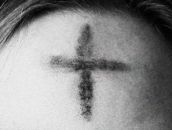
There is.  It is the way of dust and ashes.  On this day of days we often hear read the story of God at creation, of how God chose to make the first human being from the dust of the earth.  “Then the Lord God formed man from the dust of the ground, and breathed into his nostrils the breath of life; and the man became a living being.” dusty-hand

Not out of gold or silver.  Nor out of some ivory tower with lots of knowledge in our heads.  Not out of a great mansion that we might be wealthy masters.  Nor out of some cotton field that we might have to know ourselves to be poor slaves.  But out of the dusty ground God raised us up to life and human dignity.

It’s a story that would come to be repeated by Jesus himself many thousand years later, when he wanders out to find John the Baptist in the desert by the Jordan River, to have John pour the water of God’s anointing over his head.  But the story goes that when John sees Jesus standing in line with everyone else, John tells him, This isn’t right.  What wrongs have you done?  What do you need to come clean of?  And John tries to tell Jesus to switch places with him, to have Jesus do the baptizing.  But Jesus tells John, No, this is right.  It is right that I should stand with the sinners.  It is right that I should be counted among the least, aash-wednesdaynd be alongside the sick and those who can’t afford to pay for a doctor.  It is right that I should know what it’s like to be with the hungry, to wait in the breadline.  For I am dust, and you are dust, and it is right that I should bear the mark of God’s blessing with everyone else.

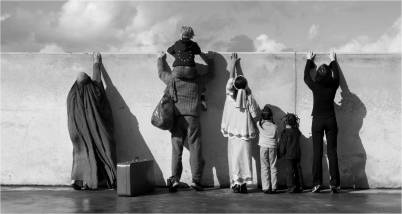
So, on this day of days it is not necessary that any of us be right.  It is only necessary that we believe we can be made right.  And for that all we need do is to get in line beside each other and confess that we are, each of us—no more and no less than anybody else—the beautiful, precious, God breathing dust of new creation.

Becoming Who We Are

Tis the season for making resolutions.  It’s likely that some of us have made a New Year’s resolution or two.  By now you are 8 days in to that resolution.  8 days may not be enough time to have pulled off your resolution but it’s probably enough time to have figured out whether the resolution you have made is going to happen.

In just under 8 days our nation will watch as a new president is inaugurated.  That’s a moment of resolution, don’t you think?  They say that presidents have only 100 days to get anything substantial done.  And not just any 100 days.  It’s the first 100 days.  A four-year presidency has 1,460 days in it.  To get new legislation passed, however, to set a tone for how you’re going to govern, for whether you’re likely to favor diplomacy or military action, to create new programs for education and start initiatives to combat poverty, you’ve got about 100 days.  By then everyone will have got you figured out and they’ll stop expecting you to do anything you haven’t already done.  After 100 days you will have lost the element of surprise.  Before you get up in the morning on day 101, everyone will already have their guns drawn and ready to fire.  Any resolutions you’re going to make then best be made in the first 100 days.  After that you’re just a sitting duck, a head on a pole.  It’s enough to make you think twice about making any resolutions at all.

Of course, the flip side is also true.  If you have only 100 days to make your mark and to make sure it’s going to stick, you might come out of the gate with all your guns blazing. “This is who I am and what I’m going to do.  I make no apologies about it.”  Before New Year’s Day has even arrived, such people have a long list of resolutions already in hand.  There is no talking with them about their resolutions, no convincing them that not every resolution is a good one, that some resolutions may not be worth the collateral damage they’ll leave in their wake.  Such people remind me of Shakespeare’s Macbeth who upon killing off every enemy and foe in his way, sits upon his throne, twirling his crown between his fingers and asking himself, “All this for this?”  It’s enough to make us think twice not only about making resolutions but about the resolutions we make.

In my 36 years I can’t remember ever making a New Year’s resolution, though I must admit, without even knowing it at times, I’ve made my fair share of both good and bad resolutions.

This past week my wife and I watched our niece for a few days while her mom went into the hospital to give birth to her baby brother.  I almost forgot what it’s like to have an almost two-year old around.  But on Wednesday morning I drove my niece to daycare to drop her off for the day and I thought I saw 15 ghosts from my past come back to haunt me as I remembered what it was like when I dropped my own children off at daycare for the first time.

Walking in, I quickly sized up and pegged all of her classmates.  I know—what a terrible thing to do.  They’re not even 3 yet and already I’ve pasted their face to a Most Wanted Ad.  My niece wasn’t off the hook, though, either.  I sized her up too, looking around the room carefully to figure out which kid she could most easily best in a match for her sippy cup.

It all sounds dramatic, I guess.  But who among us doesn’t know what it’s like to be pegged by parents, whether it’s our own or someone else’s?

Among the definitions offered for the word resolution, Merriam-Webster gives two very needed ones.  Resolution: the act of analyzing complex notions; and resolution: the changing of a voice from one that is dissonant and harshly out of tune to one that is harmonious and melodic.

Can we all agree that if we make no other resolutions in the coming year, one resolution worth making right now is that for the sake of our children and ourselves, we will make love simpler to figure out?

It won’t just happen though.  Resolution never has and never will.  By definition resolution means to re-solve, to re-solution, to re-figure what has previously and up until now been figured upon.  Resolutions require then that we reject what has been, that we turn away from damaging habits and old ways of thinking to come up with more just, equitable, and peaceable solutions.

Anyone who wants to lose weight knows that you can’t just hit the gym three days a week after work.  This is but one piece of necessary change.  The other piece may be that you need to go to bed earlier or choose a different entrée at the restaurant.  For there to be real and lasting resolution, these things must work together.

Jesus understood this, that resolution is hard, seemingly impossible work, and that anyone who sets out to make and keep a resolution better be prepared to sacrifice more than just dessert.  No matter what gospel version you read in the Bible, they all include Jesus going out to meet John the Baptist in the desert by the Jordan River.  People have been coming out in waves to see John, to hear him say, “You must change and by the grace of God coming to you soon, you can change!”  Then to have John hold them while the waters of the Jordan pour over them like a cool bath washing them clean, and the warm sun hits their face as John announces for all to hear, “This one is blessed!  This one is holy!  This one is loved of God!”  It’s a moment of defining resolution that John turns no one away from because everyone needs this kind of change.  Then one day Jesus steps up to take his turn at the baptismal font and it totally throws John off his game, as suddenly all of his understandings of love and power are falling short as the One who is God’s very grace has come to ask for grace.

“I can’t baptize you, Jesus, for what change are you in need of?  What sin, what wrong, what hatred, have you possibly committed that you need to come clean of?  I think you’ve got this all backwards Jesus.  Indeed, you should be baptizing me,” John tells him.

But Jesus is resolved.  Not to show off his perfections, not to flaunt his position, not to push John aside as some would and say, “Here, you don’t know what you’re doing.  Let me fix these people.”  Rather, Jesus is resolved to stand among the people, with humility to confess that maybe there are things that even he needs to change.

Listen, if you want to re-figure, to re-solution the world, the way to do it is not to stand at a distance and yell at the world.  Resolutions are never made and kept by those who would only stand behind pulpits and podiums, by those who act and feel entitled by what their Bible says, or because they won an election, or because they are members of a church or citizens of a country.

Listen, if you want to re-figure, to re-solution the world—and the world could use it—then you’re going to have to be as humble as Jesus who was glad to get in line and be counted among the poor and dispossessed of the world.  You’ll have to be as gentle as a suffering servant who would dare not break a bruised reed or snuff out an already smoldering light.  You’ll have to be persistent in your refusal to give in to cynicism and fear, and insist in what you believe, that God is doing a new thing and now is the time to love mercy and to do justly.

Listen, if you want to re-figure, to re-solution the world, you can.  For this is who you are—you are holy.  You are blessed.  You are loved of God.  Now go, become who you are.

Sunday’s Sermon, January 8, 2017

Trounced About, Conceiving Miracles

I’ve been thinking a lot lately about where Mary and Joseph would be right now in the Christmas story.  Somewhere around Samaria, I think.  It’s easy to forget that for Mary and Joseph Advent didn’t last for four weeks but for nine months.

Their Christmas preparations didn’t start when the tree went up and the radio started playing Rockin’ Around the Christmas Tree around-the-clock.  Nor did they really know when Christmas would actually arrive.  There was no calendar with 25 days of doors, behind each one a piece of tasty chocolate, just enough to hold them over as they counted down to the Big Day, which was sure to be merry and bright.

No, for Mary and Joseph these days—these same days you and I are currently living out—were marked by a journey of a hundred miles from Nazareth to Bethlehem.  Mary was so pregnant that she couldn’t remember what it felt like to not be pregnant.  It had been a year since the Angel Gabriel told her she would conceive and bear a son.  What strange words those were to Mary.  Conceive.  Her.  A virgin.  How inconceivable.  Yet there was not just a little bit of joy…and fear…and shame.  Joseph felt it too.  He had spent a whole night tossing and turning in bed, and in his head.  He knew he’d have to dismiss her.  Dismiss her or stone her.  And he loved her too greatly to ever do that.

Then he had a dream in which his own angel told him, “Joseph, do not be afraid to marry Mary, for her baby is from the Holy Spirit.”  But who was ever going to believe that?  When Mary starts to show, who was going to believe it was God’s doing?  Mary the Infidel they would call her.  And then they’d kill her.  So Joseph married her, not because he believed in dreams or angels necessarily, but because he believed in doing the right thing, which is to protect the vulnerable.

I don’t know what direction you’re heading in today.  The Gospel Writer Luke says that it was right around now when Mary and Joseph had to leave Nazareth to go to Bethlehem.  They’d be somewhere near Samaria today.  Mary needs a comfy spot to put her feet up.  What she’s doing being trounced about on the back of a camel, 50 miles from anywhere, God only knows.

I have traveled the road from Nazareth to Bethlehem before, passing through Samaria.  As in the days of Mary and Joseph, the people who live there look like they belong without knowing where or how.  They are among the most vulnerable.  They pay taxes to a government that is not their own and dream of a day when God will conceive in them something miraculous.

I don’t know what direction you’re heading in today.  I find that my own protective instincts are strong right now.  I feel myself wanting to stay close to home, to hold tightly to the things that make me comfortable and safe.  I want my lights, my services, my radio station just the way I like them.  May we not fail to remember, though, that somewhere out there is Mary and Joseph, vulnerable and unprotected.  And they are the ones who will bring Christmas to pass.


All That We Can’t Wait For

This is what the inside of my mailbox has looked like almost every day now for a month.  I imagine yours has looked pretty similar.  Stacks of flyers and magazines, announcing the coming of Christmas.  In our house my children like to flip through the pages and circle the things they are hoping Santa will bring them.  When you compare this process to, say, going to the grocery store, I figure there is a lot to be said for it.  At the grocery store the things we want can very quickly find their way into the cart and onto the checkout belt.  Sometimes this can happen even without parental or spousal consent.  “No dear, I did not intend to buy the 2-pound bag of M&M’s.  I just turned my back and next thing I knew the kids had done it.  But yes, I did mean to buy the box of Ho Hos.”  There could be little disagreement that circling things in a magazine is far safer, less expensive, and generally speaking, much easier on us.  It doesn’t require us to exercise much restraint or self-discipline.

Go ahead, wish away.  Wish all day.  It doesn’t mean you’re getting it, my mother and probably every mother before her has said.

The thing with wishing is that it doesn’t obligate us to anything except to keep on wishing.  Whether we’re wishing on a star, on the right combination of lottery numbers, on the rain to stop, for the family to get back together, or for peace on earth, the luxury of wishing is that we don’t have to be responsible for actually making any of these things happen.  It’s not that we wouldn’t do our part if we could.  It’s that we have done our part, and still we struggle to make ends meet.  We’ve marched and prayed and volunteered and worked harder than hard to love our enemies, and that includes our own family, but still the rain falls.

We call it a wish because we feel it is out of our hands. If the wish is going to come true it will not be for anything we’ve done.  The stars will have to align.  Someone—or something—else will have to make it happen.  Go ahead, wish away.  Wish all day.  It doesn’t mean you’re getting it, which I take to mean, you just never know, you might get it.

This past Sunday marked the beginning of Advent in the church, the season in which we prepare for what is arriving.  It seems necessary to point out that when preparing for an arrival, be it our own or someone else’s, we don’t all prepare the same way.  This is pretty obvious to us.  When company is coming over to the house, some of us vacuum, some of us figure why bother?  It’s just going to get dirty again.  When you’re heading out to do errands and you hear it might rain, some of us grab a raincoat, others of us take our chances.  When we go to the beach, we sit in the sand, right on the edge of the water where the waves come rolling in.  Some of us laugh and laugh to have the waves run up our legs, to feel the sand filling up our bathing suit.  Others of us wait until the last possible second and then get up and run, never letting the water get too close.

In the case of Advent what we are preparing for of course is the arrival of Emmanuel, God-With-Us.  Now I don’t know what type of person you are when it comes to preparing for arrivals.  In this season we will once again hear the story of Mary.  When the angel Gabriel told her that she was favored by God, that she would conceive and give birth to a son who would be called the Most High, whose throne would last forever, Mary said, “How can this be since I am a virgin, least among women?”

“Because God is with you,” Gabriel tells her.  “In the power of the Holy Spirit God is with you even now.”

What does Mary do next to prepare for the baby’s arrival?  No, she doesn’t pick up the latest edition of What to Expect When You’re Expecting.  She doesn’t stock up on diapers.  She runs off to find her cousin Elizabeth who is old herself and has given up any hope of ever having a child of her own, and Mary tells her, “Elizabeth, if it can happen to me, it can happen to you, too.”  This is one way to prepare for an arrival.  Share the invitation to the party.

On the other hand, when King Herod hears this same news, that a baby is going to be born and he will be called the Most High, something within Herod turns vile.  He prepares by dispatching his henchmen throughout all of Galilee to hunt down and kill every newborn male child.

For both Herod and Mary, the arrival of Emmanuel spells the overturning of power, the raising up of the lowly and the bringing down of the mighty.  As such it exposes all of our longest held presuppositions regarding what power is and what it is not and makes clear that for all we are waiting for, we cannot wait to do our part in making way for God to come and be with us.

And what is our part?  The writer of Matthew’s gospel has a simple admonition for us: Keep watch.  For you do not know, you do not know when your Lord will come.  So keep watch.

But where should we keep watch?  And when?  And how?  And who?  Like Mary and Herod, do we need to go somewhere, to see someone?

Like it or not, the answer is as difficult as it is easy.  This is how it will go when the Son of Man comes, says Matthew, two people will be out in a field; one will be taken and one will be left.  Two women will be grinding meal together; one will be taken and one will be left.  People will be eating, drinking, making merry together when suddenly, like the breaking of a levee and the coming of a flood, everything will be up for grabs.  Matthew doesn’t name names.  He gives us no categories by which we can make sense of who will be left behind and who will be taken.  The good go this way, the bad go that way.  There’s none of that.  What is more, we aren’t even told which is better—to be taken or to be left behind.  All we are told is to keep watch right where we are, over the people we are with.  For some of us, this may be easy.  For others, it may be incredibly difficult, especially if we don’t like where we are, or we feel threatened and afraid of those we are with.

This is, however, the only way.  If we want to prepare for the coming of Emmanuel, of God-With-Us, then we’ll have to resist every temptation to bury our heads in the magazines and flyers.  We’ll have keep watch.  We’ll have to go outside and let ourselves be seen and heard as we call the world’s attention to the poor and homeless among us.  We’ll have to look our neighbor in the face—because we don’t know, we don’t know when any of us might be gone—and confess that we have not listened to them well or heard them well because we are white and they are not, or we are poor and they will never know what that’s like.  We’ll have to call out our leaders for playing power games, and do our part to construct a world where the lowly are lifted up and the mighty are humbled.  If we have any hope of meeting Emmanuel as he comes to us this Christmas, this is what we’re going to have to do, because this is what God-With-Us, Jesus himself will be coming to do.

I don’t know what’s on your wish list for this Christmas.  I don’t imagine any of us will be getting any visits from any angels this year, announcing peace on earth.  Look around, though, you just never know.


After the Election, Count Hairs

Well it happened.  I didn’t think it would.  But I woke up on Wednesday morning and then again on Thursday and Friday to discover that what I thought was all but impossible had happened.  We had found a way to say more about an election after it was over than we did while it was still going on.

I won’t say how it went for me.  Not here.  Not from this pulpit or any pulpit.  Not ever.  Pulpits aren’t for calling out election results, only for calling out fear and calling on hope.  This isn’t to say that I don’t care about who’s been elected, or that I never thought it mattered in the first place—Trump, Clinton, Johnson, it’s all the same to me.

It wasn’t all the same on Tuesday when I voted and it wasn’t all the same on Wednesday when I woke up to discover who had won and who had lost.

We have been told that it’s not whether you win or lose but how you play the game that matters.  I don’t think this is helpful wisdom, though.  The fact is, not everyone gets a trophy, not everyone gets the promotion, not everyone gets to ride off into the sunset.  And as for the ones who do get these things, they tend also to get the power to decide for others, and especially for the losers.  And so it has mattered to me all along who would win the election, because if the spoils go to the victor, the victor has the ability to make sure the loser doesn’t go without.

And I don’t think we can overstate how important this quality is, because if our most recent election cycle has shown us anything it’s that sometimes winning and losing is a zero sum game.  It’s not just that the person we wanted to win actually does, or that the person we thought would win doesn’t, it’s that the only thing that makes us feel worse than losing is someone else having won, or put another way, the thing that really makes us feel good about winning is that someone else lost.

When the winner has no concern for the loser and the loser has no concern for the winner, then it’s hard to tell who won and who lost and in the end it’s a zero sum game.

This past Tuesday afternoon I was at the bus stop waiting for my daughter to come home from school.  As with most days, I wasn’t alone.  There are 3 families in our neighborhood whose children all take the bus together and we’ve all become quite chummy with one another.  So there I was—me, two neighbors, and one of my neighbor’s had his youngest son with him.  He was running around, jumping off the curb, and passing time as little boys do, when his mom pulled onto the street just ahead of the bus.  She was getting home from work and he was naturally excited to see her and he darted out in the direction of her car.  She motioned for him to stop, to allow her time to pull over, but he just couldn’t help himself.  Meanwhile the bus was coming to a stop.  So I reached out to grab his hand and pull him back, thinking I was doing the good and necessary thing, and of course he started to yell.  “Let me go, let me go.  You’re not my daddy!”  But of course I couldn’t.  His dad quickly ran over and picked him up, which is when he turned and threw me a gentle punch.  His dad apologized and told him to apologize, too, but the tears just kept coming.  I told him it was okay and that I didn’t mean to hurt him at all.  “I just want you to be safe.”

Anyway, the next day we were out at the bus stop again, waiting, when he came up to me with a peace offering, a lollipop.  Twisting and turning (also as little boys do) he looked at me and then looked away.  “I’m sorry for running into the traffic and for not letting you help me.”  I bent down, took the lollipop and said, “And I’m sorry if I scared you at all.”

It was a beautiful moment.  On a day that had been full of victories and concessions, and not a few parades and protests, it was a beautiful moment, and it might have been enough for all of us except no sooner had the bus pulled up and his older brother came bounding down the steps and up to me.  At the dinner table the night before he must have caught wind of what had gone down that day and he wanted in on the action.

“My brother has to say sorry to you.”

Ah the older brother.  You remember the story of the prodigal son.  Takes his share of the family inheritance early, while his father is still alive, and goes off to distant lands where he spends it all in wasted living.  While all the day long his older brother is back home working double shifts in the field to make up for both of them.  On the day his younger brother does come back home—dirty, worn, wasted, and broke—the older brother is still out working when he hears the sound of party poppers.  His father has decided to throw a party to celebrate the return of his younger brother.

“What?  What the hell is this?  This isn’t the way it’s supposed to go,” the older brother points out to their father.  “I’ve been with you the whole time, pulling my weight and then some, and never have you given me even a pig to roast.  But when my brother, my useless, lazy brother comes home you pull out all the stops.  Come on, at least let me hear him say he’s sorry.”

His father tries to tell him that’s not how it works.  We don’t always get to hear the other person say they’re sorry, that they messed up.  We don’t always get to decide whether they deserve a party.  Sometimes someone else decides that for us.

The problem for the older brother of course is not that someone else is getting a party, but that they’re getting his party, the party he feels he so richly deserves.  If you’re the father, however, it never crosses your mind to think that the party isn’t for both of your sons.

Win or lose, all that is mine is yours, he tells his oldest son.  Come to the party and see.  At the very least, won’t you come see your brother?

When the winner has no concern for the loser and the loser has no concern for the winner, then it’s hard to tell who won and who lost and in the end it’s a zero sum game.

Listen, I’m not going to pretend that this actually is a zero sum game.  News of Donald Trump’s election as our next president has pushed much of our nation and world from fear  to fear.  That someone whose actions and words have threatened the dignity of women and minorities, the safety of refugees and immigrants, and the rights of our gay, lesbian, and transgender neighbors, could be chosen to represent and lead our country is just terrible.  Others have said they’re afraid to let it be known that they did vote for Donald Trump.  I get it.  This is not a zero sum game for us because we’ve already got skin in the game.  Whether we all agree on just how credible the threats are, some of us are trying to find ways to reconcile with neighbors and family members who think we’re thoughtless and uncaring to have voted the way we did, while others are trying to reconcile with what we’ve taught our kids about kindness and compassion.

This past week my friend Melissa, who lives in North Carolina, posted on Facebook that on Thursday her daughter came home from school looking rather sullen.  “How was your day?” she asked her.  When Melissa got no answer, she pressed her a little bit.

“Well there were these boxes in the cafeteria today for children in Mexico.  Do you think it means they’re going to let the kids take their school books with them when they have to go home, when they can no longer live here?”

Now along with Melissa we can wonder all day long at the answer to her daughter’s question, but I want us to understand something.  Melissa doesn’t have an answer to her daughter’s question, and neither do we.  We know what we’ve heard and seen, and not just from one person but from many people, sometimes even from each other, during this election year.  When campaigns are waged, promises are made.  When promises are made, votes are cast and people win or lose.  What happens next, however, we do not know.  We tell ourselves that we know, that our candidate won and it’s going to be great or our candidate lost and it’s going to be terrible, but if we’re honest about it, for a brief shining moment, we don’t know how it’s all going to go.  And in that moment we, like the father of the prodigal, have the power to ask a different question and change the game entirely.

“Won’t you come see your brother?”

The biblical story doesn’t actually have the father asking his older son to come, but we know the question must have hung in the air because the older brother is still out working in the fields when his younger brother gets home.  Still brooding.  Still running up a tally.  “I’ve been with you the whole time and never have you given me anything!  But when that son of yours, that no good son of yours comes back, broke to the bone…”

“My child, you are with me always, and all that is mine is yours,” his father assures him.  “But we had to celebrate and rejoice because this brother of yours was dead and has come to life; he was lost and has been found.”

So the older brother must decide.  Stay where I am, bitter, bruised, and broken in my own right, or go home and be with my brother?

This is, I think, the question Jesus is trying to get through to us this morning in our gospel reading.  He is talking about ultimate happenings and he paints a rather bleak picture.  In the end there will be wars and revolts.  Nations will rise up against nations.  There will be earthquakes and famines and plagues.  Ultimately everything that we’ve ever used to identify ourselves in the world will be burned up or washed away, right down to our holy things—our synagogues, temples, churches, and presidential lawn signs.  Friends will turn against friends, mothers against daughters, brothers against brothers.  This will happen, Jesus tells us, but before it does you are going to be asked to answer a few questions, to speak, and you ought to be careful with what you say because one of the questions may very well be, Won’t you come see your brother?  And what you say will have the power to change the outcome of the game entirely.

Let me ask you something.  How close would you get to your brother or sister if they had swindled away your good name?  If they stood for everything you stood against?  If they didn’t spend money in any of the same ways you do?  If they made a mockery of your heritage?

How close would you get to them if they voted for Donald Trump or Hillary Clinton?

Would you still defend their dignity? Would you still call them your brother, your sister?  Would you listen to their side of the story and help them write a good ending to their story?  Would you get close enough to count the hairs on their head?

Jesus says that in the end this is how close he will be to us.  Close enough to count the very hairs on our head, to make sure that not a one of them will be lost to us.

I realize this may be asking a lot of you right now.  To reach out in faith to someone who is not your own.  But I would remind us that very soon we will be in the season of Advent and then Christmas when once again the God of all compassion will say to us, “I am coming to you who are my own, and though you will turn me away, I am coming to you anyway, so that all that is mine may also be yours.”

Now won’t you come see your brother?  He is so afraid and I’m not sure he knows how not to be.  But you’ve been with me the whole time.  You know what it is to be welcomed, to take from the hand of mercy, to dwell in grace, to love everything.  You can help him to not be so afraid.  Please, won’t you come see your brother?


Sunday’s Sermon, November 13, 2016


Eating Corn with Nancy

My friend Nancy died recently.  Tom is her husband.  This was my homily for them at Nancy’s funeral. 

It is good to be here with you today.  I flew down from Boston on Thursday just for this occasion.  I’m not making a big deal out of it.  I’m certain that a lot of us took a plane just to be here today, and from a lot farther away than Boston.  I’m nearly certain that all of us came here in a car today, and that some of us spent all day yesterday, and maybe even the day before—in those cars—driving just to get here.

Some of us, like Tom, didn’t have to sit for long in the car to get here.  It’s maybe an 8 or 9 minutes drive from here to Wormley Creek.  But I bet it felt like it took forever.  Journeys of the heart can be that way.  We love someone for almost our whole life.  They get sick. We care for them year after year.  How can we expect goodbye to take only an hour or two?

I don’t imagine that any of us walked here today.  That would have taken too long, I guess. Think about all the things we did just to get here, and how we probably would have had to do without them, if we’d wanted to walk to get here.  We would have had to skip breakfast, go without the flowers, the plate of cookies for after the service, settle for wearing a pair of shorts and a tee shirt instead of a finely pressed suit, if we’d wanted to walk here today.

No question, it took some doing to get us all here today.  And I know that’s not really saying much because after all, Nancy died.  And she loved us, and we loved her, and we miss her now very much, and Tom and the family have been so gracious to gather us all here today.  Fly, drive, walk, who wouldn’t have found their way here?

So please forgive me, I don’t mean to sound insensitive or anything, like I’m rushing us out of here.  No one would be more pleased than Nancy to have us linger here for a while. But still, I’ve got to ask: does anyone have any good plans for after the service?  Anyone going to see a movie?  Hitting the beach?  Hitting the bar?  Grabbing a bite to eat somewhere?  Just going to bed early?  Come on, you can’t honestly tell me that you haven’t thought about what comes next.

There’s a Bible story in which we’re told that on a day just like today, at a moment just like now, two people decided to go for a walk.  Now of course it makes you wonder, what kind of day was that exactly?   Well we know it was a day on which a few women had gone to the cemetery in the early morning to visit Jesus’s grave.  Three days ago they watched in shock and horror as their friend was put to death on trumped up charges of trying to overthrow the world.  (All these women knew was that Jesus had always been kind to them, and they guessed it had overthrown their world.)  And now he was dead and no one had given them a chance to return the kindness or to give him a funeral.

So taking along some spices with which to anoint his body they went with the darkness to find where Jesus had been buried.  But when they got there, the grave was empty. Confused and sad by this, they just stood there.  When quite suddenly two men in dazzling clothes appeared, asking them, “Why are you looking for Jesus here?  Don’t you remember what he told you, that this is exactly how it all would go?  That he would be put to death and then 3 days later rise again. He is not here.”

What to do, what to do next…

The women rush off to find some of the disciples to give them the report.  Not to tell them, “We have seen Jesus, he’s alive again!” because they haven’t, and they don’t know.  But just to tell them, this is what we’ve heard.  And naturally some of the disciples believe the report and some of them don’t.

Now I don’t know what you would have done next, had you been there to hear the report, but we’re told that a couple of them went out for a walk.  Maybe they just needed to clear their heads, or clear the air with God.  It had been a full day so far—up early, off to the cemetery, no Jesus there.  Whatever the case, it is while they’re out for a stroll, talking about all that has happened, that Jesus himself meets up with them.  Except they don’t know it’s Jesus.

I used to read this story and say, well I just flat out don’t believe that.  I mean, how can you not recognize a guy you just saw three days ago?  Did three days in the ground really change Jesus up that much?  Maybe the sun was in their eyes at that moment and they couldn’t see clearly.  Maybe?  How do you not see the stars on a starry night?

There’s something I’m beginning to understand, though, about grief and sadness.  Grief and sadness have the power to fundamentally change the way we see each other.

Last May, around Memorial Day, I went with an elderly woman to the cemetery to lay some flowers on her husband’s tombstone.  While there she walked me around a bit, pointing out the various family members who were also buried there.  When you walk around a cemetery you notice things—names, dates, who lived to be old and who died young. Anyway, at one point we were standing in front of a tombstone that read, Harry Simon Cox, Beloved of the Lord.

“That was my uncle, my mother’s youngest brother,” Mabel said (Mabel was the woman’s name).

“That’s a lovely thing to have said about him,” I remarked.  “Harry must have been well loved.”

“Actually,” she said without pause, “no one could stand him; not a friend in the world.  But my mother had Beloved of the Lord put on his tombstone because that’s how she wanted him to be remembered.”field-of-flowers

I think it’s worth pointing out that despite all the efforts to convince the two travelers out walking on the road that day that Jesus was not dead but alive and well, Jesus himself couldn’t convince them.  Oh he tried.  He tried quoting scripture to them, and lots of it. Starting way back in the Old Testament with Moses and all the prophets, he told them the whole story about himself.  But all they had to say was, yes, we had hoped.  He tried reminding them of the promise that he would rise again on the third day and that today is the third day.  But still all they had to say was, we had hoped.  He pointed out the women and what they said about the two men in dazzling clothes, but they called it a vision, a daydream, and said only, we had hoped.

What to do, what to do next…

“So they came near the village to which they were going,” the story goes, “and Jesus walked ahead as if he was going on.  But they urged him strongly, saying, “Stay with us.  The day is almost over.”  So he went in and stayed with them. And while they were sitting at the table, he took bread, blessed and broke it, and gave it to them. Then their eyes were opened, and they recognized him.”

The English poet William Blake once wrote, “I sought my soul, but my soul I could not see; I sought my God, but my God eluded me; I sought my neighbor, and I found all three.”

You see, if it’s proof of resurrection that we want—proof of heaven and of life after death—than we’ll have to do more than read the Bible.  We’ll have to do more than to say we believe in Jesus.  We’ll have to invite a perfect stranger into our home, sit down to a meal with them, and take the bread that they have to offer us.

immigrantsI want to tell you just one story, and then I’ll be done.

For having spent six years in this very place with Nancy, I knew Nancy mostly because we traveled together to Honduras on several occasions.  Nancy absolutely loved Honduras.  It would be hard to say what it was exactly that Nancy loved.  Most of the people that I know who travel on mission trips to third world countries go because they can.  They can heal, they can teach, they can build, they can give in ways that not even the people who live there can.  And this is neither here nor there, but I believe Nancy went to Honduras more for the getting.  To get her eyes opened.  To get her heart opened.  To get an education in people and things that are far and away different.  Then to get to say, here, here is the kingdom of God.

To look at Nancy walk around Honduras you’d think she was one of the relatives, just back in town for a family reunion.  I remember being there with her in 2010.   We were traveling with a group of about 20 from this church.  We’d been in the country all week, staying in a remote village.  As usual Nancy spent her days in the medical clinic working out her compassion, while I worked construction, helping to build new homes for families who had never known more than stick walls and bugs crawling on their children at night.  But mostly I carried water and tried not to break anything.  On the last day of our trip, while most of the team toured some of the local sites, Nancy and I, along with one other team member, Pat, decided to venture back to the community of El Bonete, where the three of us had worked two years earlier.  Tobacco sheds on El Bonete

El Bonete is a hillside community located just outside the tourist town of Copan.  To get to El Bonete you have to walk over a river on a rickety bridge, hike half a mile through some dense cornfields, past a couple abandoned tobacco barns, and then crisscross your way along dirt paths, climbing the whole way. Fortunately for us that day, on the other side of the bridge was a rusty old pick-up truck and a couple young boys who thought it cool to give 3 gringos a ride.  Nancy climbed into the front while Pat and I hopped in the back and held on for what I was sure were going to be my final moments on earth.

At the top of the hill we got out in front of the village school.  About 6 children—dirty, shoeless, and smiling—came scampering out to see what all the commotion was about.  In her divine wisdom, and I think scheming all along for a moment just like this, Nancy had packed about 25 sheets of stickers in her backpack.  She handed them out and the children began to decorate each other and us from head-to-toe.

This went on until Pat, Nancy, and I said, adios, we have to go.  Pat and I said we wanted to hike the distance across the village, about a mile, to see some of the houses we had worked on two years earlier. Nancy said, “Go for it, but I’m going to find a spot just to sit. Come and find me when you get back.” Pat and I weren’t so sure we trusted the idea of Nancy hanging out alone in some cornfield.  When we did come back though, about 45 minutes later, we found Nancy sitting in a lawn chair on a porch, shucking corn.

“Whose house is this?”  I asked her.

She was peeling off another husk.  “I don’t know.”

“What are you going to do with that corn?”

“I’m going to give it to the people who live here.”

“But you don’t even know who they are.

And Nancy said, “What does that have to do with anything?”

She got up and started down the hill. “Do you want to take the truck?” I asked her. “No, we’ll walk.

We hiked back down past the tobacco barns and over the rickety bridge.  On the other side we had a decision to make, walk a long flat path out to a main road or hop a rock wall and be right we needed to be to meet up with the rest of our group.  It was Nancy who decided on the rock wall.  It was about 4 ½ feet tall.  We decided Pat would climb up onto the wall and then reach back to pull Nancy up.  When Nancy went to put here foot against the wall, however, she couldn’t make it happen.  I was just waiting my turn behind her when she looked back at me and said, “You’re going to have to push.”  I suggested that maybe I could give her ten fingers, or grab her by one ankle and a knee and give her a boost.  We could count off and on 5 away she’d go.  But she said no, that’s not going to work.  (Years later Nancy would come to recall it as the moment she realized the ALS was setting in.)

So I squared off behind her.

“Are you sure we shouldn’t try the ten-fingers trick? Maybe we could take the long way around after all?”

She just smiled, assured me that Tom would never have to find out, and counted down 3…2…1.  I pressed up against her bottom side, she laughed, we all heaved and hoed, and up the wall she went.rock-wall

I got to speak with Nancy on the phone the morning she died.  She said she wanted to talk, but I knew she couldn’t and I didn’t know what to say.  So I read her a few lines from the ever-eloquent Anne Lamott.  “Courage is fear that has said it prayers,” Lamott writes.  And then she goes on to talk about what happened in the weeks after the end of WWII, in the refugee camps for orphans and dislocated kids.  Of course the children couldn’t sleep at night with all that fear and terror filling their heads.  “But the grown-ups discovered that after you fed them, if you gave them each a piece of bread just to hold, they would drift off. It was holding bread—a sign that there was more to eat if they were still hungry.  This was bread to hold, to remind them and connect them to the great truth that morning would come, that there were grown-ups who cared and were watching over them, that there would be more food when they awoke.”

In the church when we break bread and pass it around we call it sacrament—mystery, celebration—the body of Christ given for you and you and you and you that no one should be left out, for here, here is the kingdom of God!  We call it a mystery because it makes no earthly sense that God would love us all so equally and graciously.  We call it a celebration because God does.

wheat

In her own way, Nancy was the perfect sacrament.  She passed herself around this world, letting just about everyone take a piece of her.  It was tough at times.  Nancy didn’t like to quit and at the end of the day there wasn’t always much of her left to go around.  She knew it, and Tom knew it, but Tom, you were her holding bread.  No, you didn’t get to take all those trips you were hoping to take in retirement.  You did, however, get her to where she needed to go.  In these last years especially you did your part to carry her with dignity and I believe the very thought of you got her through the nights.  You were her holding bread. Bless you for that.

I’m sorry I didn’t bring any bread for you, or for any of us, today.  But I did bring some corn.  And I wonder what would happen if we started passing it around.  Do you think there would be enough for everyone to get a nibble?  Enough to hold each of us over through our grief, to get us over the wall and through the night?  For the love of God, Nancy and Jesus would say there is, there always is.


Covenantal Politics

I started writing this post a while ago, not long after the mass shooting in San Bernardino, California.  At the time I had titled it, Guns, Safety, and Freedom: Why we can’t have it all and what we can do about it.  I had been inspired (or uninspired as the case may have been) by a swarm of responses that appeared on Facebook almost right away.  In my estimation, the responses were predictable, which also made them lazy and nauseating.

I get that following tragedy, people tend to turn to whatever medium gives them a response, and that in such moments, an enduringly comforting or wise response is not always necessary, though it is recommended.  I also get that to the brokenhearted and/or pissed-off, comforting and wise responses are not always obvious.  And so in our well-intentioned pursuit of helpful healing, rather than pursuing a sobering dose of peaceful clarity, we drink, sleep, isolate, and surf any available crowd, as we fall down drunk right into the middle of our Facebook news feed.

On December 22, 2015, after Syed Rizwan Farook and his wife, Tashfeen Malik, opened fire on a holiday party, killing 14 coworkers and injuring 22 others, it was hard to predict what the first post on my news feed would be that evening.  I mean, thanks to the mechanisms of Facebook, understandings of friendship are as solid or as loose fitting as a baby’s diaper following a good meal.  With the simple click of a button, I can accept or decline people to be my friends.  Once accepted, I can keep them while still adding more, or I can drop them one-by-one or all-at-once.  And they can do the same with me.  No reasons must be provided.  We neither have to have ever met nor have plans to ever meet.  In fact, we don’t even have to recognize each other.  We might simply find interest in some article or picture that the other person posted on their page.  We might both have an answer to a question that our mutual friend, three times removed, has asked about the best place to service their electric hedge trimmer.  I might have caught the fact that your grandmother just died and she was from upstate New York and she lived for a long time with Alzheimer’s and you remember when she still knew your face and, well, my grandmother has Alzheimer’s and I worry that someday she won’t remember me either.

Now I’m not silly enough to think that I’m the first person ever to point out this rather unique quality of friendship as made possible by Facebook.  Nor am I so ridiculous as to think that Facebook holds responsibility for the quality, shallow as they may be, of some of my friendships.  I know people who can’t bring themselves to walk out their front door, let alone to meet a friend for lunch on a busy sidewalk.  That they can touch their world and be touched back because of Facebook makes me feel both glad and sad.  I also knew a man who had hundreds of friends on Facebook and bought rounds at the bar nearly every night, but when he died of an unfortunate drug overdose, the funeral director and I were the only ones who came to pay our respects.

My point is this: it’s becoming harder and harder to figure out what makes for friendship in our world today.  When Syed Rizwan Farook took aim and opened fire no one in attendance at the party saw it coming.  He was their coworker; to some a likely friend.  Yet after the fact, some did say, we should have seen it coming, which is what we always say when the person we want to blame and punish is dead.  Why we don’t just leave blame alone, I don’t know.  Sometimes it just doesn’t seem like enough for people to die.  We want to see someone suffer.

When I logged onto my Facebook Home page, I saw that one of my friends had posted a  link to a national address the President had delivered a few days earlier in which he laid out some statistics regarding gun use and gun control in the U.S.  Perhaps I ought to have clicked on the link to hear the speech for myself, but I didn’t.  It was clear from my friend’s comments about the speech that he didn’t intend for me to actually listen to it.  Underneath the link he posted another link and tagged it, ” Now for the REAL facts about guns.”

Over the past year, as presidential elections have been unfolding, candidates and their supporters have talked relentlessly about facts.  Donald Trump has said, and just said so again today, that homicide rates in cities across our country are up from previous years.  Hillary Clinton says they are down.  Donald Trump says the deficit is on a rocket ship to the moon.  Hillary Clinton says it’s getting lower every day.  Donald Trump says we are less safe.  Hillary Clinton says we are not in so great a danger.  We have heard about the alarming number of black individuals who have been killed by police, and the equally disdainful number of police who have been killed in return.  We have been told that some of the killing is justified, that the acquittal of police officers ought to help convince us of this, but it doesn’t, because we’re not sure the courts aren’t rigged.  Conservatives say Liberals are trying to repeal the 2nd Amendment to take their guns away.  Liberals say the 2nd Amendment isn’t license to have any gun you want.

So what is true?  What are the facts?  Clearly there are none.  That when it comes to guns, safety, and what freedom is in a democracy, there are no facts.  Because in a democracy the only indisputable facts are the ones we can actually agree on.  Everything else is simply chicken feed to be pecked at, fiercely gobbled up, or blown away by an opposing wind.  In a democracy, we can’t have it all, all the time.  In a democracy this also means we can’t be led by someone who either believes they have it all already or who promises they can get it all for us.

I have listened to Mr. Trump.  He promises to make America first again.  He promises to make America win again.  Mr. Trump, I’m part of America.  So please listen now to me: I don’t need to be first.  I don’t need to win, and I certainly don’t need or want for you to do my winning for me.

Do I want to see better jobs for the poor and hard-working?  Yes.  Do I want to walk around my city and fly across country free from harm and paranoia?  Yes.  Do I want to send my kids to college without having to take out a second mortgage on my house?  Yes.  There are lots of things I’d like to have.  But having these things is not a reliable indicator of who is placing first.  At the same time, not having these things is not an indicator of who is losing.  In my experience, as in my ideal world, one cannot secure safety and freedom merely by stating their terms for safety and freedom.  One cannot be safe and free of their own accord.  There is no category for individual safety and freedom, at least not when you’re running for president.  This also means that safety and freedom are not barking points at a carnival.  Step right up, get a ring around the bottle and pick your prize—safety or freedom!

So Mr. Trump, I don’t need you to convince me of your power to make me safe and free.  I need you to lead me in the way of safety and freedom, and for this you need to do more than speak to my worst fears in a calming voice (a calming voice I have not heard).  You must let me see a better version of myself in you.  We need not become each other, for we cannot be the same.  It would be enough for you to be someone that I could see myself wanting to be with in the dark, when I don’t know my way.  Of course, this would require you to see me as someone you’d like to be with when the lights go out.  I can’t imagine this ever happening, though.  You seem way too afraid to ever reach out in the darkness.

I say this based on how much you yell and warn me against certain people.  I can only assume how very afraid you are.  But we can’t both be afraid.  It simply won’t get us anywhere.  So I cannot be afraid.  Because someone has to come in second, and in last.  Clearly you wouldn’t be able to handle that.  I’ll do my best to.

But you probably shouldn’t be President.  Until your politic is to take the same risks you are making others take—getting pushed back across borders to live where there is no safety or freedom, showing a willingness to trust those who absolutely terrify you (you want me to trust you and you terrify me)—you probably shouldn’t be President.

Then again, if we could agree that in the end, it’s the very least among us who ought to have first prize anyway—and seeing as that’s not likely to be you or me, and our better part would be to start making it so now—well, that could change everything.  And I do mean everything.


Trading Up for More

If anger and outrage is what you feel, than I guess that’s what you feel.  But in this great world-wide community in which we all play a part, I need to know what you’re going to do with your anger and outrage.  Because, it would seem, you have the power to shoot me.  And you have the power to stage a protest in my neighborhood, on the street where I live and where my children play.  And you have the power to use every post and tweet—right down to every single word you sputter—to level only critique of our presidential candidates, elected officials, and world leaders.  And if anger and outrage is what you’re feeling right now, I guess it makes sense that these are some of the things you’re up to these days.

But I need more from you.  In this great world-wide community in which we all play a part, I need to know that you’re smart enough to know the difference between what you feel and what is helpful.  Because your criticisms and hashtags and protests, while perhaps justified, are not going to save any lives, black or otherwise, and they’re not going to get a better person elected, and they’re not going to help my children fall asleep at night and dream sweet dreams.  For this, I need more from you.  And I think you know it, because I think you want more, too.

I need you to take some motherly advice and find something good to say or don’t say anything at all.  I know there are times when it’s necessary to talk about what’s not good, but that time can’t be all the time.  So please, if only for today, trade up for something hopeful.  Be a samaritan and cut across the street to meet your neighbor.  Or go one step farther and cut across town to meet your neighbor who lives there.  Bring them a cupcake or a casserole.  Add hopelessness to your list of protests.  I’ll thank you for it.  The mournful will thank you for it.  The dead will praise you for it.