When my day comes to
slip the surly bonds
please don’t let the church
announce it

like gossip picked up
at the grocery stand.
“Did you hear?
So sad—
her son died.”

Which one?
the lady picking out
apples asks without regard
(everything is on sale today)

When my day comes to die
treat it like bedtime
the day before.
Shut the door to tragedy

and all her ugly step-sisters.
Do not suddenly remember
my mother
you forgot until now.

Go to sleep
with me
and when tomorrow comes
wonder at how long

I can go on dreaming.
The Dog Who Would Be Carried
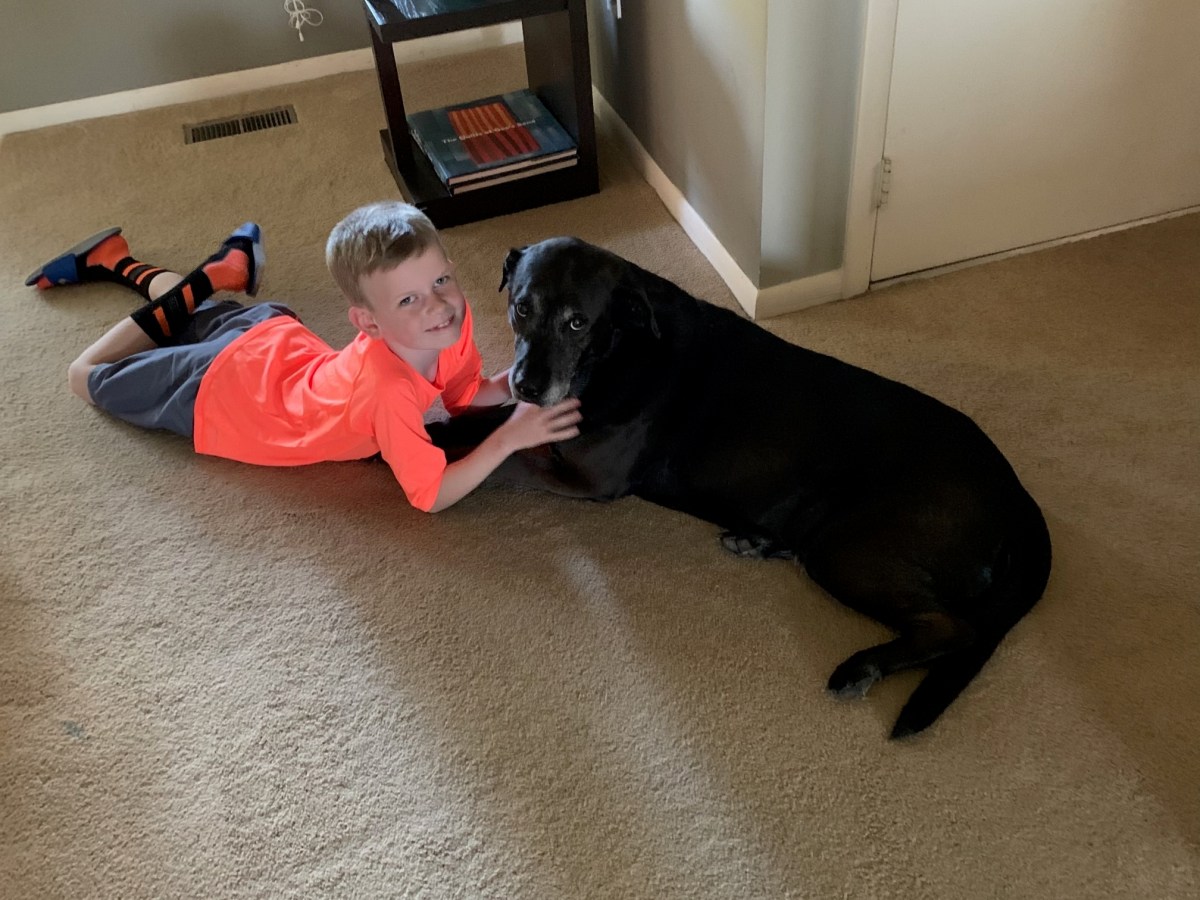
Last week, my friends Bob and Clair had to put their dog, Baylee, down. Baylee was a 15-year-old black Lab who, in dog years, had a long life. Being that she was well loved for all those years, she also had a good life. Bob and Clair knew her end was coming. A couple months ago, she tried to get up one morning from her perch beside their bed and just couldn’t. From that point on, Bob started carrying all 110 pounds of her up the stairs each night when it was time for bed and then back down again the next morning when it was time for breakfast. In the late afternoons he’d carry her from the living room into the dining room just so she could be with them while they read the newspaper and ate dinner. When it was clear that carrying her was causing her too much pain, they tried to do as much as they could in just one room of the house. It would not surprise me to hear that Bob slept a couple nights on the couch downstairs, one arm dangling off the side, gently rubbing Baylee’s ears until they both fell asleep. I don’t know if they just wanted to be close to Baylee or if they wanted her to be close to them; in case something happened and she needed help quick. My guess is, they just wanted her to know she wasn’t alone, for sometimes this is the best and only thing we can do, especially in the face of death. The day before Baylee died, Bob and Clair’s adult daughter, who no longer lives with them, drove 4 hours to come home and see Baylee one last time.
For all this, one might never guess that when they first got Baylee, Bob in particular did not want her. If you were to ask him why, he doesn’t really know. It may have something to do with how much he loved the dog they had before Baylee. It may have to do with the way Baylee terrorized their home at first. When she was still just a pup, they came home one day to find their Christmas tree lying on the ground, Baylee chewing on grandma’s homemade ornament and lying in a puddle of water, spilled out of the stand. They went without a tree that year. But they set up an eight-foot aluminum ladder in the living room and wrapped it in lights. Baylee didn’t seem to mind that. Bob, however, did. For the longest time, he did not want Baylee, going out of his way to not pay her any mind.
Then, not long after that notorious Christmas, she got terribly sick. In a strange premonition, perhaps, of things to come, she woke up one morning unable to walk. Like a leper, her paws were shedding their skin. The doctor at the animal hospital said that with some time and medicine she would be alright, but in the meantime, someone was going to have to carry her whenever she needed to go out, come back in, or just roll over.
Given that Bob worked from home, he was duly appointed for the job. Against his own will, of course. Also, of course, the job wasn’t going to be easy. For one thing, no one who is missing their protective layer wants to be touched. It’s too risky, too painful. And so, even man’s best friend will bristle, bark, and bite at the hand which reaches out to feed, lift, and heal her. She does not know how badly she needs that hand to never pull away.
When I spoke with Bob last week, I asked him, “When did you come to love Baylee?” He told me, “While she was suffering.” He did not love that she was suffering. No, no. He came to love her while she was suffering. While he was reaching out to touch her, to pick her up off the ground and carry her, and one day, she just let her whole body fall into his arms with a trusting sigh.
Look, I swear by my own dog who is currently curled up on my feet after having been scolded for barking to go outside only to stick her nose up at the wind that every problem our world faces can be solved by a simple willingness on our part to take care of each other. Because when we are caring for each other, it is impossible to be mean. When we are caring for each other, we are not only making each other better, we are making ourselves and every creature of the earth better, too. And that is a world worth having.
Holy Milk & Ashes
Last Wednesday, I stopped off mid-day at Cumberland Farms. Standing at the counter waiting to check out, the woman behind the counter had her back turned to me. She was simultaneously organizing boxes of cigarettes and Chap Stick variety packs. When she finally turned around, she exclaimed, “Oh, I was hoping I would see you today.”
Now, you should know, I go to Cumberland Farms all the time, and to this one especially. There’s a reason they call it a convenience store—it’s right down the street from my house, and perfect for getting gas, mints, or that gallon of emergency milk. So, it stands to reason that I would know the people who work there, and that they would know me. Or that we would at least be able to pick each other out of a line-up. But I swear by the glass of milk I drank for dinner tonight, I’ve never walked in there wearing a clerical collar. This is important, because how else can you explain what happened next?
“Do you have any ashes with you?” I turned my head to see who was behind me, sure that she had to be talking to someone else. But she wasn’t. I was the only one in line. “Who me?” I asked, doubtfully pointing at myself. “You want to know if I have any ashes?”
Her question wasn’t without some merit. It was, after all, Ash Wednesday. That day when Christians have been known to smear ashes on their foreheads in remembrance of their mortality. You are dust and to dust you shall return. As if any of us, including Christians, need reminding. It’s not just that we all know pants go on one leg at a time, or that we’re all going to kick the bucket one day like it or not, it’s that we have found every conceivable way to denigrate, demonize, traffic, starve, ignore, and straight up shoot and kill each other, stacking up body counts from Selma to Minneapolis, Nagasaki to Gaza. In life we are mortal, dangerously so.
But also this: “Yes, do you have any ashes with you? You’re a reverend, aren’t you? Don’t you do holy things?”
Even now, I don’t know how the woman behind the counter knew this about me. “Yes, I am a reverend, but I’m afraid I don’t have any ashes with me.”
She paused for a moment to consider my answer, and to put down the fifteen cartons of Virginia Slims she was holding. “That’s okay. We can pretend you do.”
Leaning across the counter, she tilted her head towards me. I put down the gallon of milk I was holding. My fingertips felt cold. I put them to her forehead and traced the sign of a cross. “You are dust, and to dust you shall return.” In that moment, she let the full weight of her head fall forward into my hand, as if daring me to drop this blessing I’d been given. “And you are beloved,” I added.
She looked up and locked eyes with me. “So are you.”
There are a lot of days (most days) I move through this world just trying to keep from being found out. No one has to know you’re a reverend. How embarrassing. You don’t even have ashes on Ash Wednesday. Then, for the cost of a gallon of milk and a stop-off in town, I am called out.
You do holy things don’t you? No, you don’t? We can always just pretend you do.
But we can’t pretend. None of us can. For we are mortal—there is no hiding from this—a mere 36 inches of countertop away from being beloved.
In Defense of Organized Religion
I preached this piece as a sermon on January 28, 2024. Two days before, a synagogue in the town where I live received a bomb threat.
Imagine with me for a moment that it is Sunday morning, 9:00. You are out in your driveway picking up the paper, or taking the dog out, when your neighbor, who is doing the same thing, says, “Would you like to come over for a cup of coffee?” “That’s a very nice offer,” you say, “and I’d love to, but can I take a rain check? I’m going to church in a bit.” “Church? Never heard of it,” your neighbor responds. “What do you do there?”
Given where we are right now, perhaps the question sounds as foolish as the answer is obvious. What do you do at church? In all fairness to your neighbor, however, a couple things worth considering. First, it may be that even among us who are here today, we don’t know the answer to the question. The fact is, when we woke up this morning, we didn’t think about not coming. Coming to church is simply what our parents taught us to do, because it’s what their parents taught them to do.
Arguably, traditions change, some not to be passed along anymore. But among those that are still standing the test of time—on wobbly knees, perhaps, but nonetheless still standing—is church-going. So here we are, some of us because it’s tradition.
But lest the traditionalists forget, tradition does not speak for itself. To tell your neighbor, “I go to church because it’s what my parents taught me to do,” still doesn’t tell your neighbor why you go to church. It only tells your neighbor that you do what your parents taught you to do. The question is, why do you go to church, what do you do there that make you want to be there?
It’s an important question to be able to answer because, among the other things worth considering today is that, in being here, we are part of the minority. That’s right. It turns out, in the United States at least, church-going isn’t tradition any longer. A recent survey by the Pew Research Center shows that the largest religiously affiliated group in the country now are the Nones, those who, when asked to check what box their religion is, checked none.[1] Back in 2007, Nones made up 16% of the religious landscape in the U.S., but today that number has risen to 28%, making them more prevalent than Catholics, white evangelicals, and certainly more prevalent than mainline church-goers like us. In other words, on the whole, there are more people across the United States who stayed home from church this week than who went. Making you the minority.
In saying this, though, I wish to be clear about something: not all minority status is the same. There are those throughout history, and still today, who, on account of their gender, sexual orientation, skin color, national origin, or religion are not being given the rights or treated with the dignity owed to every human being. In courts and on our streets all over the world, and especially here in the U.S., this is true for refugees, Muslims, Jews, members of the LGBTQ community, the economically dispossessed, and our black brothers and sisters. Just this past week in my own town of Attleboro, a man was arrested for openly threatening to bomb and kill members of a local Jewish synagogue. This is true.
It’s just not true for us.
We may be part of a new church-going minority this morning, but make no mistake about it, as a group we are not suffering, we are not being oppressed. We may feel our numbers slipping at times, we may feel our budget tightening, we may mourn the fact that what felt important to our parents does not feel so important to our children, but the fact that we are gathered safely and freely tells us that something more is still going on here. What is it? Is it our American flag here at the front? Is that what makes it possible for us to gather safely and freely? No, that can’t be it. It may well be there was an American flag inside the synagogue in Attleboro all this past week. There was an American flag inside the Tree of Life synagogue in Pittsburgh back in 2018 when a gunman shot and killed 11 worshipers inside, as there was inside Mother Emmanuel, a historic black church in Charleston, South Carolina in 2015, when another gunman, a professing white supremacist, opened fire and killed 9 people in a Bible study. An American flag inside a house of worship can be a sign of many things—a reminder that in the march for freedom, we still have miles to go before we rest. What we must not allow the flag to be is a poor excuse for freedom.
So, what is it? If it’s not the flag that allows us to be here safely and freely, then what is it? Whether we care to have it said about us or not, I dare say it is our white privilege that protects and keeps us—a minority when it comes to being religious in America today—still in the majority. And it is this majority status we must contend with as minority church-goers. Because when you’re in the minority, you’re in a unique position. You’re the fish swimming upstream, the dissenting voice in the crowd, the one going to church.
It seems reasonable then to expect we would have an answer to our neighbor’s question, “Church? What do you do there?” In showing up here today I assume we know we are part of the minority and that we have calculated the risk involved with being so. Which means, I assume we know that we have come to swim upstream, and that our answer will reflect accordingly. Church? What do you do there?
One answer to the question might be that we come to church to get baptized. That’s not bad. We come to church to get splashed with water that, like the rain, falls down on everyone, reminding us that if this is what God is like, then God is for neither the majority nor the minority, God is for the whole of creation. In baptism we remember who we are: unbelievably special to God, just no one any more special than another.

You remember what John the Baptist said to Jesus when Jesus went to him to get baptized. John was down at the river, a long line of people waiting their turn, when John looks up and sees Jesus in line. “What are you doing here? This isn’t for you, you don’t need this,” John tells him.
Then Jesus came from Galilee to John at the Jordan, to be baptized by him. John would have stopped him, saying, “I need to be baptized by you, and do you come to me?” But Jesus answered him, “Let it be so now, for this is the ultimate right.”
Matthew chapter 3, verses 13-15, translation mine
For John, baptism was all about repentance, about owning up to the mess we’ve made of things, as we make a 180 and choose to get right with God. Naturally then, John didn’t think Jesus needed to be baptized. “You’re already right with God. If anything, Jesus, you should be baptizing me.” But Jesus tells John, “Get it straight, we all want to be right, just as we all want a better world.” Your neighbor who burns their trash wants to be right. Your mother-in-law whose political views make your blood boil wants to be right. Our current President, and whoever our next President is going to be, they want to be right. Holy-rollers and high-rollers want to be right. We all want to be right, and we all want a better world. But we we’ll never get there without first standing in line together.
It’s a good reason to come to church, to get in line so you can be splashed with water and remember that you are unbelievably special to God, just not any more special than anyone else.
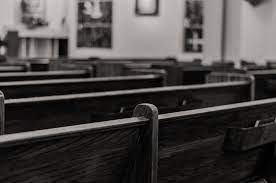
If remembering who you are isn’t enough to bring you back here again next week, though, another good reason to come to church is to be remembered. I am fond of saying that, for all the planning that goes into getting ready for church every Sunday—creating, formatting, and printing a bulletin, writing a sermon, prepping Sunday School lessons and crafts, rehearsing choir anthems, lining up readers, deciding on conversation topics and games for youth group, not to mention just getting ourselves and the kids up on time, dressed, fed, and out the door, through the rain, and into the car—the moments I tend to cherish most are the ones none of us could have planned for. Like the moment I overhear someone ask another person at the back of the sanctuary, “How’s your daughter doing? I remember you saying a while back that she was going through a rough patch.” To which the other person replies, “You remembered I said that? I didn’t think anyone was even listening.” Or a moment like last week when I caught a glimpse of Bill, 90 years old now, helping Patrick, 7 years old now, carry his juice to the breakfast table. Or the moment some middle-aged man texts me at 10 o’clock at night on a Sunday to tell me how the holiest part of his day turned out to be 10 minutes he got to sit quietly in the pew listening to someone read “The Very Hungry Caterpillar” to the children. Or that moment when someone accidentally drops their communion bread on the floor and the person next to them breaks their already small piece in half to share with them.
I’ve been thinking about this, about all the things that can happen just by us coming to church, and I asked Annie to read for us Mark chapter 1. Jesus is in the synagogue when a man with an unclean spirit comes up to him.
And when the Sabbath came, he entered the synagogue and taught. They were astounded at his teaching, for he taught them as one having authority and not as the scribes. Just then there was in their synagogue a man with an unclean spirit, and he cried out, “What have you to do with us, Jesus of Nazareth? Have you come to destroy us? I know who you are, the Holy One of God.” But Jesus rebuked him, saying, “Be quiet and come out of him!”
Verses 21 – 25
Whether Jesus knew this man would come up to him, or that the man would even be there, we don’t know. Mark says only that Jesus is in the synagogue because it is the sabbath. And this is what you do on the sabbath—you go to the synagogue. So, maybe it stands to reason that Jesus has seen this man before, that they have been in worship together for many years. But there’s something about this sabbath, and this moment, that is different, that makes the man cry out for attention in a way he has never done so before. What is it? What is different? It is that Jesus is the one preaching. On all the other sabbaths it has been the scribes doing the preaching. When they preach, no one really notices what is said because it’s all been said so many times before. Color in the lines, children should be seen and not heard, God rewards a hard worker, and other lies meant only to protect the privileged. Hardly enough to scare off any demons. But today, Jesus is preaching, and he preaches, we are told, “with authority.”
I have no idea what that means. In 2023 in America, I have no idea what “authority” means. The opposite of being able to scare off demons, these days it seems to mean the power to bring them on. But I believe you do, I believe you have what it takes to preach with authority like Jesus—to treat your listeners with the dignity their humanity deserves as beloved children of God, to make them feel safe enough to want to risk becoming new, to send their demons running—because I have heard you do it many times before.
Can I just say, whatever you do, don’t stop now.
[1] https://www.npr.org/2024/01/24/1226371734/religious-nones-are-now-the-largest-single-group-in-the-u-s
The Help
One day last week I was sitting in my office in the middle of the afternoon when the phone rang. The voice on the other end told me that something awful had happened. “Can you come?” they asked. I got in my car and drove to where they were, gathered with about a dozen family members in a hospital waiting room, buried under the weight of an unexpected, tragic loss. For about 30 minutes we sat in a circle, crying, no one really saying much, until one person turned to me to say, “Could you offer a prayer?”
Now, that should be an easy request for me. The fact is there’s a reason I got the call that day. When the world is spinning off its axis, the person in my shoes is expected to be able to step up and do something. Stop the spinning, or at least keep us from passing out. Or so I tell myself. But that day, I just wasn’t myself. Something had happened that morning. It was a small thing, nothing more than a criticism from a passerby, but when I walked into that waiting room, it still had me by the throat. Nonetheless, I (bravely?) said, “Of course, I’d be glad to offer a prayer.” Everyone closed their eyes and bowed their heads. In my memory, what came out next was something like alphabet soup after it’s been thrown to the ground by a toddler and licked up by the dog. Letters all mixed up, the only vowel remaining, U, so the only thing you can say is, umm, uh.
Somehow, after about 90 seconds of verbal vomit, I remembered what Ann Lamott once said, that the only two prayers you need are, “Thank you, thank you, thank you,” and “Help me, help me, help me.” Yes, let’s try that, I told myself. “God, whoever, wherever, you are, thank you for hearing us. Now help us.” To which an aunt, sitting two spots over to my left, blurted out, “Amen.” Only, I wasn’t done with my prayer. But what do you do when someone says Amen? You say Amen too and be done with it. So that’s what I and everyone else in the room did. We said Amen and opened our eyes.
At that point, the only thing I could think to do was get out of there as quickly as possible. I stood up, thanked the family for welcoming me, said peace be with you, and walked out.
On my way back to the parking lot, I ran into someone else I knew and stopped to chat for a minute next to the vending machines. While standing there, the aunt from the waiting room just happened to come by to get some crackers. “Thank you for coming today” she said to me. “It means a lot to us that you came right over.” “Anytime,” I said to her. Calking a smirk, I added, “I got to tell you, though, you really threw me off back there when I was praying and you said Amen. I wasn’t quite done yet.” Putting her hand on my arm, she gave me a tender smile. “Sorry about that, but you sounded like you could use some help.”
You understand, this is a story about the difference between those who are willing to help but can’t, those who are able to help but won’t, and those who can help and do. It is also a story about grace, which can be of help to everyone.
The Uninvited Guest
For Christmas Eve, 2023.
Into this world, this demented inn
in which there is absolutely no room for him at all,
Christ comes uninvited.But because he cannot be at home in it,
because he is out of place in it,
and yet he must be in it,
His place is with the others for whom
there is no room.His place is with those who do not belong,
who are rejected by power, because
they are regarded as weak,
those who are discredited,
who are denied status of persons,
who are tortured, bombed and exterminated.With those for whom there is no room,
Thomas Merton, 1915 – 1968
Christ is present in this world.
It’s an experience we’ve all had. The uninvited guest. Even if you don’t think you’ve ever had an uninvited guest, you have. Because the uninvited guest doesn’t always have to be a person showing up unannounced at our door. It could be a person showing up unannounced on the playground at school. An otherwise good friend, but because they are unannounced, because the game we are playing only calls for 4 people and we already have 4, this friend is suddenly uninvited.
It could be that brother or sister who, whenever they come to town, always wants to stay at your house. You have 3 other siblings also living in town, but it’s Christmas and you know they’re going to be calling to ask, got any room in that inn of yours? And you do. And though you really do love your brother or sister, and find true pleasure in their company, and would leave a key under the mat for them, you didn’t actually invite them to stay with you. But that’s family, and you know what they say about family—there are no guests. Which I guess means you can never be uninvited. You can only choose where to stand for the family picture.
It could also be that the uninvited guest isn’t a person at all. I heard a story from a woman this past week about how she took in a dog from a shelter recently. The shelter had to close suddenly and they needed a home for all the animals, and she, loving dogs and not being able to bear the thought of one without a home, took one in. It all happened so quickly, though; much more quickly than it normally would. She didn’t have a chance to spend much time with the dog before taking it home with her, or to learn much about its likes, dislikes, and behaviors. Does it like to play fetch? Does it enjoy swimming? Does it jump, cuddle, bark, or bite? This wasn’t a newborn puppy she was taking in. The training window was long closed for this one. What this woman was doing was akin to adopting a teenager on the eve of their 18th birthday or taking back a prodigal after they’d run away from home with everything and come back with nothing. There was no way for her to know how taking in this dog was going to go. She’d have to take a chance on the power of invitation.
A couple days later, the dog attacked and killed the woman’s cat. She was heartbroken about it, and understandably so. But that wasn’t the worst part. The worst part was that she was made to feel dumb and wrong by those who told her she should have known better. How can doing the right thing turn out so wrong? she said to me. If you can answer that question then see me after the service and I’ll give you the woman’s name and phone number, because all I could think to tell her was, Doing the right thing is never wrong. It’s just hard.
Invitation is hard. There are some who would say it’s getting harder all the time, but I think it’s always been hard. It’s hard because, try as we may, there is no way to know how it’s going to go when we open the door of our hearts, homes, schools, businesses, and churches to one another and say, come on in, and welcome. And so, we are left having to make judgments and decide early on what it might cost us to be trusting, kind, and generous.
Will doing the right thing turn out right, or will it turn out wrong?
Not knowing the answer, it is no wonder, I suppose, that we build walls at our borders and fences around our property. This way the uninvited guest won’t even reach our door, let alone knock on it, have us open it, and discover that we were wrong about them. They have come only to steal, kill, and destroy.
Not knowing the answer, it is no wonder, I suppose, that neighbors have become to each other like something even less than uninvited guests. We have become like the missiles crossing back and forth over Bethlehem even tonight. We have become like signs in the front yard, placed there only to discredit whatever the sign in the front yard next door says. We have become like objects—cold, hard, unfeeling, suspect to each other.
Will doing the right thing turn out right, or will it turn out wrong?
Who is daring enough to find out? Tonight, we celebrate One who is. Tonight, we celebrate One who comes uninvited into this world, this demented inn, where there is absolutely no room for him at all. God comes in the baby Jesus because God must be in this world.
Only you can choose what to believe about this one, but God is love, and it is always love’s way to go where love has yet to go, and there to do what love does. To fill empty virgins with life. To feed the hungry with good things. To humble the mighty with truth. To show up uninvited if only to surprise us with (with what?), with love.
I read a story not too long ago about a young boy from Anderson, South Carolina named Richard Ballenger, who on Christmas Eve in 1980 was asked by his mother to shine her shoes, because she was busy wrapping presents. Taking his mother’s shoes, little Richard did as he was asked, and then, with the proud smile that only a seven-year-old can muster, he presented them for inspection. His mother was so pleased, she gave him a quarter.
On Christmas morning as she put on the shoes to go to church, she noticed a lump in one shoe. She took it off and found a quarter wrapped in paper. Written on the paper in a child’s scrawl were the words, “I done it for love.” [1]
It very well may be, and I think it is, that God shows up again every year at Christmas in flesh and blood for one reason and one reason only: for love.
Like a long-lost friend come to remind us of our better days.
Like a gentle presence standing in the doorway of our sorrow.
Like a faithful companion who stays long after visiting hours are over.
Like a fellow soldier in the march for freedom.
Like a woman who takes in the dogs that need to be taken in.
Like a baby who does not check the invitation list to see if they are due to arrive tonight, but goes where love has yet to go, to do what love does.
Yes, on this night when the God who so loves the world sends his son to be born of Mary, let us remember, we are ones for whom Jesus comes. Uninvited as he may be, unready as we may be, as demented as our inn is, God comes for us this night. That we might be as one, great, human family to one another. And you know what they say about family—there are no guests, so you can never be uninvited. You can only choose where to stand for the family picture. But don’t worry, God says everyone will get to hold the baby.
[1] Manning, Brennan (2004). “Watch for the Light: Readings for Advent and Christmas.” Maryknoll, NY: Orbis Publishing, p. 202.
On the Shortest Day of the Year
We call today the
shortest day of the year.
But anyone who knows
how to keep time
knows that all we mean by this is,
the light is going to run for cover
faster today than it does on any other day.

We still get the same
blessed 24 hours—
no fewer and no more.
It will simply be that a few more
hands of the clock
will be spent in darkness than in light.

And here's the thing,
we can't do a thing to change this
(unless we're going to drive west all the time).
It's not like we can go to the store
to exchange some of the extra darkness
for extra light.

But who would want to do that anyway?

Don't we know that
without the darkness there is no light?
There is no waiting for the stars
to come out at night.
And O how brilliant are the stars!
There is no sun rising
over the blackness of the sea.
There is no possibility to learn
to trust in what can only be felt.
And there is no hope of tomorrow, when
the light will start to creep back into the day
a couple minutes more at a time.

Until one day we will reach the longest day of the year and,
looking back, we'll say,
Look how far we came together.
Let's do it all over again.

A Thanksgiving Story
Next April my dog, Quimby, will turn 7. When we first got her, we did what a lot of dog owners do with puppies. We bribed her. I mean, we trained her. When we said “sit” and she sat, we gave her a treat. When we said “come” and she came, we gave her a treat. And when she went out into the yard to do her “business,” we gave her a treat. To be honest, the training never really took. To this day, when I say “come,” she mostly runs away.
But one thing she has managed to get pretty good at it is knowing where we keep the treats. Even after I’ve had to go out and get her because she wouldn’t come when I called, sometimes dragging her by the collar just to make clear she’s in trouble, she will still come into the kitchen and go right to the cabinet where we keep the treats. I hate to say it, but she will even come in and sit right down in front of that cabinet, like she’s paying homage to her god, like she is a most obedient servant. I will tell her, no, you don’t get a treat for doing what I made you do. A few minutes later, I’ll wander back into the kitchen from wherever I went off to because I was trying to ignore her shameless plea. Always, she will be sitting there, looking grand and at attention, staring up at the treat cabinet.
The funny thing is, it’s been years since we kept any real treats in the house. Ever since we had our kitchen remodeled, and ever since the veterinarian told us Quimby needed to lose about 15 pounds, the only treats have been carrots and the occasional apple slice. Clearly, Quimby never got that message, or she just doesn’t care. She’s holding out hope that, someday, her master will once again fill that cabinet with treats, the good kind…with bacon.
Then, a couple days ago, fortune came through for her. I was out in the yard chatting with my neighbor. Quimby was rolling around in the grass, giving herself a back scratch, all four legs stretched to the sky. “She’s the happiest dog around,” my neighbor said. “Yeah, and we don’t even give her treats anymore,” I said wryly. I proceeded to tell him about our failed training, the kitchen cabinet, and the 15 pounds.
Later that evening, there was a knock on my door. It was my neighbor, holding a bag of dog treats, the good kind…with bacon. “Put these in the cabinet and give her one every so often, whether she deserves it or not. Otherwise, what’s the point in hoping?”
This Thanksgiving, may we be filled with the kind of hope that perches itself in front of an empty kitchen cabinet. May we remember the millions of creatures, and especially the children, who go to the kitchen cabinet every day to find them empty. And may we all be the kind of neighbor who shows up at the door with treats, the good kind. Because what is hope if not that thing which comes to us when we need it, and even when we don’t deserve it?

Taking an Elbow to the Face
My son plays basketball. If you ask him what he loves about playing, he’ll tell you, being on the team and shooting. He loves being with the other boys on the team. He doesn’t even have to be on the court with them. He loves just being on the bench with them, doing what teammates do—being in the huddle, cheering on a good play, cheering each other up after a bad play, sharing packs of bubble gum. He loves the feeling of belonging that comes with putting on a uniform. Whenever I see him wearing it, he always looks 10 feet taller.
And he loves to shoot. He’s pretty good at it, too. He has a smooth jumper and he’s always one of the few out there who can consistently hit a 3-pointer. But when it comes to playing defense or going under the basket, he shies away.
We talk all the time about how in basketball you can’t just do one thing. Your team also needs you to make some steals, block some shots, and drive for the hoop. And the thing is, in his mind he knows he can do all these things. He’s got quick eyes and good height. And I know he can do all these things. I’ve seen him do them a hundred times out in the driveway when playing against me, or when mixing it up with his own teammates. But out on the court, with 9 other 12-year-old boys all going for the ball, and 5 of them kids he’s never seen before, it’s a different story. He doesn’t want to end up on the ground. He doesn’t want to wrestle for the ball and wind up taking an elbow to the face at the same time. Who can blame him? I try to tell him it’s no big deal. So you take an elbow to the face, you get fouled, or even give a foul. It’s all part of the game.
If I had to guess, though, taking an elbow to the face is not really what he sees when he imagines himself driving for the hoop. He sees blood, broken bones, and himself being carried out on a stretcher. You understand, I’m exaggerating. But you get the point. The mind is a powerful friend or foe. It doesn’t matter, nor does it seem to help, that I give him pep talks. You just need to tell yourself you’ll be alright. Don’t think the worse. Mind over matter. You know the cliches, and so do I, because my parents gave them to me, and they didn’t help me, either. In fact, most of the time they only made me dig in my heels, convinced me even more that, if I took their advice, things wouldn’t turn out alright. I’m sure I even told myself in those moments that my parents didn’t care about me.
Now, as an adult, I’d like to think I’ve gained some perspective, perspective that my own kids will have someday. Part of that perspective comes in seeing, and admitting, that my parents did care about me. That when they signed me up to be part of the local theater group, or picked me up to put me on the ski lift to the top of the mountain—“We didn’t pay all this money so you could conquer the bunny slope,” my dad said—they weren’t actually trying to kill me. Yes, I still believe I would have been perfectly happy all my life on the bunny slope. Not everything in life must be a lesson in how to overcome. As a parent (and as a human being), I try to remember that my great adventure doesn’t have to be someone else’s great adventure. For some, the most courageous thing we could do today was done the moment we chose to get out of bed.
And yet, I’d be lying if I didn’t say I’ve also gained perspective in believing this: my son probably needs to take an elbow to the face. We all do. Not because I want to see him or anyone else get carried out on a stretcher, but because it may be the only way for us to have our minds changed about who or what has any real power over us.
It may be that if he did take an elbow to the face in a game, he would hit the ground. He might even bruise or bleed. But I also believe two (three!) other things would happen. One, he wouldn’t die. Two, whoever elbows him to the face would be the first not only to help him up but also to ask if he’s alright. And three, he would discover that what he has long feared is no longer to be feared.
Can you imagine how different the world could be right now if humanity agreed to play by these rules? That if you hurt someone, purposefully or not, you have to personally bind up their wounds. That if you shoot a gun to kill someone, you must dig your victim’s grave, lay their body in the ground, and comfort their loved ones. That if you fire a rocket to destroy the homes of millions, displacing them to the streets, you have to rebuild their homes, and, meanwhile, take those millions into your own home.
Can you imagine how different the world could be right now with a love like that? Shamed by kindness, we would never go to war again.

Middle Eastern Street Crossing
In recent months, we have all seen the death and destruction wreaked by Hamas on Israeli citizens. What has been done is tragic and inexcusable by any standard of humanity. I have nothing but sorrow. We have been reminded once more that anger is powerful, and violence only leads to violence.
When staring into the face of the pained and dead it is only natural to ask: who did this to you? Then, if there is an answer, even a faint one, we take our place alongside the victims. For who would ever want to be accused of keeping company with the victimizers, especially when the evidence of their deeds is still lying warm in the streets? No, we know what we must do to avoid any appearance of impropriety: decide who the enemy is, and should you see them, especially them, lying hurt and bleeding in the street, go around them. If you really want to try your hand at being a good Samaritan, just know this: it will come at a great cost to your own safety and reputation. You may wind up being counted among the guilty.
And yet, who is the enemy? We must be careful to decide. Those who are familiar with the story of the Good Samaritan know it to be a story of decisions. When someone lies dying and bloodied in a ditch, how do you decide on whether to stop and help them? Some conclude quickly that the person deserves what they got. They were in the wrong place at the wrong time, and should have known better. The tattoo on their arm, the label on their clothing, the hue of their skin, the cut of their hair confirms it for you. They’re in your part of town and no amount of personal or professional obligation could make you their helper, let alone their neighbor. They are the enemy, the reason you—so inconvenienced—must find another way home. That a Samaritan stops to help is shocking because Samaritans were considered the enemy. Categorically outcasted in every way, we simply don’t ever expect to be helped by our enemies. It is much easier to think of them as the people who would blow us up, and so we must blow them up first.

I visited the Middle East many years ago now. I remember vividly the feeling of walking through the streets of Hebron. One of the most ancient towns in the region, it was once home to Abraham, that great tree from whom Jews, Muslims, and Christians all take their life and grow their branches. The cobblestone streets were filled with Palestinian women selling their wares, while men sat nearby on grain sacks, their backs perched against buildings strong but sagging with time, bantering and smoking the day away. Up and down the streets, like mice scurrying underfoot, children kicked soccer balls. And every 5 or 6 feet there would be an Israeli soldier holding a machine gun. I thought then, as I think now, that people who carry guns without need of food are the most scared people in all the world. And yet, fear is not without its reasons.
Modern day Israelis know that not even a century has passed since their grandparents were living in Germany, Poland, Yugoslavia or some other European homeland, peaceably tending to life when one day their windows got smashed. Running to get under the floorboards in the kitchen, not everyone made it. Pulled outside, yellow stars sewn on their jackets like a breast plate, they were stacked on trains bound for Auschwitz, Buchenwald, Birkenau. Not a one was tried but 6 million plus were still found guilty. And of what? Of being someone; of being Jewish. Those who survived the gas chambers and death marches still came out wounded, to be forever haunted by ghosts.
Meanwhile, the rest of the world reeled from their own brand of guilt over not having stepped in sooner to stop the massacre, over having to realize the answer to the question—who did this to you?—was now, we did, we did this to you.
For the Jewish Holocaust survivor, returning home was both dangerous and unpopular. The War was over but prejudice and bigotry would not be defeated so easily. In time, The United Nations, that global symbol of goodwill and good intention, would give these millions upon millions of refugees a new home. A sliver of Mediterranean land about which prophets once said, milk and honey will flow. And they will not hurt or destroy on my holy mountain. What could be more promising and perfect for a people who have just come through hell than to settle in a place where nothing and no one can hurt or destroy? So became the official State of Israel.
And yet, along with a thousand hopes and fears, the scars of near extinction remained. In the new land of Israel were also Abraham’s other children. Palestinians. Mostly Muslim, some Christian, together with the Jews, they were like the stars in the sky. A galaxy of lights that could give warmth like a bidding fire, welcoming the neighbor in, or spew its heat like a .22 caliber, perched in the window and aimed across the street, never to trust their neighbors again.
That the State of Israel has controlled the borders in and out of Gaza and the West Bank for decades, keeping their neighbors in check at all times, tells us something about how powerful memory is, and the fear it kindles. I can only imagine what it is like to be an Israeli today. To live in dread that what the world did to your grandparents in the fatherland of Germany is now happening to you in the motherland of Israel. The Israeli solider I encountered in Hebron years ago is no longer there. I am sure, though, that another one, machine gun in hand, has come along to take their post, and that is of little wonder.
But fear of our neighbors also kindles oppression and desperation for our neighbors. Which is to say, as sick, twisted, and reprehensible as what Hamas did to Israel is, it did not happen in a vacuum. To whatever degree rocket launching and gun slinging appears random, indiscriminate and unprovoked, it may also appear to happen in a vacuum. Except, nothing happens on its own.
When the State of Israel began, it was weaned on land that Palestinians had already been existing on for centuries, though they were not a state themselves. They were subjects of British colonization. Not foster children, not even adopted children, Palestinians have persisted on the hope of one day just not being subjects anymore. Then, with the founding of Israel, they became subjects all over again, and that’s how it remains to this day. I can only imagine what it is like to be a Palestinian. The frustration and desperation that comes from being walled-in and occupied by another because they deem you a threat. No question, the tactics and thinking of Hamas is disgusting. That the majority of Palestinians believe they are disgusting is worth noting, as is the fact that they can imagine what drives them to extremes.
Yes, there has always been some measure of talk on the part of the world about helping to foster a two-state solution, Israel and Palestine living side-by-side on the map as equals. I don’t know if any two-state solution is ever going to happen, or even be possible. I do know that, as with anything, solutions begin with having the right ingredients, for you get what you put in. So Israel could choose now to act justly and reject vengeance. This would be a start. Justice doesn’t turn a blind eye to what has been done. It takes account, but stops short of thinking that the only way to guarantee your own safety is to obliterate everything and everyone who reminds you of your enemies. Justice would never kill children.
The United States, the “most powerful nation on earth,” could show up not just on the side of Israel, but on the side of the vulnerable, which would mean showing up in Gaza. If we’re going to provide tanks and guns for people to go to war with, we must also be prepared to stand in front of those tanks and guns when they are pointed at innocent lives. How powerful that would be.
Our faith communities can reject the dualism that says supporting Palestine means being anti-semitic, or supporting the existence of the State of Israel is anti-Muslim. It is not un-Christian to love your Muslim and Jewish neighbors as you love yourself. We all come from the same tree.
And we can all agree that we have done this to each other. We have insisted on choosing between Israelis or Palestinians, war or peace, Jew or Muslim [insert a thousand other binaries here], and so we have left ourselves no option but to walk down only one side of the street. But every street has two sides; every border has two sides; every person has two sides, and crossing over is as simple as choosing to do so. Because unless we cross to the other side, nothing, nothing, nothing can ever be made whole. And wouldn’t whole be wonderful?
 PleaseGrace