I know people who will pick up a book and read the last page first because they can’t stand not to know how the story is going to end. It’s not enough for them to be along for the ride. They want to know how, when, and where the ride is going to end. I have nothing against such people, I’m just not one of them. I also know people who will pick up a book, read its first 10 pages, and put it back on the shelf saying the story just isn’t there. It doesn’t grab them right off, and if it can’t do that, it’s not worth sticking with. The book might still be a very good one, a prize winner even, but it’s not going to win a spot on their shelf, and I have nothing against them for saying so. I’m just not one of them, either.
When I pick up a book I go cover to cover: Dedication, Table of Contents, Acknowledgments, right on through to any Epilogue or Author’s Biography. In between it’s all page by page, paragraph by paragraph, one word at a time. If my cup of coffee is especially large and hot and there’s no one to stop me, I might even check the publication date. I’ll give any reader who skips right to the last page the benefit of the doubt that, finding the end to be excellent, they’ll flip back to the first page and give the whole book a fair trial. But having already discovered where the story is going to end, I simply wouldn’t find the rest of the book so marvelous.
This isn’t to say that every book is a good one. As the American philosopher Mortimer J. Adler once claimed, “In the case of good books, the point is not to see how many of them you can get through, but rather how many can get through to you.” I take this to mean that if the book doesn’t stir your conscience and cause you to love and hate, all at the same time; if it isn’t to you as it is to Madeline L’Engle, “a star, a living fire to lighten the darkness, leading out into the expanding universe;” if it doesn’t, in the wisdom of Oscar Wilde, “make you to find beautiful meaning in beautiful things;” then I suppose the book may not be very good and that perhaps Charles Dickens was right to say, “There are books of which the backs and covers are the best parts.” But such things should only be decided after you’ve read more than the first or last 10 pages.
For what it’s worth, my favorite books tell stories whose endings I didn’t see coming. This is one such story.
_______________________________________
It was many years ago now on a Saturday morning. The sky was bright blue. I pulled up to Bernard’s house in my minivan and waited for him to come out. At 9 a.m. he appeared looking like a Nike fashionista. Sporting blue workout shorts with a bold neon green stripe down each leg, a solid navy blue tee-shirt with a matching cap, and a pair of white sneaks with the infamous Let’s Do It flash embroidered (also in blue) above the heels, he was poised to sweat it out in battle. In a little less than an hour we would step to the starting line of Bernard’s first ever 5K road race. But first he had to get in the passenger seat, which he did in the most human way possible. “Looks good,” I assured him. “You’re all lined up.” With that, he bent forward and fell backwards, trusting that my words, and the seat, would not fail him. I buckled him in.
I’m sure that had I asked him in that moment if he had ever imagined himself pounding it over 3.2 miles—16,404 steps—of dismal pavement, surrounded only by dull scenery and 1,000 perfect strangers all mindlessly rushing past each other on their way to a finish line of free bananas, he would have told me straight up, “No.” Maybe he would have taken to a slow stroll in the woods, freely stopping at will to lean on a rock and admire how crinkly the leaves sounded underfoot. But a foot race? Ludicrous!
Yet here we were, no less than 810 days from where it all began.
On that day, 810 ago, Bernard was cruising his motorcycle along New England backroads at a mellow 40 m.p.h. His iPod, safely perched on the dashboard, was blasting out Beethoven, because that’s how Bernard rolled on his Harley Davidson. The sky, like another one soon to come, was bright and blue. At 2:30 p.m., Bernard decided to turn the handlebars towards home. What happened next—call it mystery, mayhem, only those who can look into the darkness and still see the light would call it mercy—is a memory only Bernard can recall, and he doesn’t. With the force of someone who had just been sucker-punched to the head, Bernard tipped over. Because there was no way to see it coming, there was also no way to protect himself from it, or from what was coming next.
The accident report, which no one saw much point in reading, suggested that when Bernard fell into the guardrail, the combination of his posture on the bike (which I’m sure was being maintained according to National Highway Traffic Safety Administration standards), along with his speed (which never went above the posted limit), angle, and the damn summer breeze blowing in from the east at that moment, all made for the perfect combination of mangled-up hash.
By the time we got to see him it was 9:00 p.m. the next day, 807days ago. By then he’d already had both his arms sawed off. His right leg looked like it had been twisted up by a tornado. For all the blood his body had lost and for all the fluids he was being pumped with, he looked like a balloon ready to pop. His neck, though broken, and his head, though dented in spots, had both been saved by his helmet. In the morning, a short 8 hours from now, some of his intestines would be added to the spoils.
“It has to be done,” the doctors told us. “It will save his life.”
What we’re never told of course, because really, we already know this—how unavoidable this is, how unavoidably necessary this is, how unavoidably necessarily painful this is, so please don’t remind us again—is that our lives are never merely saved. For every act of saving also requires an act of sacrifice.
806 days ago, 805 days ago, 804, 803… For 65 days straight we went in and out of the hospital waiting room. In the mornings we tuned into Regis and Kelly, who never failed to show up every day at 10 a.m. to keep us company for an hour. In the afternoons we slumped over chairs in the corner. Drifting in and out of our own listlessness, we were beckoned back to life only by the long-lost relative rifling through our pockets in search of another quarter to feed the vending machine with. (It is one of the odd wonders of waiting rooms to be able to reduce everyone to immediate family. A doctor walks in to give an update and they’re hard-pressed to figure out who the next of kin is. Who is weeping? Who appears the most stoic? Who is everyone huddled around? In the waiting room appearances can be deceiving, not to those who are waiting, because they all know who is who. But what is the woman whose husband is presently getting a couple yards of digestive tract cut out of him doing letting his co-worker weep inconsolably on her shoulder? Who is she, and who is he to be so grief-stricken?) So it must be said that “we” doesn’t do much for describing exactly how many people flocked to the waiting room at first.
After a while though, around day 780, maybe 779, could have been 769, most of us had to return to work and to cutting the grass and doing laundry.
It’s a bittersweet fact of life that most of us can endure a hospital waiting room for only so long. Giving comfort and finding solace are among the noblest human ventures. We stumble into the waiting room as strangers, stricken and lost in our own sea of questions, faith, and grief. We’ve joined the huddle on the field but we don’t have the equipment or size necessary to keep us safe from the hits that are about to knock us flat. We leave the huddle, however, and eventually the game entirely, as family. We pat each other on the back and head for home believing that we used every play available to us in the book. Come hell or high water, we must let ourselves sleep well tonight.
The irony of course is that no one was working the plays harder than Bernard was, and yet he wasn’t going anywhere anytime soon, least of all to home.
A few people continued to hold-up at the hospital, and one in particular would go in and out—100 miles door-to-door—everyday. 755 days ago, 754, 753, 752…
________________________________________
The love of Bernard’s life is a woman named Gail. At the time of the accident they were not married. That she was the one who had told Bernard years earlier that he deserved to buy himself that motorcycle, that I call her my mother-in-law, that she was the first one to the hospital every morning and the last to leave every night, should say it all.
A couple of us continued to drop by the waiting room whenever we could. These were mostly women, friends of Gail’s from bygone days. I never thought much about what they were doing there alongside Gail, what they might have whispered to her in the quiet of the dawn. They knew Gail long before Gail knew Bernard. Back when she was just a child and didn’t care about boys and tomorrow; back when she was working in retail, pinching her nickels and dimes and hitting the books at night with no time for a guy; back when she told them in sacred tone that she, she had met a man who turned her heart on.
“If Bernard doesn’t come out of this, you will,” they intoned. It’s the kind of thing priests say just before they pour sacred water over the head of an infant to proclaim that, though barely alive, they are fully grown with love and all its possibilities.
What I knew of these women is that they always called ahead to the waiting room to see what they could bring for whoever was there. A pizza, 6 coffees from Dunkin Donuts. Like Mary and Martha carrying spices to Jesus’s tomb to embalm his body, to stave off the smell of death and make the pain of their loss feel just a bit less cruel, a couple BFFs continued to drop by the waiting room every day.
________________________________________
732 days ago, 731, 730… All the way through to day 701 we prayed without always knowing how or even why. Do we pray for life, death, a greater good, a lesser evil, or just the right person to come along and decide for us? Frederick Douglass once said, “I prayed for 20 years but received no answer until I prayed with my legs.” He, of course, was talking about the wicked oppression of slavery and what can happen when we decide to free ourselves.
After 200 days in rehab and doing all he could to make the old self work again, the insurance company told Bernard he was “good to go.” Of course, that’s only how the rep who stopped by his room one morning put it. Bernard was sipping coffee through a hard plastic straw when when a young man strode in looking like someone who’d been sent to announce the winning lottery numbers, only to realize the winner couldn’t reach for his wallet anymore. “Good news, you get to go home.” Translation: We trust you know where to find more straws.
The truth was/is: Bernard had come a long way. He’d figured out how to maneuver one mechanical arm, and was already working on a second. He’d never be able to keep a spoon level enough to feed himself ice cream again, or be able to pull a shirt over his head, or reach up high enough to prune his beloved Japanese Maple, or feel the pulse of another person’s hand in his. “We can give you hands that look like hands but won’t ever do much for you, or we can give you hooks for hands that will allow you to grab a tissue and scratch your nose,” the arm mechanic said. Bernard took the hooks.
At 61, he was suddenly bruised, dented, disabled, and starting out again. But 500 days ago, he drew his heels back as far as he could and heaved himself into a standing position at his kitchen counter.
It had been almost a year since he looked around his house. Before the accident, he was always looking around the house. Checking every battery in the smoke detectors, changing them out before they even needed changing. Patching up the tiniest knick of wood trim before it got any bigger. Unraveling the hoses, then winding them back up into a perfect display of geometric symmetry. In Bernard’s house, nothing was ever given a chance to become bruised, dented, or disabled. Now, with one great exception, everything still looked the same.
“I have to do this for myself,” he insisted. Shuffling over to the bottom of the staircase, he looked up. Stairs was one thing therapy hadn’t given him a ton of practice at, and the few stairs he had tried out were wide and short. To get to bed every night, and to his straw of coffee every morning, he would have to balance himself up and down 14 narrow, tall steps. “We don’t have to do everything right now,” I told him. “Remember, we’re just here to check things out today. We’re not staying the night. You’ll be coming back.”
“We’ll see,” he said, as if looking to the steps to confirm his hope.
Lifting his right foot onto the first step, you could see the 8 inch surgical scar from where his shattered knee cap had been puzzled back together stretched out, spots of iodine still visible. Raising his left foot up, he didn’t stop to rest it next to his right one. Instinctively, he went straight for the second step, only to realize too late that he couldn’t stand on one foot for even a split-second. Falling into the wall, he dropped to the steps like cheaply hung wallpaper.
How he managed to get himself back on his feet, I honestly don’t recall. As other stumbles have since come to prove, it involves the loss and discovery of both dignity and gravity. “I have to do this for myself.” Whatever else this might come to mean, for the moment it meant that Gail and all the rest of us would have to let Bernard fall, and he would have to let us pick him back up.
________________________________________
“Ready to go?” The early morning sun caught the flash emblem on his cap, casting a glare onto the dashboard. “Grampy, you’re shiny,” my daughter, Lillian, called out from the backseat. All of 4 at the time, she and her younger brother, Rowan, were going to walk with us—no small feat for such small feet.
It was now 9:08 a.m. At the registration table, I picked up number 611 for Bernard. “That’s a good sign,” he said as I pinned it on him. “Is 611 a significant number for you?” “Any number that isn’t 9-1-1 is a significant number.” We both laughed.
9:50 a.m. We stood at the back of a pack so large we couldn’t see the starting line up ahead. “I want to start last. That way I won’t get bumped or knocked over. It doesn’t matter how long it takes to cross the finish line.” Or the starting line, I thought.
9:57, 9:58, 9:59…Bang! In a matter of minutes, we were our own pack of 5.
Anyone who has ever run a road race knows that each mile is marked by volunteers handing out Dixie Cups of water that you can grab on your way by. It took us 24 minutes to reach the first table, where they were already closing up shop. “You got this!” a woman shouted. Suddenly seeing us, she pulled out a few cups and quickly filled them. I took one and tipped it into Bernard’s mouth, pouring another one over his head. Thinking that looked like great fun, Rowan took one and threw it at Bernard’s face.
At Mile Marker 2 there was no table, just some wet spots on the ground, already half-dried. “I’m tired,” Lillian groaned. “Can I have a turn in the stroller?” We’d been walking for about 45 minutes and still had a mile to go. I figured I could probably run all the way back to the car to get another stroller and still catch up with them before they reached the finish line. “I’ll keep walking with Dad,” my wife said.
________________________________________
It was her idea to walk a 5K with Bernard in the first place. Back in the ICU, over 800 days ago now, she had stood on the other side of the curtain from him reading a letter she wrote. She absolutely hates hospitals—the alarms, the plastic bags hanging up and down, the smell of sanitization, the feeling of uncertainty in a place of protocols. “Whatever you need to do, Dad, you go ahead and do it. Fight, or don’t fight, it’s okay. You will be okay. We will be okay.” They say a person’s sense of hearing is the last thing to go. She aimed to test that theory.
_______________________________________
By the time we reached the last bend in the course, cars were back on the road, relegating us to the sidewalks and shoulders. Up ahead, we could see the finish line. The stop clock was frozen at 61:32. They must have stopped counting when they figured the last person had crossed over. Little did they know #611 was still out there. When one of the race workers saw us coming, she put down the stack of tee-shirts she had been lifting into a box and began to clap. A man who was built to look like he must have finished the race an hour ago came trotting out. We were still about 100 yards away from whatever free bananas might still be left. He had a cup of water in hand. He went to give it to Bernard went he realized, Bernard had plastic arms! “No thank you,” was all Bernard said.
Soon, everyone who thought the race was over began to clap, as the trotting man kept trotting, now more jumping up and down. “Look at this! Look…at…this!”
________________________________________
I never crossed the finish line that day. With about 50 feet to go, I stopped to let Bernard go on ahead alone. ________________________________________
I don’t know how many days it’s been now since Bernard wore #611; so many that I’ve lost count. Then, a couple days ago, Gail called me in the late evening to say that Bernard had taken another fall on the steps, and could I come over to help him up. When I arrived at his house, he was sitting on the fourth step, looking his usual embarrassed self. He had a raspberry patch on his forehead from where he hit the wall. “You okay?”
“Yep.”
Back on his feet, Bernard wanted to head right back up the stairs. “Hold on. Let’s at least take a walk around the living room first to make sure you’ve got your balance.” He didn’t want to, but I insisted we do it my way.
Watching him from behind as he headed up the stairs once more, I remembered what it was like seeing him cross the finish line that day in last place, from the back of the pack, and I realized that if he fell, I wouldn’t be able to stop him, or catch him. In this way, life can be fragile. Lucky us, it can also be brave.








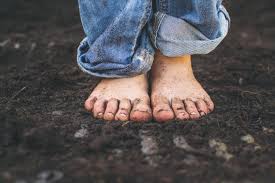

 who like a mother feeds the earth with rain and sunshine, who gives the sparrow a home, we praise you.
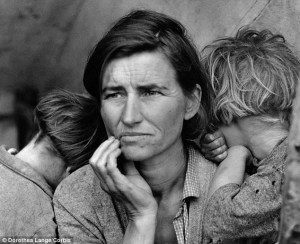 For all who have lived with a disappointment and hurt of motherhood so deep that it has led to rage and fear, heal us and help us to forgive.
 Hugs, that holiest of incarnations where parent and child get close enough to touch each other’s skin and wounds, will also be passed around. And surely they will ordain one another all over again. They will issue statements about how special and blessed the other person is. They will say, you have a gift, you are a gift, you are my gift. And finally, my daughter will no doubt fall asleep in bed next to her mother tonight. She’ll stay there until I pick her up and move her into her own bed, from which she’ll get up tomorrow morning, happy to eat breakfast at the same table where her mother loved her the night before.
 PleaseGrace